 EN

A juice bottle filling and sealing machine handles more than volume and speed when juice is filled hot. The product-contact path carries elevated-temperature liquid through valves, pipes, the filling zone, the bottle finish, and the closure. If any interface is specified for room-temperature service instead of the validated hot-fill condition, the line can suffer seepage, unstable fills, difficult cleaning, or package defects. From a packaging-line engineering perspective, the practical question is not simply whether the machine can fill juice. It is whether the whole product path maintains its intended condition until the bottle is closed.
That distinction matters because a hot filling process is a combined thermal, mechanical, and hygienic operation. One FDA juice HACCP guidance example describes treatment at 90°C for 2 seconds, followed by filling at 85°C and a one-minute hold for a shelf-stable juice. Those values are an example rather than a universal recipe, but they show why actual product temperature and exposure time must drive the engineering review. A juice bottle filling and sealing machine should be configured around the validated process, product acidity, solids, bottle material, closure system, and production rate.
Hot filling changes the conditions at every seal
Seals in a juice filling line are placed at pump connections, valve stems, tri-clamp joints, filler bowls, manifolds, capper contact points, and sometimes heat-exchanger connections. At ambient temperature, an elastomer may appear compatible during a short water test. Under a sustained hot filling technology cycle, however, heat, cleaning chemicals, compression set, pressure changes, and repeated sanitation can change its behavior.
For this reason, seal selection should begin with a documented duty profile rather than a material name alone. The profile should state:
- minimum, normal, and maximum product temperatures at each product-contact location;
- product acidity, pulp level, sugar content, viscosity, and any particulates;
- clean-in-place chemicals, concentrations, temperatures, and contact times;
- normal line pressure, pump transients, and possible back pressure at the filler;
- the required service interval and inspection access.
A supplier can then evaluate gasket, O-ring, diaphragm, and valve-seat materials against the actual conditions. More accurately, the goal is not to select a seal that merely survives heat; it is to select one whose sealing force, chemical compatibility, and cleanability remain suitable through repeated production and cleaning cycles.
Why closure application is part of the sealing decision
In a juice bottle filling and sealing machine, the cap is the final package seal, but its performance is linked to upstream controls. Hot liquid changes the bottle finish and closure behavior while torque is applied. Excessive product temperature at the capping station can alter the conditions under which liner contact and thread engagement are achieved. Too much temperature loss may also conflict with the validated process. The line therefore needs a defined window between filling, cap placement, torque application, and any hold or cooling stage.
Start with the bottle-and-closure supplier’s approved temperature range, then verify it on the actual bottle. Check cap feed, thread start, torque response, visual seating, leak performance after cooling, and opening torque after the specified storage interval. This is where moving from a single machine parameter to whole-line connections becomes useful: a capping result cannot be assessed in isolation from filler temperature, bottle handling, neck support, and conveyor timing.
Pipeline configuration protects temperature, hygiene, and stable filling
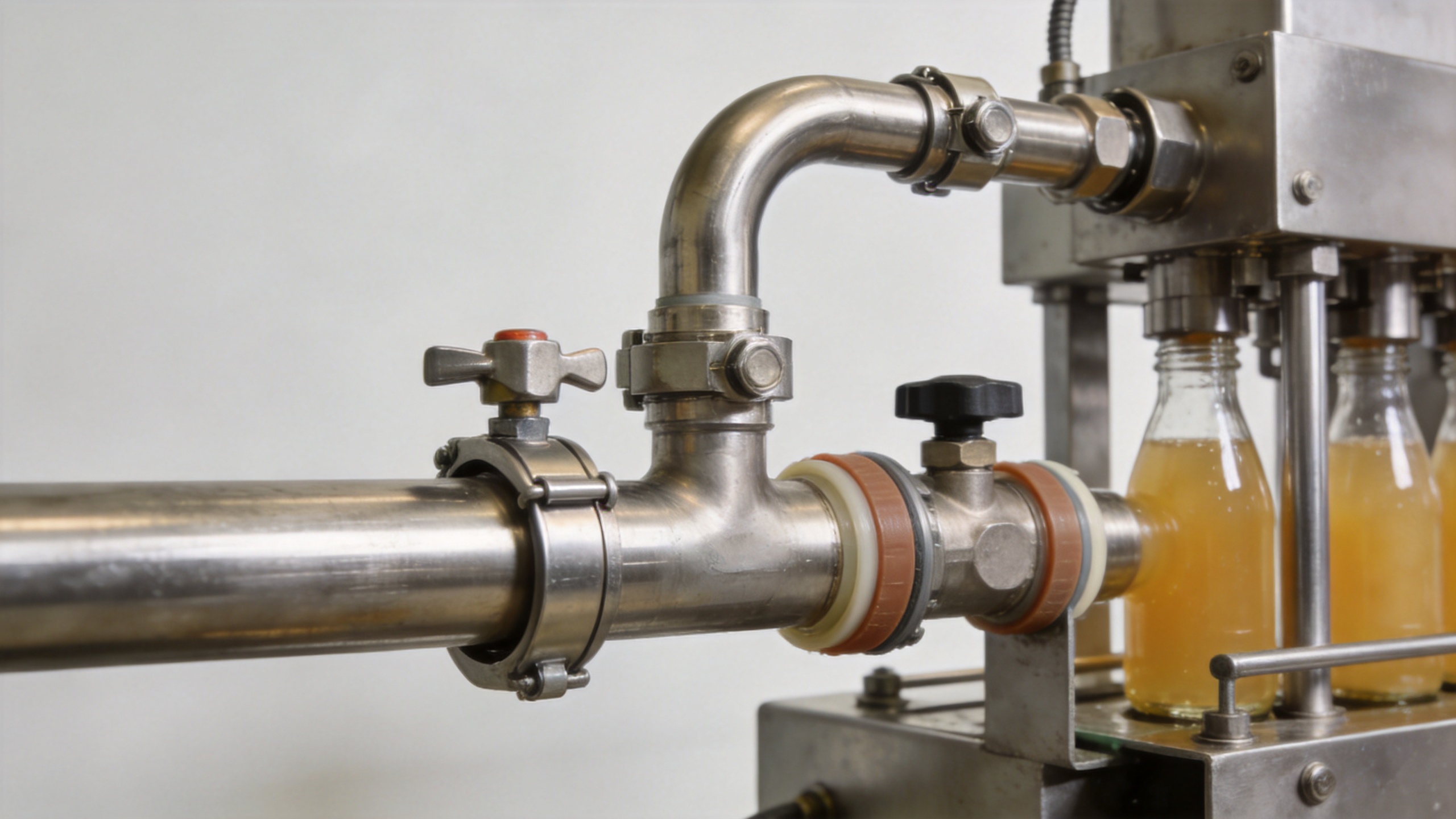
The product pipeline for hot juice should be designed as a controlled route, not as a collection of pipes between a pasteurizer and filler. Long uninsulated runs can create temperature loss and uneven thermal conditions. Oversized pipes can slow product movement and increase residence time. Poorly routed branches can retain product or cleaning solution. Tight bends, abrupt diameter changes, and unplanned restrictions can affect pressure stability at the filling valves.
A useful engineering review for a hot filling process covers the following points:
- Route and residence time. Map the path from final heating or holding point to the filler bowl. Confirm the expected volume, flow rate, line length, and time in the route at normal and reduced production rates.
- Temperature retention. Review insulation, ambient exposure, and the location of measurement points. The temperature used for process verification should represent product conditions, not only a remote heating setpoint.
- Drainability and cleanability. Use hygienic routing that avoids unnecessary dead legs and permits effective cleaning and draining. Hygienic-design principles used in food and beverage equipment emphasize cleanability and drainage, but final details should be confirmed against the applicable standard and the site sanitation program.
- Pressure control. Size pumps, valves, and restrictions so the filler sees stable pressure without excessive shear or foaming. Juice with pulp or changing viscosity may require a different approach from clear juice.
- Expansion and support. Hot product-contact lines expand. Supports, flexible connections, and routing should accommodate that movement without loading valve bodies, instruments, or sanitary connections.
These decisions affect filling consistency. A line that produces variable inlet pressure or entrained air may create level variation, splashing, foam, and contamination risk at the bottle mouth. The equipment selection conversation should therefore start with liquid characteristics before speed, then connect the answer to the full line layout.
Match the filler, piping, and cleaning cycle
Hot filling technology is easier to validate when the product path and the cleaning path are considered together. Every valve, manifold, flexible section, and instrument connection should have a known role during cleaning. If an area cannot receive adequate flow or drain after cleaning, it can become a recurring maintenance and hygiene concern.
Ask for a piping and instrumentation review that identifies product flow direction, return paths, low points, vents, sample points, temperature sensors, pressure instruments, and clean-in-place connections. Also clarify whether the filler is recirculated during warm-up, what happens during a production pause, and how the line is emptied before cleaning. These questions are especially relevant when a juice recipe changes from clear product to pulp-containing product or when bottle formats change.
Commissioning tests for a juice bottle filling and sealing machine
Before accepting a new or modified juice bottle filling and sealing machine, build an evidence-based test plan. It should use the intended juice, bottle, closure, fill level, and operating range rather than relying solely on a water run.
| Test area | What to verify | Why it matters |
|---|---|---|
| Product temperature | Record temperature at agreed critical points through startup, steady production, and a short stop. | Confirms that the validated thermal condition reaches the filling zone. |
| Product-path integrity | Inspect joints, valve seats, pump seals, and filler connections at operating temperature and pressure. | Finds heat-related leakage or movement before routine production. |
| Package seal | Measure cap seating, torque, leaks after cooling, and closure condition after the planned hold period. | Connects capping settings to real hot-fill package performance. |
| Filling stability | Check fill level, foaming, splash, and reject trends across the planned speed range. | Reveals inlet-pressure, timing, or product-behavior issues. |
| Cleaning verification | Confirm the documented cleaning sequence, flow paths, drainability, and post-clean inspection method. | Shows whether the configured line can be maintained hygienically. |
A practical specification checklist
When requesting a hot juice line, provide the validated fill temperature range and hold requirements; product pH, solids, pulp, and viscosity; bottle and closure drawings; required output; clean-in-place conditions; available utilities; and acceptable testing methods. Then ask the equipment supplier to identify the product-contact seal materials, piping layout assumptions, temperature instrumentation, filler inlet conditions, and the test records to be supplied.
There is no substitute for validation with the final product and packaging. Still, a clear specification makes the discussion more productive. It turns a generic juice bottle filling and sealing machine request into a review of the sealing system, product route, cleaning method, and package connection that actually determine hot-fill performance.
Conclusion
Heat-resistant sealing and thoughtful pipeline configuration are needed because hot juice filling is a system condition, not a single machine feature. Select product-contact seals for the real temperature, pressure, chemical, and cleaning profile. Route piping to support thermal control, stable flow, cleanability, and drainage. Finally, validate the bottle and closure together with the filler. That approach gives production and engineering teams a defensible path from process requirements to an appropriate juice bottle filling and sealing machine configuration.





 Hot News








