 EN

Budgeting for carbonated beverage bottling equipment is not simply a matter of pricing a filler. A workable investment plan starts with the beverage, package, required output, and the operating conditions that keep carbonation, fill level, and container handling stable. From a B2B purchasing perspective, the practical question is: which parts of the line are necessary to meet the agreed production and acceptance conditions, and which are optional for the current launch?
For carbonated products, the filling process is usually evaluated as a counter-pressure or isobaric process: pressure must be managed while the product enters the container. That is why a low entry quotation can change materially when the project later adds temperature control connections, CO₂ management, bottle handling, closure equipment, cleaning provisions, or inspection. The same logic applies when comparing beer bottling equipment; the liquid, packaging, hygiene plan, and target operating rhythm set the budget boundary.
Start with the production brief, not the machine list
A useful first budget document describes the product and operating target in language that engineering, procurement, and production can all test. Define the beverage formulation, carbonation condition, expected product temperature, bottle or can format, closure type, planned shifts, and target output. It is more accurate to ask for a stable operating target than to compare only a nameplate speed.
- Product properties: carbonation level, temperature window, foaming tendency, and cleaning requirements.
- Package details: container material, neck finish, height range, label format, and closure specification.
- Output definition: bottles or containers per hour, shift pattern, and the conditions under which output will be checked.
- Operating model: number of SKUs, expected changeover frequency, operator capability, and maintenance access.
How filling technology changes the equipment scope
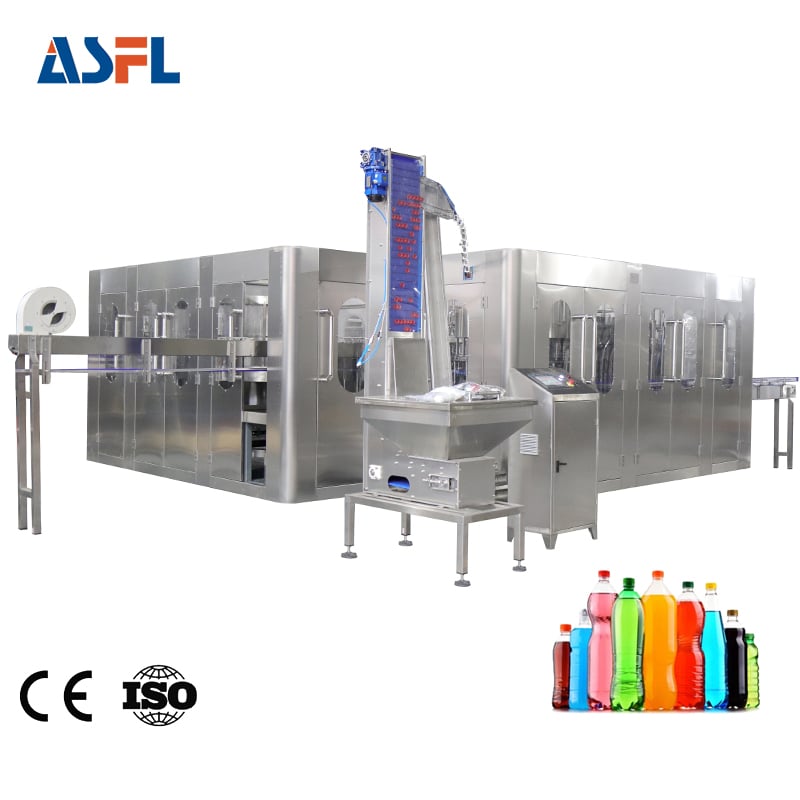
A carbonated line needs a filling method suited to pressure-sensitive product handling. The filler itself may be the most visible item, but its cost is linked to the systems around it. Product supply stability, pressure control, tank and piping design, container transfer, cap handling, and the relationship between filling and closing all affect the final scope for carbonated beverage bottling equipment.
Ask suppliers to identify the boundaries of supply: what is included between product infeed and packed product discharge, what site utilities are assumed, and what connection work stays with the buyer or an integrator. This avoids treating an equipment quote as the full project budget.
Container, closure, and changeover requirements
Container choice affects more than format parts. Bottle stiffness, neck geometry, transfer surfaces, rinser requirements, closure handling, labeling, and rejection arrangements can all influence the configuration. Bottle-mouth positioning also matters because consistent filling depends on controlled container presentation. When several formats are planned, the investment should include an explicit changeover plan rather than a vague statement that the line is “flexible.”
| Requirement | Budget effect to examine | Question for review |
|---|---|---|
| Multiple bottle sizes | Change parts, guides, starwheels, setup time | Which formats are included in acceptance testing? |
| Different closures | Capper or closure-feeding configuration | Are closure specifications final and available for trials? |
| Higher output target | Filling-valve count and upstream/downstream balance | What sustained conditions define the target rate? |
| Frequent SKU changes | Format storage, setup aids, operator time | How will changeover time be measured and approved? |
Budget the whole line: utilities, automation, and integration
The purchase budget for carbonated beverage bottling equipment should normally distinguish core process equipment from line integration. A project can require rinsing, filling, closing, conveying, labeling, date coding, inspection, packing, pallet handling, or selected combinations of these. Each additional station changes not only the equipment list but also controls, guarding, footprint, electrical work, and commissioning effort.
Utilities deserve their own budget line. Depending on the selected process, planning may need to consider compressed air, electrical distribution, water treatment or rinse-water arrangements, product and cleaning connections, drainage, temperature-related connections, and CO₂ supply arrangements. The correct scope is site-specific. Treating these items as later details can make an apparently comparable equipment offer difficult to compare.
Include hygiene, cleaning, and maintenance in the investment case
Hygiene design should be scoped around the product and the plant’s procedures, not assumed from the material name alone. Ask which contact parts, seals, piping routes, and cleaning connections are supplied, and which cleaning sequence must be developed or validated on site. Cleaning convenience often depends on dead-leg design, accessibility, and the way the process is drained and connected.
Installation, commissioning, and acceptance costs
A usable project budget includes more than delivered equipment. It should separate freight and handling, site preparation, installation labor, piping and electrical connections, software setup, operator training, trial materials, and commissioning support. Local compliance, guarding, and documentation expectations may add further work. The budget owner should decide which costs are supplied by the equipment partner, which are covered by the plant, and which need an outside contractor.
Acceptance criteria are especially important. Before placing an order, define the product and package to be tested, the target rhythm, fill and closure checks, changeover assumptions, and any agreed handover documents. In many projects, a verification checklist is more useful than simply adding features to a spreadsheet. It gives each side a shared way to identify scope gaps before production starts.
A practical budget framework
Use a layered budget rather than a single equipment allowance:
- Core process scope: product handling, carbonated filling, closing, and the necessary connections.
- Packaging and line balance: rinsing, conveying, labeling, inspection, packing, and format parts required by the brief.
- Plant integration: utilities, layout work, electrical and piping connections, controls integration, and safety provisions.
- Readiness costs: installation, trials, training, commissioning, spares, and acceptance testing.
- Contingency for confirmed unknowns: documented format expansion, site conditions, or connections that remain to be validated.
This approach does not produce a universal price because the budget is driven by project conditions. It does make quote comparisons clearer: a lower equipment total may exclude scope that another proposal has already included.
Budget review checklist by decision area
Turn the preliminary quotation into an investment review by assigning each of the following decisions to a confirmed production requirement.
- For carbonated beverage bottling equipment, confirm product temperature, carbonation, pressure conditions, and trial-package details.
- For carbonated beverage bottling equipment, define sustained output conditions rather than comparing nameplate speed alone.
- For carbonated beverage bottling equipment, list required formats, closures, change parts, and changeover evidence.
- For carbonated beverage bottling equipment, separate core filling scope from rinsing, closing, conveying, inspection, and packing.
- For carbonated beverage bottling equipment, document utilities, drainage, controls, guarding, installation, and responsible parties.
- For carbonated beverage bottling equipment, include cleaning connections, maintenance access, training, spares, and acceptance criteria.
- For carbonated beverage bottling equipment, reserve contingency for identified site or future-format unknowns only.
- For carbonated beverage bottling equipment, reconcile every feature with its process requirement before final approval.
- For beer bottling equipment, start with the product, container, closure, and planned operating conditions.
- For beer bottling equipment, include glass handling, rinse-fill-close coordination, inspection, and service access where required.
- For beer bottling equipment, define package trials, output conditions, utility boundaries, and format-change responsibilities.
- For beer bottling equipment, budget cleaning, operator training, spares, commissioning support, and handover evidence.
- For beer bottling equipment, treat future expansion as a separate, documented budget item.
- For beer bottling equipment, compare proposals by included scope and verification conditions, not the equipment headline alone.
Questions to settle before requesting a final proposal
- Which product, carbonation, temperature, and container conditions will represent normal production?
- What output can be evaluated under those conditions, and what upstream or downstream assumptions apply?
- Which package formats and closures are included now, and which are future possibilities?
- What utilities, space, drainage, and site-preparation work are available at the installation point?
- What cleaning, maintenance, training, and spare-parts scope is expected at handover?
- What commissioning and acceptance criteria will demonstrate that the agreed line scope is ready?
Conclusion
The investment budget for carbonated beverage bottling equipment is determined by a connected set of choices: product conditions, filling method, package range, operating target, automation level, utilities, line integration, and launch readiness. Start with a testable production brief, assign every feature to a requirement, and compare proposals by included scope rather than headline price. A supplier discussion can then focus on the real trade-offs: initial configuration, format flexibility, maintainability, and the conditions that need verification before the line is accepted.
 Hot News








