 EN

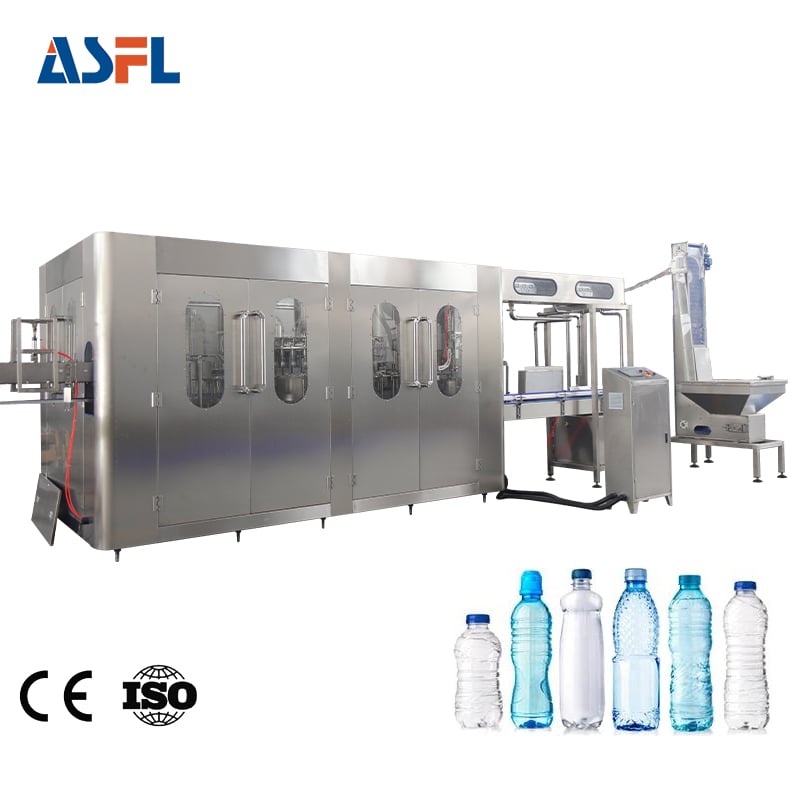
For a plant manager, a fully automatic mineral water bottling plant is not a collection of separate machines. It is one production system in which treatment, bottle handling, filling, capping, labeling, packing, compressed air, and conveying share a production rhythm. When one constrained asset slows down, upstream product and downstream packaging wait. That is why maintenance decisions deserve the same attention as line-speed targets.
Predictive maintenance uses condition evidence to decide when work is needed. In a fully automatic mineral water bottling plant, that evidence may come from vibration, temperature, motor current, air pressure, flow, cycle counts, or inspection trends. The purpose is not to add sensors everywhere. It is to detect a meaningful change early enough to plan an intervention around production and sanitation requirements.
Why calendar maintenance alone leaves gaps
A fixed calendar is useful for lubrication, sanitation-related inspections, and tasks with known intervals. Yet a fully automatic mineral water bottling plant can experience changing bottle formats, water conditions, ambient temperatures, air demand, and production schedules. Two identical bearings can age differently when one conveyor transfers bottles through a busy accumulation zone and another runs intermittently.
Condition data gives the maintenance team another input. It helps them ask whether the filler drive, capper, transfer starwheel, air system, or conveyor is behaving differently from its normal operating pattern. It does not replace operator observations or hygienic inspections. Instead, it creates a traceable reason to inspect a component before a small deviation becomes a line-stopping event.
Downtime has a wider effect than the failed part
In a fully automatic mineral water bottling plant, a stoppage at the filler may strand empty bottles upstream and packed product downstream. A capper issue can create rejects that require checks beyond the capper itself. A compressed-air problem can affect actuators across several stations. The relevant question is therefore not merely, “Which part failed?” It is, “Which asset interrupts the production path, quality checks, and recovery sequence?”
This systems view is especially useful during equipment procurement and line upgrades. A fully automatic mineral water bottling plant should be evaluated by stable operating conditions, maintenance access, and handoff behavior, not by an advertised nominal speed alone. Here it helps to separate two topics: filling accuracy is one issue, while cleaning access and changeover discipline are another.
Start with failure modes that matter to the bottleneck
Predictive maintenance becomes practical when the team begins with a short list of high-consequence failure modes. For a fully automatic mineral water bottling plant, the initial list may include abnormal bearing vibration on a critical drive, rising motor current caused by drag, unstable pneumatic pressure, recurring conveyor jams, or a trend in cap application checks. Each item should have an owner, an inspection method, a response threshold, and a record of the production condition when it was observed.
Do not start with a dashboard. Start with a failure-mode review involving operations, maintenance, and quality. Operators may recognize an unusual sound or recovery delay before a monitoring trend becomes clear. Maintenance staff can identify access limits and planned sanitation windows. Quality staff can explain which deviations need documented follow-up. That collaboration makes the data useful rather than decorative.
Choose signals that match the equipment and mechanism
Different assets call for different evidence. Vibration and temperature may be useful where rotating parts and bearings are important. Motor current can show a changing mechanical load. Air pressure or consumption trends can direct attention to pneumatic supply and leaks. Cycle counts can help organize wear-part reviews. In a fully automatic mineral water bottling plant, the signal should be selected because it relates to a known failure mechanism, not because it is easy to collect.
| Area | Useful question | Possible evidence |
|---|---|---|
| Filler and capper drives | Is mechanical load changing during normal production? | Vibration, temperature, motor current, inspection notes |
| Conveyors and transfers | Are jams or drag becoming more frequent? | Jam history, current trend, operator observations |
| Compressed air | Is supply stable under peak demand? | Pressure trend, leak checks, alarm history |
| Utilities | Could one utility stop multiple stations? | Pressure, temperature, flow, planned-maintenance records |
A fully automatic mineral water plant often has its own priorities based on local utilities, formats, and cleaning practices. The useful comparison is not between a “smart” line and a conventional line. It is between a monitoring plan that answers a real operating question and one that creates data with no agreed action.
Turn a signal into a work order
The value of predictive maintenance appears when a signal leads to disciplined action. A fully automatic mineral water bottling plant needs a simple chain: establish the normal condition, define who reviews the exception, confirm the condition on the machine, decide whether work can wait for the next planned window, document what was found, and compare the post-maintenance condition with the baseline.
- Map the product path and mark assets that stop the line or create quality holds.
- List likely failure modes and the evidence that could reveal each one.
- Collect a baseline during stable production, including format and operating context.
- Set practical review rules rather than treating every variation as an emergency.
- Schedule verification and repair around approved production and sanitation windows.
- Review whether the intervention changed the trend and update the maintenance plan.
This process makes a fully automatic mineral water bottling plant easier to manage across shifts. It also keeps the discussion honest: a rising trend may justify inspection, but it is not proof of a specific defect until the team verifies it.
Plan around sanitation, changeovers, and data quality
Food and beverage maintenance cannot be isolated from hygiene controls. Sensor mounting, cable routing, cleaning access, and work permits need review before installation. A fully automatic mineral water bottling plant may have planned sanitation downtime that offers a sensible opportunity for installation and service, provided the work follows site procedures. The implementation plan should also state how maintenance records, alarms, and quality observations are connected.
Changeovers matter as well. Different bottle sizes, caps, production rates, and accumulation settings can alter loads and cycle patterns. If the team compares data without recording those conditions, it may misread a normal format change as deterioration. For that reason, a fully automatic mineral water bottling plant benefits from maintenance records that capture format, line speed, product run, and the operator’s observation alongside the sensor value.
Use maintenance evidence in purchasing and upgrade decisions
When evaluating a fully automatic mineral water bottling plant or a major retrofit, ask suppliers for maintainability information rather than only throughput figures. Useful questions include: Which components require routine access? What diagnostic points are available? How are utilities monitored? What parts of the line require coordination during a format change? Which data can be exported to the plant’s maintenance workflow? The answers help the buyer compare configuration boundaries and total ownership considerations.
A fully automatic mineral water plant should also be assessed for handoffs between filling and capping, line controls and utilities, and mechanical service access and sanitation practices. These interfaces often shape stable operation more than a single machine specification. Suppliers can support this evaluation with confirmed configuration information and a clear commissioning or trial-run discussion; unsupported savings claims do not help the decision.
A measured way to begin
Predictive maintenance does not require a large rollout on day one. Choose one constraint asset or shared utility, agree on the failure mode, establish a baseline, and decide how the team will respond. Then review the result after several planned maintenance cycles. In a fully automatic mineral water bottling plant, this incremental approach can build a maintenance history that is specific to the site rather than borrowed from a generic template.
The central benefit is operational visibility. A fully automatic mineral water bottling plant runs more predictably when people can connect machine condition, production context, and a planned response. With sound maintenance records and verified follow-up, teams can make better decisions about inspection timing, spare parts, shift coordination, and future equipment choices.





 Hot News








