 EN

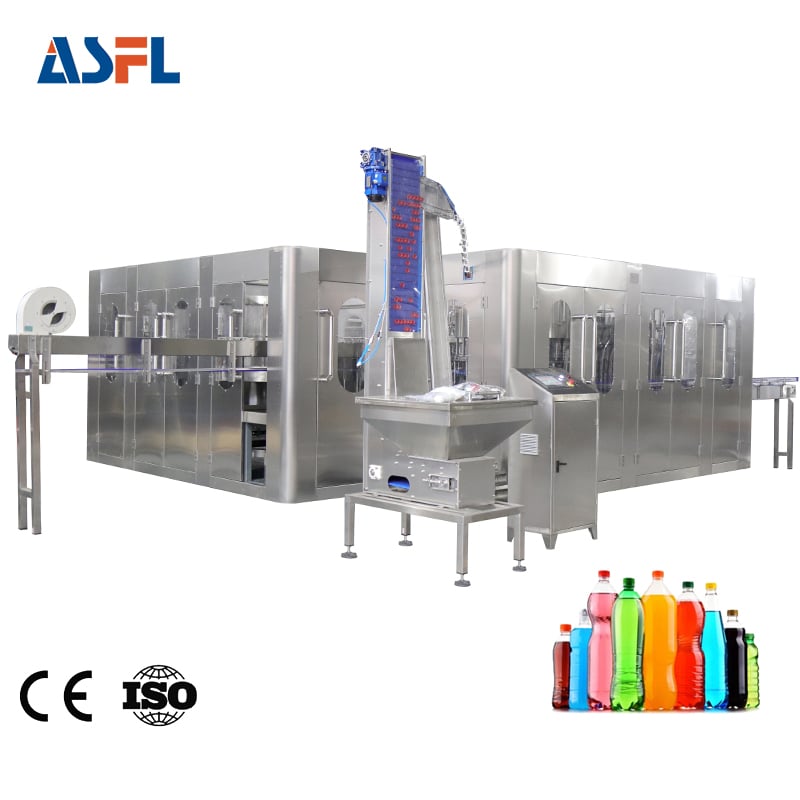
A carbonated beverage line is judged by far more than its nameplate output. A reliable carbonated soft drink filling machine must keep product handling, container control, hygiene, and downstream timing in balance while it runs. For procurement teams, the useful question is not simply “How fast is it?” It is whether the machine can maintain stable conditions with the intended drink, bottle or can, closure, and production schedule.
From an equipment-evaluation perspective, start with the beverage and package, then examine the claimed output, and finally define how the configuration will be verified. That sequence matters because carbonation, foam behavior, bottle geometry, and line connections all influence what a carbonated soft drink filling machine can deliver in day-to-day production.
Controlled counter-pressure filling
The core capability is stable counter-pressure, also called isobaric, filling. Carbonated drinks contain dissolved carbon dioxide, so an abrupt pressure difference can release gas and create foam. A suitable carbonated soft drink filling machine should provide controlled bottle pressurisation, product admission, and pressure relief instead of treating filling as a simple open-flow operation.
Ask the supplier to explain the sequence used for your beverage: bottle preparation, pressure balancing, fill control, and depressurisation. The answer should relate to your carbonation level, product temperature, target fill volume, and package. A soft drink filling machine may appear similar across applications, but the filling valve setup and pressure-management logic need to suit the actual process conditions.
During a trial, observe foam at the finish of filling, consistency of liquid level, and how the machine responds when product supply conditions vary. Those observations are more useful than a broad claim about speed because they show whether the carbonated soft drink filling machine is operating within a stable process window.
Repeatable fill accuracy and gentle container handling
Reliable output depends on repeatable filling rather than a short burst of high speed. The machine should coordinate bottle or can infeed, lifting, centering, filling, and discharge so containers are presented consistently to the filling valves. Poor neck guidance, unstable lifting, or inconsistent star-wheel transfer can affect fill level and may also disturb the product.
Package details must be reviewed early. PET bottles, glass bottles, and cans have different handling and pressure characteristics. Confirm the container diameter, height, neck or lid interface, wall rigidity where relevant, and allowed dimensional tolerances. If several formats are planned, verify the required change parts, adjustment points, recipe controls, and trial procedure for each one.
It helps to define acceptance criteria beforehand: which container and beverage will be used, how many samples will be checked, what fill-level range is acceptable, and how the line will be assessed after a normal startup. This turns fill accuracy into a testable requirement rather than a promise in a quotation.
Foam management that is tied to real operating conditions
Foam control is not a single add-on. It reflects pressure balance, beverage temperature, product supply stability, valve timing, container handling, and the transition to capping. A capable carbonated soft drink filling machine should make these settings understandable and repeatable for the operating team.
Ask which parameters can be adjusted or stored as recipes, and which require mechanical intervention. Also ask what conditions must remain stable upstream: product temperature, carbonation preparation, pressure, and supply flow. Put another way, a filling machine cannot compensate indefinitely for an unstable product feed. The practical value lies in how the machine helps operators detect and respond to deviations.
A useful factory acceptance discussion includes both normal operation and transitions: startup, brief stops, restart, and changeover. These moments often reveal whether a carbonated soft drink filling machine has adequate controls for the production rhythm you expect.
Hygienic, cleanable product-contact design
For beverage equipment, cleanability is a capability, not merely a material label. In markets governed by U.S. food rules, 21 CFR Part 117.40 requires food-contact surfaces to be adequately cleanable, corrosion-resistant when in contact with food, and made from nontoxic materials appropriate to their intended environment. Your applicable local regulations and validation requirements may differ, so confirm them for the destination market.
Review the product-contact path, valve design, seals, piping transitions, drainability, and access for inspection. Ask how cleaning and sanitising steps are carried out, what components require routine attention, and how the proposed procedure is documented. The objective is not to assume compliance from a brochure; it is to confirm that the design and cleaning plan fit your beverage, cleaning chemistry, and site controls.
Also separate the filling area from the surrounding machine layout. Adequate space for cleaning, maintenance, and safe access can affect whether hygienic procedures are actually followed on the production floor.
Integration with rinsing, capping, conveying, and controls
A carbonated soft drink filling machine rarely operates alone. Its reliability depends on interfaces with rinsing or container preparation, cap or lid handling, capping, inspection, conveying, and sometimes upstream mixing or carbonation equipment. A machine that fills steadily in isolation can still face interruptions if the capper, conveyor, or product supply does not match its rhythm.
Request a clear line connection map. It should identify container transfer points, control signals, accumulation areas, product and gas connections, and the response to a downstream stop. For closures, confirm the handoff from filler to capper and how closure quality will be checked. For conveyors, examine guide rails, transfer plates, and accumulation behavior rather than considering conveyor speed alone.
This is where the evaluation moves from single-machine capacity to stable line performance. The target rate should be demonstrated under agreed beverage and package conditions, with the connected equipment operating as planned.
Format flexibility and changeover discipline
Many plants need more than one pack size or bottle shape. If that applies to your operation, a soft drink filling machine should support a controlled changeover process. The important questions are which parts change, how adjustments are recorded, whether settings are recipe-driven, and how operators verify correct setup before full production resumes.
Quick changeover has value only when it does not introduce uncontrolled variation. Ask for a documented list of change parts and a demonstration using representative containers. Include cleaning requirements between products in the review, particularly when flavour profiles, sweeteners, or other formulation differences affect your site’s procedures.
Maintainability, diagnostics, and support planning
Reliability also means that routine service and troubleshooting are manageable. Review access to wear parts, seals, valves, sensors, lubrication points, and electrical components. The controls should help the team identify a stoppage category without hiding the underlying condition behind a generic alarm.
Ask what spare parts are recommended for commissioning and normal operation, what preventive-maintenance tasks are expected, and what information the supplier needs for remote diagnosis. A maintenance plan should cover both the filling block and the connections that influence it, including product supply, gas supply, capping, and conveying.
Do not evaluate automation separately from maintenance capability. A higher level of automation can be useful when it provides repeatable settings and clear diagnostics, but it should remain practical for the skills and support resources available at the site.
A practical verification checklist
Before selecting a carbonated soft drink filling machine, prepare a shared test and acceptance checklist. It should include:
- the beverage specification, expected carbonation conditions, and product temperature at filling;
- each container, closure, and label or downstream handling requirement;
- the target operating rate and the conditions under which it will be evaluated;
- fill-level sampling, visible foam observations, and rejection or rework criteria;
- cleaning, sanitation, access, and product-contact documentation requirements;
- changeover steps for every intended format; and
- the control, utility, conveyor, capping, and service connections for the complete line.
Use the checklist during technical discussions, factory testing, and installation planning. It makes the comparison more disciplined and helps distinguish a configuration that suits your operation from one that only looks appropriate on paper.
Conclusion: assess capability as a system
A reliable carbonated soft drink filling machine combines controlled counter-pressure filling, repeatable container handling, foam-aware operation, cleanable product-contact design, line integration, format control, and maintainable diagnostics. No single feature proves that a machine will fit every beverage plant. The sound approach is to compare capabilities against your actual beverage, container, target rate, hygiene obligations, and support plan, then verify the result through agreed trials and acceptance criteria.
For a soft drink filling machine project, provide the supplier with representative product and package information before finalising the configuration. That gives both sides a clearer basis for selecting valves, handling parts, controls, and line connections that can be tested under relevant conditions.
 Hot News








