 EN

How Do Modern PET Bottle Filling Machines Support Lightweight Bottle Packaging Trends
Lightweight PET packaging is not simply a bottle-design project. Once resin is removed from the body, base, or shoulder, the container has less structural margin while it moves through rinsing, filling, capping, and discharge. That changes how buyers should assess fully automatic bottle filling machines. A useful question is not simply whether a line can fill a lighter bottle once; it is whether the full process can guide, fill, close, and transfer that bottle consistently under the intended production conditions.
From a packaging-line engineering perspective, lightweighting should be evaluated across the interfaces between the bottle and the machine. A pet bottle filling machine can support the trend when its bottle handling, filling method, controls, and downstream handoff are specified as one system. This lets teams protect product quality and line stability without treating a single speed figure as proof of compatibility.
Why lightweight PET changes the filling-line conversation
A lighter bottle is often more flexible in the body and more sensitive to side loads, vacuum effects, and uneven support. In day-to-day production, a change that looks minor in a bottle drawing can affect transfer timing, starwheel contact, guide-rail pressure, and cap application. Fully automatic bottle filling machines therefore need to manage the bottle deliberately from infeed to discharge, not merely dispense a preset volume.
The first engineering question is usually the liquid and container combination, then the target output. Water-like products, carbonated drinks, hot-fill products, and viscous liquids can place very different demands on a PET container. A bottle that is stable for one product and temperature profile may require a different filling approach for another. This is why a line review should consider the preform and bottle design, neck finish, fill temperature, headspace requirement, closure, and post-fill handling together.
Four ways fully automatic bottle filling machines help protect lighter bottles
1. Controlled bottle transport limits unnecessary side loading
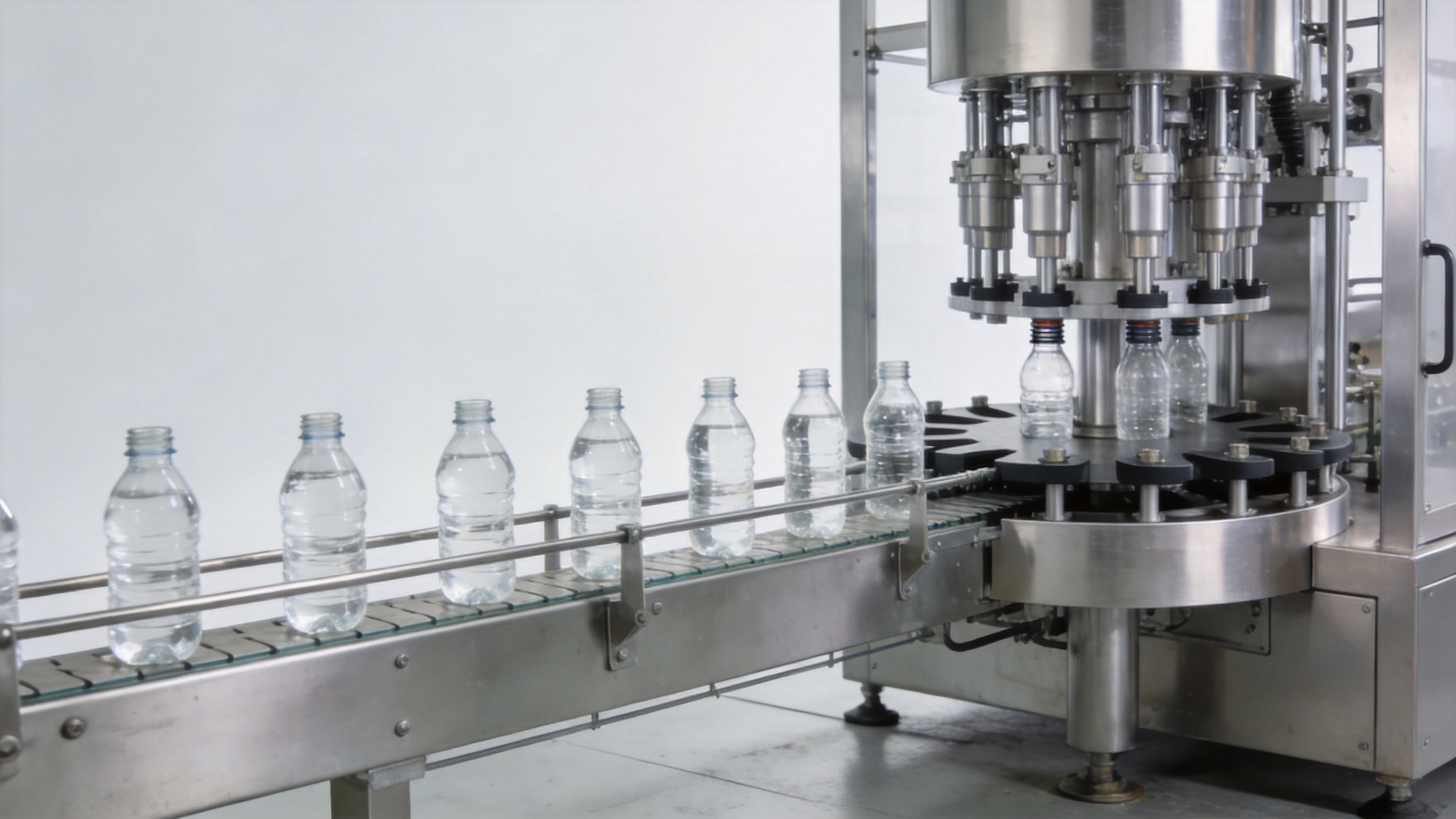
Modern fully automatic bottle filling machines can use bottle-format-specific guides, neck handling, spacing components, and transfer timing to keep lightweight bottles supported during movement. The goal is not to clamp every bottle tightly. Instead, the line should hold each bottle securely enough to preserve orientation while avoiding rubbing, squeezing, or impacts that can distort a flexible sidewall.
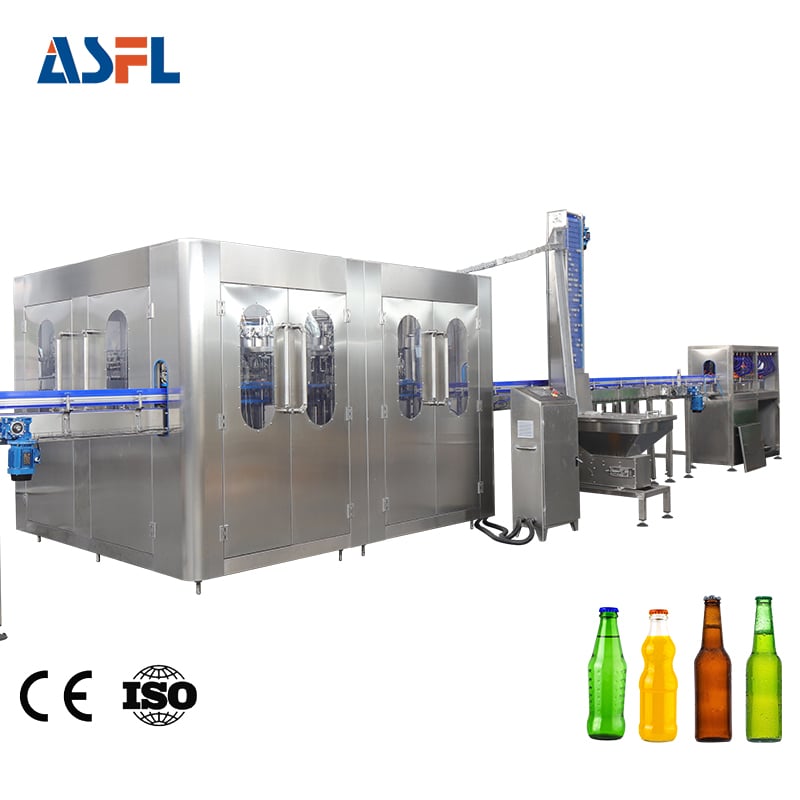
For a pet bottle filling machine, it is especially useful to review the infeed, rinser transfer, filler carousel, capper transfer, and discharge as connected points. A stable filler alone cannot correct a bottle that arrives tilted or leaves the capper under excessive side pressure. When change parts are required, their contact surfaces and adjustment range should be checked against the approved bottle drawing rather than selected only by nominal diameter.
2. The filling method can be matched to bottle stiffness and product behavior
Fully automatic bottle filling machines may use gravity, vacuum, flow-meter, piston, or other filling principles depending on the liquid and process. The appropriate method depends on product characteristics and packaging conditions. For lightweight PET, the relevant review is how the selected method controls product entry, fill level, foaming, and pressure changes without creating a container-handling problem.
For instance, a fast filling profile that works well for a rigid container may need validation when the lighter bottle has a flexible base or shoulder. Teams should verify the relationship between nozzle position, bottle support, venting, and the actual product behavior. More accurately, speed is only one part of the decision; the bottle must remain controlled at the point where liquid enters and immediately afterward.
3. Servo and sensor coordination improves repeatable handling
Automation helps turn a lightweighting concept into a repeatable process. Coordinated drives, bottle-presence sensing, controlled indexing, and fill-level feedback can help fully automatic bottle filling machines maintain a more consistent sequence when production is running normally. These capabilities do not eliminate the need for mechanical setup, but they make it easier to establish and verify a repeatable operating window.
During evaluation, ask how the equipment reacts to a missing bottle, a bottle that is out of position, a fill-level deviation, or a backup from downstream equipment. A useful answer describes the detection point, the machine response, and the reset procedure. It should not rely on an unsupported promise that every lightweight bottle will run at any speed.
4. Capping and downstream interfaces complete the stability plan
The filling valve is only one part of lightweight-bottle performance. Cap application can introduce torque and vertical load, while warm product, internal pressure, or conveyor accumulation can expose weak points after filling. Packaging-line engineers therefore examine the neck finish and closure system alongside the filler. The same principle applies to air conveyors, accumulation tables, labelers, and case-pack interfaces.
For this reason, a bottle trial should follow the container beyond the filling zone. Observe bottle posture after capping, through normal stops and restarts, and at the transition into downstream equipment. Moving from a single-machine specification to a line-interface review is often the most useful shift when lightweight packaging is the goal.
A practical validation checklist before selecting equipment
Before finalizing a configuration for a pet bottle filling machine, create a written test plan. It gives the packaging, quality, and operations teams a shared basis for deciding whether the bottle and equipment are compatible.
- Define the bottle: confirm material grade, bottle weight, neck finish, dimensions, base geometry, and permitted dimensional variation.
- Define the product and process: record viscosity, carbonation or foaming behavior where relevant, fill temperature, target fill level, and sanitation requirements.
- Map every handoff: document bottle contact and support from infeed through filling, capping, discharge, and downstream conveyors.
- Run representative trials: include normal production, planned stops, restarts, and a reasonable range of approved bottle variation.
- Set acceptance evidence: agree on what operators will inspect, such as bottle stability, fill consistency, cap application, leaks, scuffing, and transfer behavior.
Food and beverage teams should also review applicable packaging and food-contact requirements for their market. In the United States, PET food-contact applications can involve 21 CFR 177.1630, but the relevant compliance assessment depends on the specific resin, product, use conditions, and customer requirements. Equipment selection does not replace that material and regulatory review.
How to specify fully automatic bottle filling machines for a lightweighting project
Start with a requirements package, not a catalog comparison. Give the equipment supplier the approved bottle data, product conditions, target output, closure details, and planned downstream layout. Then ask the supplier to explain the configuration boundaries: which bottle contacts are adjustable, what format parts are needed, how the filler supports the bottle, and which conditions must be proven in a trial.
It is also useful to separate confirmed capability from items that still require testing. A supplier may be able to discuss bottle-positioning and target-throughput validation, but a final outcome should be tied to a defined bottle and product. That evidence-led approach avoids treating a general-purpose machine description as a guarantee for a new lightweight format.
Conclusion: lightweighting succeeds when the line is designed around the bottle
Modern fully automatic bottle filling machines support lightweight bottle packaging trends by providing controlled handling, process-matched filling, coordinated automation, and better integration with capping and downstream equipment. The strongest projects do not begin with a claim about maximum speed. They begin by matching the liquid, bottle, closure, and line interfaces, then proving the configuration with representative trials.
For buyers assessing a pet bottle filling machine, the next step is to turn the lightweight bottle drawing and operating conditions into a verification checklist. That gives the project team a clearer basis for discussing configuration, trials, and acceptance criteria with an equipment partner.

 Hot News








