 EN

What Makes a 5 Gallon Water Filling Machine Essential for Commercial Water Suppliers
For a commercial water supplier, a 5 gallon water filling machine is not simply a way to put water into a large bottle. It is the point where bottle hygiene, fill consistency, cap handling, production flow, and dispatch readiness meet. When this part of the operation is disconnected from the rest of the line, small interruptions can become missed deliveries, rework, or avoidable sanitation concerns.
From a packaging-line engineering perspective, the right 5 gallon water filling machine starts with the bottle, the water process, and the required delivery rhythm—not a headline speed. That distinction matters because returnable containers arrive with different levels of wear, handling history, and dimensional variation. A well-planned system helps a supplier turn those variables into a repeatable process.
Why commercial suppliers need more than a filling station
A commercial operation has to protect product quality while keeping refillable containers moving. A 5 gallon water filling machine becomes essential when manual or loosely connected steps make it difficult to control that flow. The machine should be assessed as part of a process that may include receiving, external washing, internal washing, rinsing, sanitizing, filling, capping, inspection, and transfer to storage or loading.
This is especially important for returnable bottles. In the United States, 21 CFR Part 129 provides current good manufacturing practice criteria for processing and bottling bottled drinking water. It also states that multiservice primary containers must be washed, rinsed, and sanitized mechanically or by another method that delivers adequate sanitary results. Local rules and a facility’s quality program still determine the applicable requirements, but the operating lesson is clear: a supplier should evaluate the full bottle path, not just the fill valve.
A 5 gallon water filling machine gives the production team a defined, repeatable handoff between preparation and finished-package handling. That makes training, inspection, troubleshooting, and acceptance testing more practical than relying on individual work habits alone.
1. It supports a controlled sanitation workflow
Sanitation is one reason a 5 gallon water filling machine has strategic value. Large reusable bottles are durable assets, yet they also require a consistent cleaning and preparation routine before filling. A line designed around the actual container format can help coordinate bottle orientation, internal treatment, drain time, and protected transfer into filling and capping.
More accurately, a stainless appearance alone does not establish hygienic performance. Buyers should ask which contact areas need routine access, where liquid can remain after cleaning, how operators verify the sequence, and how the machine fits the site’s documented sanitation procedures. Food-contact surfaces must be clean and sanitized before use after cleaning under the general principles reflected in FDA Food Code materials. The exact procedures, chemicals, and validation approach should be confirmed for the facility.
A 5 gallon bottle filling machine is therefore valuable when it makes the intended process easier to execute and verify, rather than adding hidden cleaning steps or inaccessible areas.
2. It improves fill and cap consistency at commercial scale
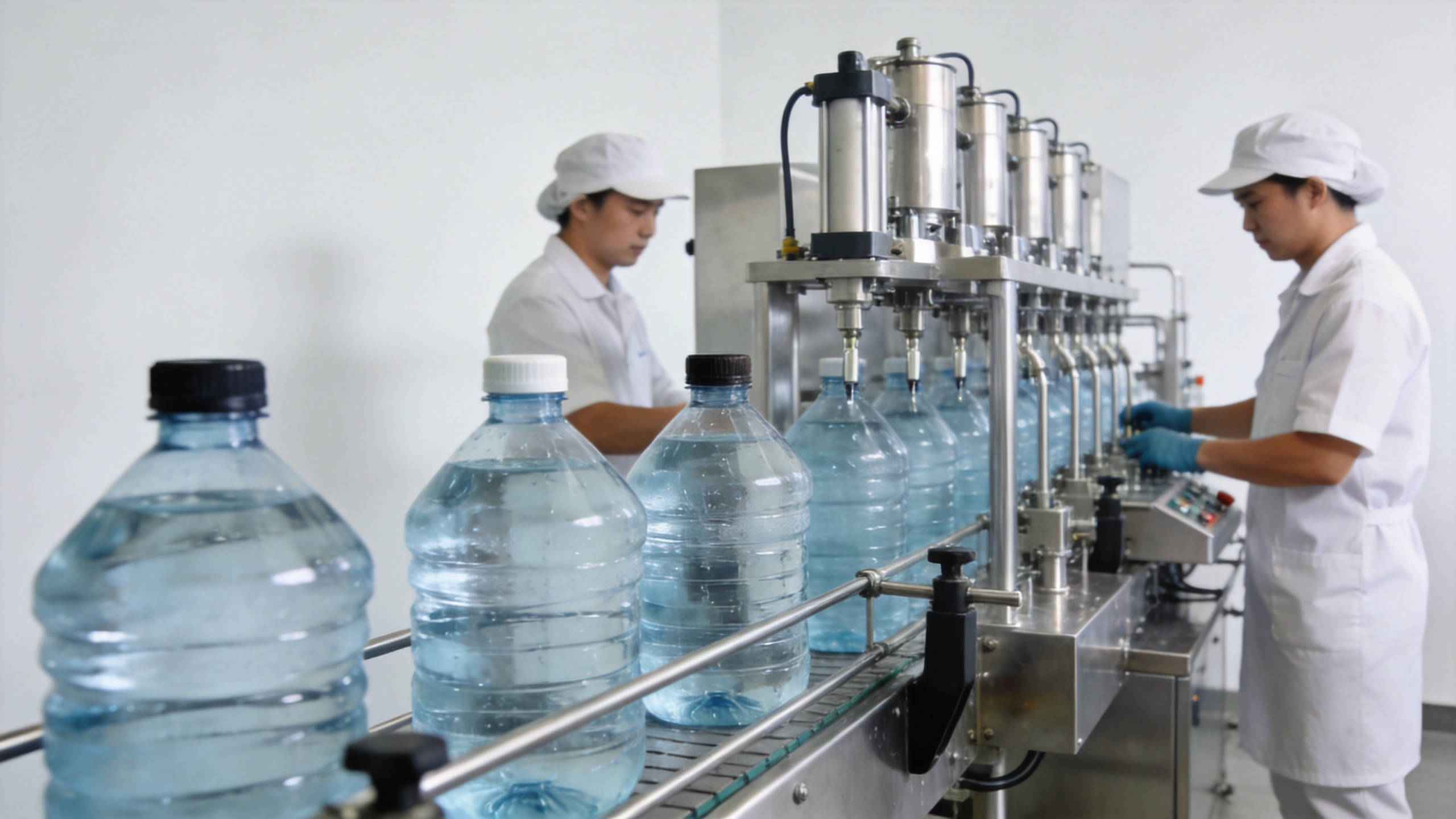
Consistency is the commercial benefit buyers notice every day. A 5 gallon water filling machine can provide a repeatable sequence for positioning, filling, and closing the bottle, helping teams reduce the variation that occurs when work is highly manual. Stable bottle positioning matters because the bottle neck, cap interface, and conveyor transfer must work together.
Still, consistent output is not just a machine setting. Water supply conditions, bottle condition, cap quality, upstream handling, and operator checks all influence results. Before comparing models, define the bottle types in circulation, the expected quality of returned containers, the desired fill-control method, and the inspection points after capping. This prevents a common mistake: attributing every closure or level issue to the filler when the real cause sits upstream or downstream.
For suppliers using a 5 gallon bottle filling machine, a simple written acceptance checklist is often more useful than a broad promise of automation. It can cover bottle alignment, rinse results, fill appearance, cap placement, leak checks, reject handling, and safe conveyor transfer.
3. It helps match output to delivery operations
The essential question is not, “What is the highest theoretical rate?” It is, “Can the 5 gallon water filling machine sustain the output that dispatch needs under normal operating conditions?” A supplier delivering to offices, retailers, or homes often faces peaks around route loading and delivery cycles. Equipment that fits only a peak-rate calculation may create a bottleneck during bottle changeovers, cleaning, or routine checks.
Start by mapping the daily volume, the number of active bottle formats, operating hours, planned sanitation time, and buffer capacity. Then look at the interfaces: empty-bottle staging, treatment equipment, filling, capping, labeling if used, accumulation, and finished-goods handling. From a line perspective, the constraint may not be the 5 gallon water filling machine itself. Conveyance, cap supply, bottle inspection, or operator access can limit the effective rate.
This is why a machine should be evaluated for stable operation and recoverability, not only nominal output. A realistic plan includes time for startup checks, changeovers, minor stops, and cleaning verification.
4. It makes labor and process control easier to scale
As a water supplier grows, a 5 gallon water filling machine can help turn experienced operator knowledge into a clearer sequence of tasks. Operators can follow defined setup points, observe specified checks, record exceptions, and escalate problems at the correct stage. That does not eliminate the need for trained people; it gives them a more manageable process to supervise.
Automation should be judged by the work it removes and the checks it still requires. For example, a 5 gallon water filling machine may streamline repetitive container handling, but the operation still needs controls for incoming bottle condition, sanitation verification, cap supply, finished-bottle inspection, and maintenance. Clear responsibilities reduce the risk that important tasks become “someone else’s job.”
5. It creates a practical basis for maintenance planning
Production reliability depends on whether maintenance can be performed without disrupting every other step. When selecting a 5 gallon water filling machine, review access to wear parts, cleaning zones, sensors, guides, and moving components. Ask how routine inspection is performed, what tools are needed, and whether the layout leaves adequate space for safe service.
A practical maintenance conversation begins before purchase. List the parts likely to need inspection or replacement, identify the information operators should record, and agree on the escalation path for repeat faults. A 5 gallon water filling machine that is easy to observe and service may support more predictable uptime than a more elaborate arrangement that is difficult to clean or diagnose.
A buyer’s validation checklist
Before choosing a 5 gallon water filling machine, commercial suppliers should validate the following points:
- Can the line handle the actual bottle dimensions, neck finish, and condition range in circulation?
- Does the planned wash, rinse, sanitize, fill, and cap sequence align with the facility’s quality procedures?
- Are bottle transfers, cap handling, and accumulation points compatible with the required workflow?
- Can operators access cleaning, inspection, and routine maintenance areas safely?
- What acceptance criteria will demonstrate stable filling, closure quality, and reliable transfer?
- How will the 5 gallon water filling machine fit the real operating schedule, including sanitation and changeover time?
Conclusion
A 5 gallon water filling machine is essential because it helps commercial water suppliers connect hygiene, repeatability, output planning, and maintainability in one controlled process. The right decision is not based on a single specification. It comes from matching the machine and its surrounding workflow to real bottles, real operating conditions, and verifiable acceptance criteria. By reviewing the complete line before purchase, a supplier can build a more dependable foundation for safe, consistent 5-gallon water delivery.
 Hot News








