 EN

Why Choose a Rotary Bottle Filling Machine Over a Linear Liquid Filling Machine for Mass Production
When output targets rise, the question is rarely whether a linear liquid filling machine can fill bottles. It can. The more useful question is whether its stop-and-go motion, bottle handling, and changeover pattern still suit the production rhythm you need. For a liquid bottle filling machine running a stable bottle, cap, and product combination, a rotary architecture often deserves closer attention.
From a packaging-line engineering perspective, the comparison starts with the liquid, container, and target rate—not with a brochure’s highest speed. A linear liquid filling machine moves bottles through stations in sequence; a rotary filler carries them around a continuously indexed or continuously moving carousel. That difference influences throughput, footprint, controls, cleaning, and the way the filler connects with rinsing, capping, labeling, and conveying equipment.
Why rotary designs fit sustained mass production
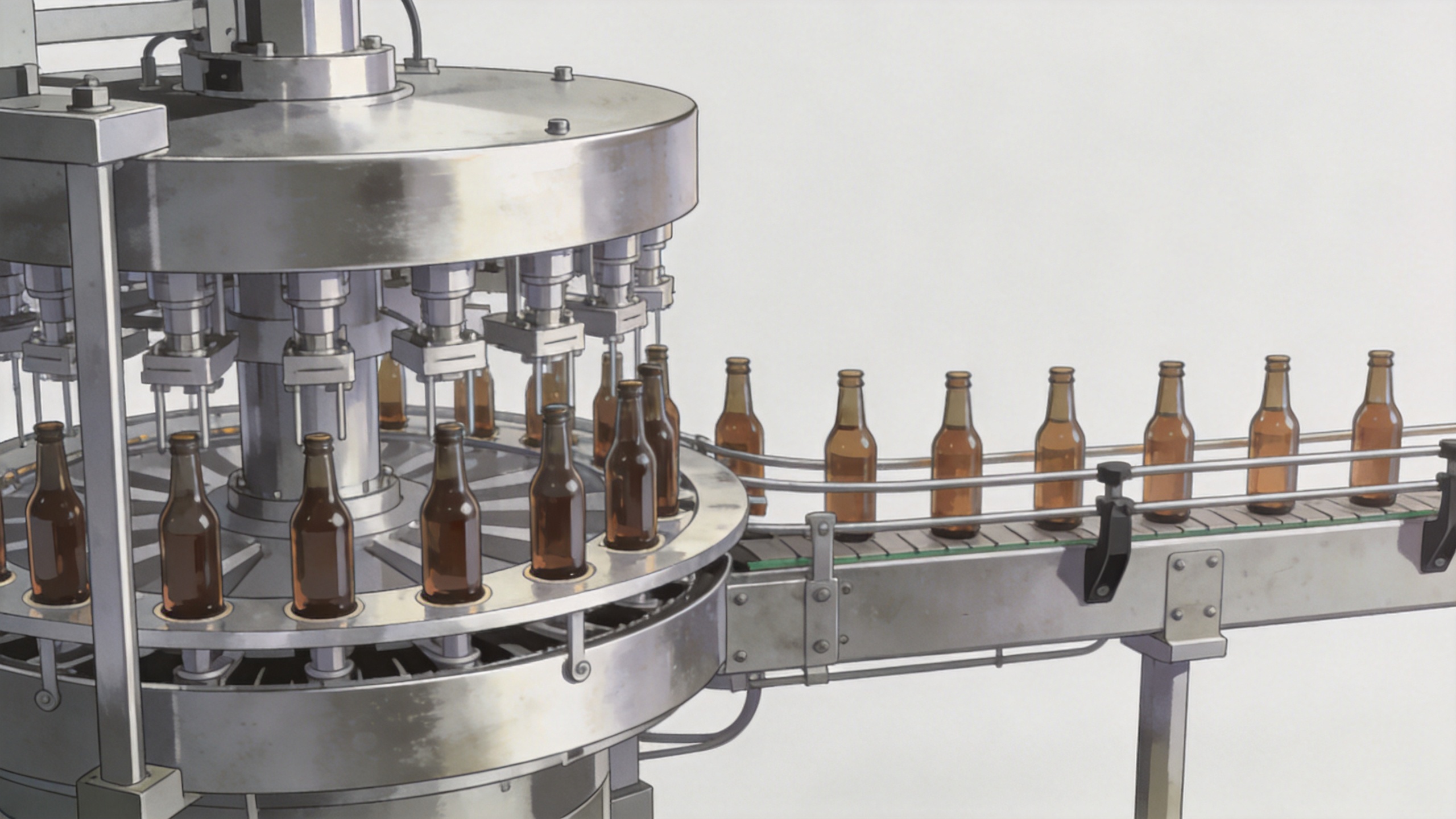
A rotary filler is built around repeated, synchronized motion. Bottles are transferred into a star wheel or comparable handling system, presented to filling valves, and released to the next machine in a predictable cycle. With a stable package family and a well-matched liquid, that rhythm can support higher sustained output than a linear liquid filling machine that must advance, stop, fill, and advance again.
The advantage is not simply “more valves.” It is the way bottle handling, filling time, and discharge are coordinated. At higher rates, accumulated micro-delays become visible: a bottle gap, an unstable infeed, or a capper that cannot accept the discharge pace can reduce real output. A rotary layout can make the filler section more continuous, but the whole line must still be balanced.
Rotary vs. linear: the operating difference that matters
| Decision factor | Rotary bottle filling machine | Linear liquid filling machine |
|---|---|---|
| Production rhythm | Continuous or tightly synchronized circular handling for long, stable runs. | Sequential in-line movement that can suit varied or intermittent runs. |
| Throughput potential | Often favored when a validated high-output rate is the priority. | Often practical where required output is moderate or changing. |
| Changeover | Can require more format parts and setup checks. | May be easier to access and adjust for frequent bottle changes. |
| Line integration | Needs disciplined synchronization with infeed and downstream equipment. | Can be simpler to place within a straight conveyor arrangement. |
| Maintenance access | Requires planned access around the carousel and transfer components. | Often offers more direct access to individual filling heads. |
This is why a linear liquid filling machine is not automatically the lower-quality choice. It may be the better operating choice when product variety, bottle changes, lower initial complexity, or open access for operators matter more than maximum sustained rate.
Choose rotary when the product and package are stable
A rotary filler is usually worth evaluating when a plant runs one or a small number of bottle formats for extended periods. Long production windows give the line time to benefit from its synchronized movement. The case becomes stronger when the infeed, filling, capping, and discharge sections can all operate at the intended rhythm.
For a liquid bottle filling machine, stable supply conditions are just as important as mechanical speed. Liquid level, temperature, viscosity, carbonation or foaming tendency, and the cleanliness requirements of the process influence the filling method and the rate at which it can be verified. More accurately, speed should be treated as an acceptance condition: confirm it with the actual liquid, bottle, fill volume, and closure rather than treating a nominal figure as a confirmed operating result.
When a linear machine remains the smarter investment
Choose a linear liquid filling machine when flexibility is central to the business case. A producer with multiple bottle shapes, shifting order sizes, or frequent product changes may value accessible adjustments over the output advantage of a rotary platform. A linear configuration can also make it easier to inspect filling heads, alter spacing, or integrate a specialized dosing arrangement.
That flexibility matters in early growth stages and mixed-SKU operations. It also matters where the available floor plan favors a straight path. In such cases, a linear liquid filling machine can support reliable production without forcing the plant to buy capacity it cannot keep supplied or packed downstream.
Do not separate filler speed from the rest of the line
One common purchasing mistake is to compare only the filler’s rated bottles per hour. A linear liquid filling machine or rotary filler cannot create useful output if the rinser, cap sorter, capper, labeler, or packing section becomes the constraint. Conveyor timing can amplify upstream variation, and bottle-neck positioning affects fill consistency. Here, bottle handling is one issue and cleaning requirements are another; both deserve separate review.
Before deciding, map the line from empty-bottle supply through final pack-out. Identify buffer capacity, transfer points, reject handling, cap delivery, and the point at which production data will be collected. This turns a generic equipment comparison into an installation plan.
Verify filling performance with the real liquid
Liquid behavior should drive filler selection. Free-flowing still liquids, viscous sauces, products with particulates, and foam-prone beverages do not place the same demands on a linear liquid filling machine or a rotary system. The relevant filling principle, nozzle approach, tank design, and control method must be assessed together.
For regulated or tightly controlled applications, the test plan should also reflect applicable local rules and the product’s measurement needs. OIML R 117-2 includes testing procedures for systems handling beer and other foaming potable liquids, illustrating why verification conditions matter. It does not make one filler type universally correct; it reinforces the need to agree on measurement method, sample conditions, and acceptance limits before purchase.
Compare the cost of operating, not only the purchase price
A rotary solution may involve a more specialized bottle-handling arrangement and a different set of format parts. A linear liquid filling machine may appear simpler to reach and modify. The meaningful comparison therefore includes change parts, cleaning time, planned maintenance, operator training, spare-part planning, and the cost of a stoppage during a peak run.
Ask suppliers to explain the maintenance path, not just the feature list. Can operators reach critical components safely? How is cleaning verified? Which adjustments are recipe-controlled, and which remain manual? The answer should match the plant’s maintenance capability. More automation does not remove the need for inspection.
A practical decision checklist
- Define the required sustained output with the actual liquid, bottle, fill volume, and cap.
- List every planned bottle and product change, including the expected frequency and permitted downtime.
- Check whether the infeed, capper, labeler, and packer can support the intended filler rate.
- Specify the filling principle and cleaning approach needed for the product’s flow and foam behavior.
- Agree on trial-run measurements, reject criteria, and acceptance conditions before final configuration.
- Compare access, format parts, training, and maintenance requirements over the operating life of the line.
The bottom line for mass-production buyers
For long, repeatable runs, a rotary bottle filling machine can be the stronger choice because its synchronized bottle handling is designed for sustained line rhythm. For frequently changing products or bottle formats, a linear liquid filling machine can remain the more practical and economical fit. The decision is conditional: select rotary when stable demand and line integration justify it; select linear when flexibility and accessible changeover carry more value.
Start with samples, bottle drawings, target output, and the downstream layout. Then use a documented trial run to test the assumptions. That process gives a linear liquid filling machine a fair comparison with rotary equipment and helps prevent a high-speed specification from becoming a low-utilization line.

 Hot News








