 EN

What Equipment Is Included in a Complete Turnkey Water Bottling Plant Solution
A turnkey water bottling plant is not simply a filler followed by a capper. It is a coordinated production system that takes approved source water through treatment, filling, inspection, and packing before bottles are ready to ship. From a packaging-line engineering perspective, the practical question is not “Which machine comes first?” but “Which interfaces must work together at the required bottle format and output?” That distinction helps buyers evaluate water bottling plant equipment as a connected system instead of a group of standalone machines.
The final configuration depends on source-water quality, bottle material and size, still or carbonated product, target speed, local rules, and automation level. A compact water bottling plant may combine functions in a small footprint, while a higher-output project can use dedicated modules.
Start with the process map, not a machine list
Before selecting water bottling plant equipment, define the path from incoming water to palletized product: source intake, treatment, treated-water storage, bottle preparation, rinsing, filling, capping, inspection, labeling, packing, and dispatch. Utilities, controls, sanitation, and quality checks cross this whole path. More accurately, capacity is only one part of the brief; water chemistry and container conditions often determine the treatment train and the filler design first.
For a U.S. market example, 21 CFR Part 129 applies sanitary good-manufacturing-practice criteria to bottled drinking water and requires filling, capping, sealing, and packaging to prevent contamination. Local rules and customer standards still require project-specific review.
1. Raw-water intake and treatment equipment
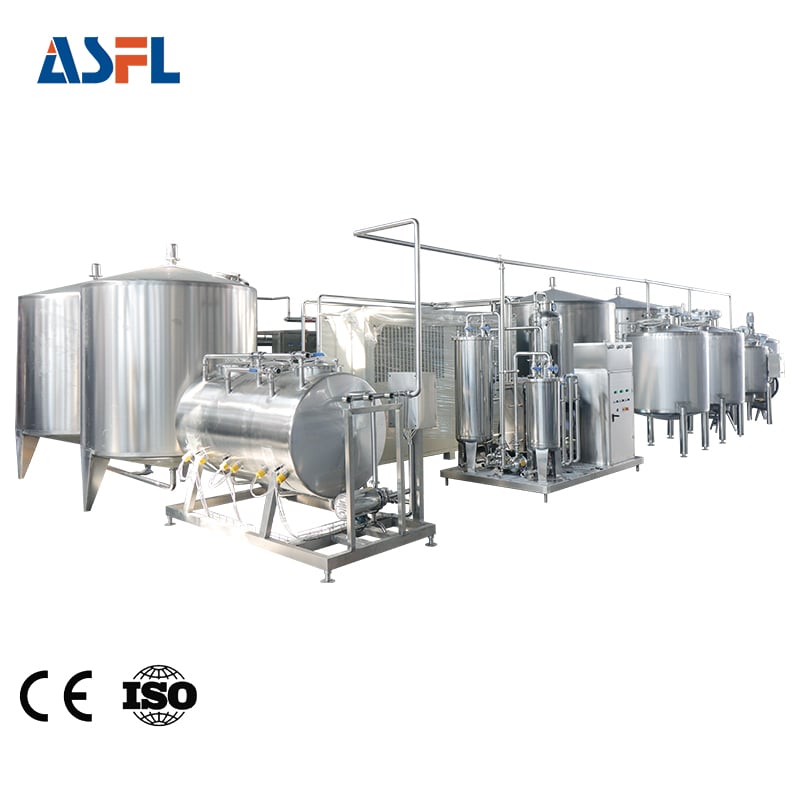
The upstream section makes the water suitable for the intended product and protects downstream equipment. Typical water bottling plant equipment in this area includes:
- Raw-water tank and transfer pumps to receive water and provide stable flow.
- Multimedia or sand filtration to reduce suspended solids where source conditions call for it.
- Activated-carbon filtration when removing taste, odor, or residual chlorine is part of the treatment objective.
- Water softener or dosing equipment when hardness or scale control affects treatment and cleaning performance.
- Reverse-osmosis system when the water analysis and product specification require membrane treatment.
- UV sterilizer and/or ozone system when the validated treatment approach uses these controls.
- Precision filters and treated-water tank to provide final protection and buffer the filler.
These modules are not automatically required in every water bottling plant. Municipal, spring, and well sources can require different treatment and monitoring. Confirm an incoming-water analysis, finished-water specification, and cleaning plan before finalizing the process. If ozone or another disinfectant is selected, engineer its contact time, residual management, materials, and safety controls with the line.
2. Bottle supply, air handling, and rinsing
Once water is ready, containers must reach the filler cleanly and consistently. For PET packaging, a turnkey scope may include a bottle unscrambler or air conveyor for preformed bottles. In-house bottle making can add preform feeding, a blow molder, high-pressure air, chiller, and conveying—changing both footprint and utility needs.
A bottle rinser is commonly paired with the filling block. Bottle guides, change parts, neck handling, and conveyor transitions deserve attention: a correctly specified filler can still lose output when bottles tip, scuff, or queue. Confirm bottle drawings, neck finish, height range, and changeover expectations early.
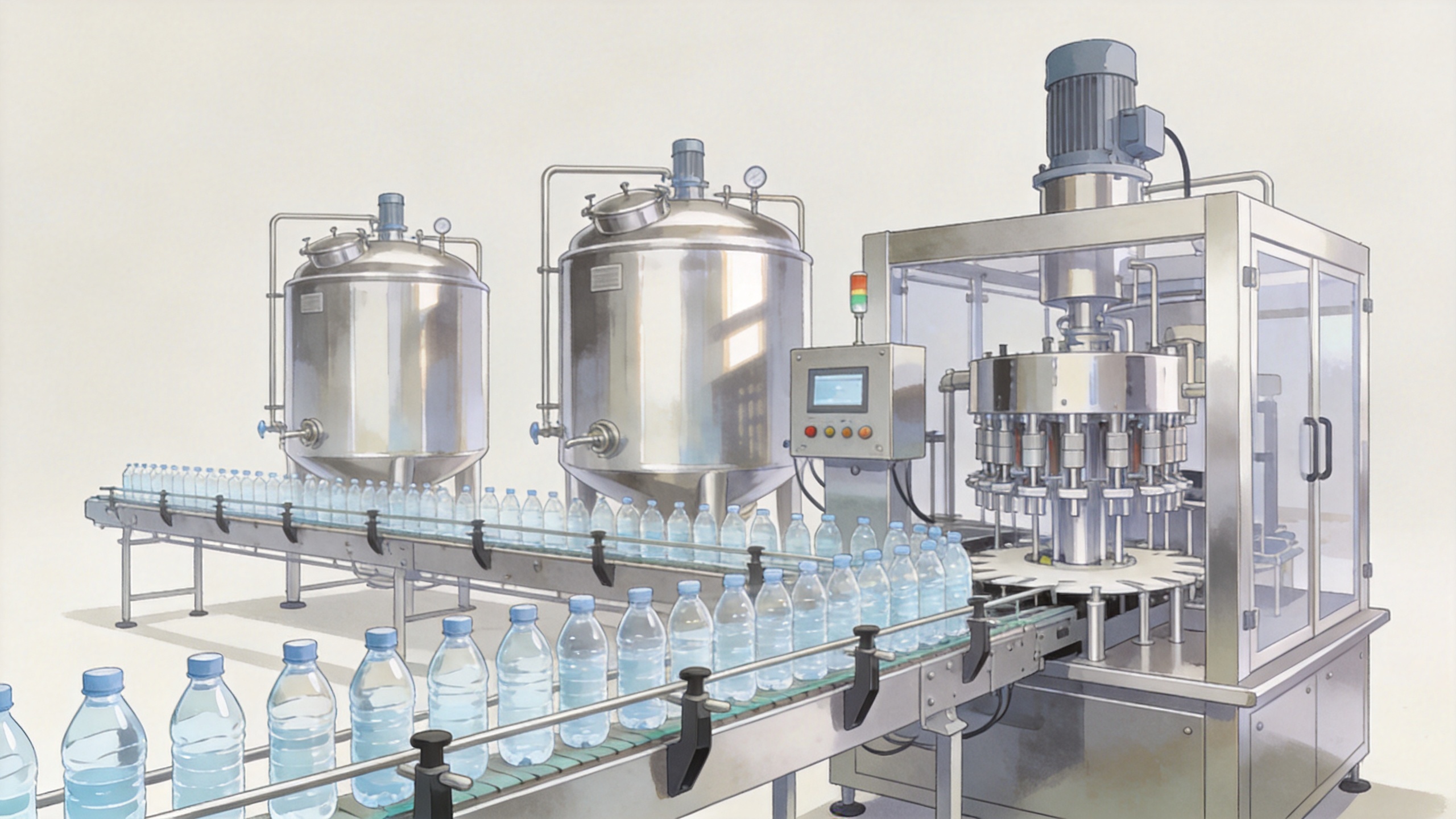
3. Rinsing, filling, and capping monoblock
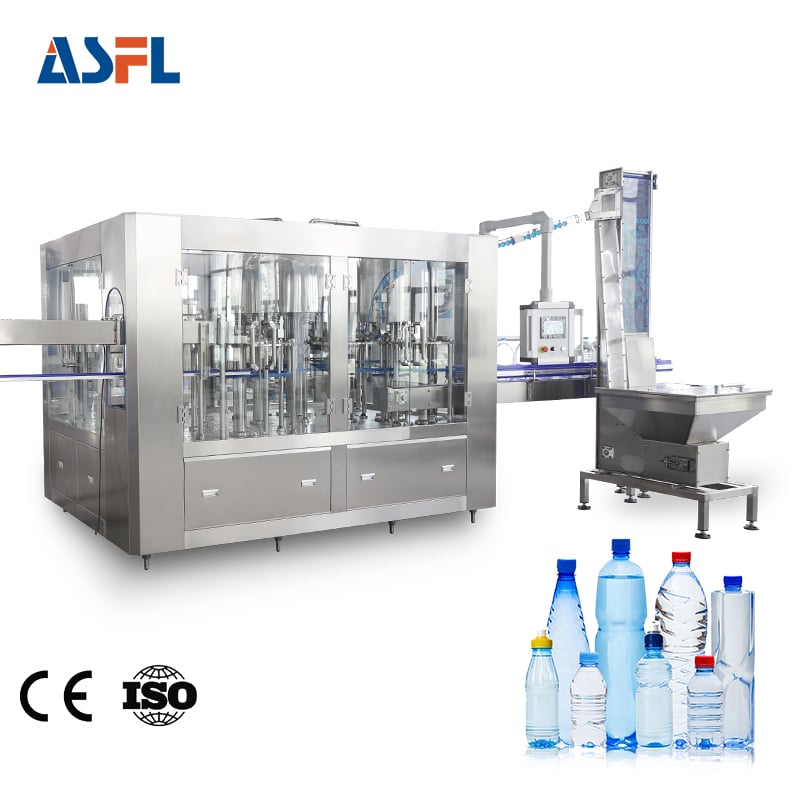
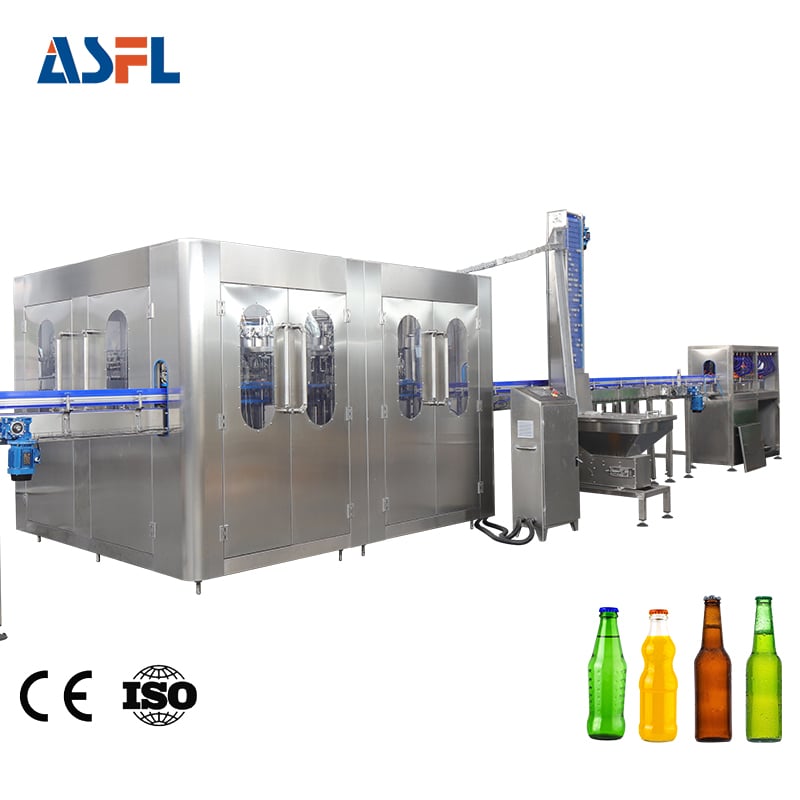
The central machine in most water bottling plant equipment packages is a rinsing-filling-capping monoblock, often called a 3-in-1 block. It brings three hygienically linked operations into one controlled section:
- Rinsing prepares bottles before product contact.
- Filling meters water to the intended level with a method suited to the product and production conditions.
- Capping applies and tightens the closure while controlling cap feed and closure handling.
Filler selection should follow the product and bottle, not a generic speed number. Still water, carbonated water, hot-fill products, and large-format containers create different requirements. Confirm output by bottle size, fill-level tolerance, cap type, contact parts, CIP approach where applicable, and stated operating conditions. Ask how the line behaves at start-up, during stop-and-go operation, and at changeover—not only at maximum rate.
4. Cap handling, inspection, and quality controls
A complete water bottling plant needs more than a capper. A cap elevator or sorter feeds closures to the machine, while sensors and inspection points help identify problems before they reach packing. Depending on the project, the inspection package may include no-bottle/no-fill detection, no-cap detection, cap-presence checks, fill-level inspection, leak testing, bottle rejection, date-code verification, or vision inspection.
Quality-control equipment should match the plant’s risk assessment and destination-market rules. In the U.S. example under 21 CFR Part 129, representative bottled-water samples for total coliform are analyzed at least weekly for each type produced during a day. Include sampling points, records, and reject handling in the scope—not merely visible machines.
5. Labeling, coding, and secondary packaging
After closure inspection, water bottling plant equipment normally moves into presentation and logistics. The end-of-line package can include:
- Pressure-sensitive, sleeve, or hot-melt labeling equipment matched to the bottle and label material.
- Inkjet, laser, or thermal-transfer coding for batch, date, or traceability information.
- Accumulation conveyors that prevent a short downstream stop from immediately halting the filler.
- Shrink wrapper, tray packer, carton packer, or case packer based on the chosen retail configuration.
- Checkweigher, metal detector where applicable, case coder, palletizer, stretch wrapper, and pallet conveyor for a more automated dispatch area.
Packaging selection should begin with the actual pack pattern, film or carton specification, pallet pattern, and warehouse handling method. Reliable filling does not prevent rework if labels wrinkle, trays are unstable, or pallet loads do not match transport conditions.
6. Conveyors, utilities, controls, and sanitation support
Conveyors are the connective tissue of a turnkey system. They link treatment, filling, labeling, and packing while providing enough accumulation to absorb normal variations. The scope should also specify compressed air, water, drainage, electrical distribution, ventilation, CIP or sanitation provisions where needed, and safety guarding. Control panels, variable-speed drives, PLC/HMI screens, interlocks, and line-status signals coordinate the equipment and make faults easier to trace.
From a line-engineering viewpoint, whole-line interfaces matter more than isolated parameters. Verify elevations, product and utility connections, control handshakes, reject flow, and cleaning access. Factory- and site-acceptance plans should test bottle flow, filling, capping, inspection, labeling, and packing together on intended formats.
What should a turnkey supplier’s scope include?
A credible turnkey proposal for water bottling plant equipment should make its boundaries explicit. It should identify the included modules, design assumptions, capacity basis, bottle and cap formats, utility consumption assumptions, electrical standards, layout, change parts, commissioning tasks, operator training, documentation, spare-parts recommendations, and exclusions. It should also show where the buyer must provide civil works, source water, laboratory support, permits, or third-party compliance services.
Do not treat every item as mandatory. In-house blow molding, an automated palletizer, or extensive inspection may suit some water bottling plant projects but not others. Choose the solution that meets the approved specification with a clear validation path.
A buyer’s final checklist
- Confirm water-source data and the finished-water specification.
- Lock the bottle, neck, cap, label, and pack-format drawings.
- Set the required output by bottle size and define the production schedule behind it.
- Map the treatment, hygienic filling, inspection, and packing interfaces.
- Review utilities, drainage, cleaning access, safety, and local compliance obligations.
- Request an integrated layout, acceptance criteria, commissioning plan, and training scope.
In short, complete water bottling plant equipment covers the complete route from source-water treatment to pallet-ready packs, plus the controls and validation activities that make the route reliable. Start with the water, container, and output requirements; then configure each module around those facts. That approach produces a more usable water bottling plant than selecting isolated machines by headline speed alone.
 Hot News








