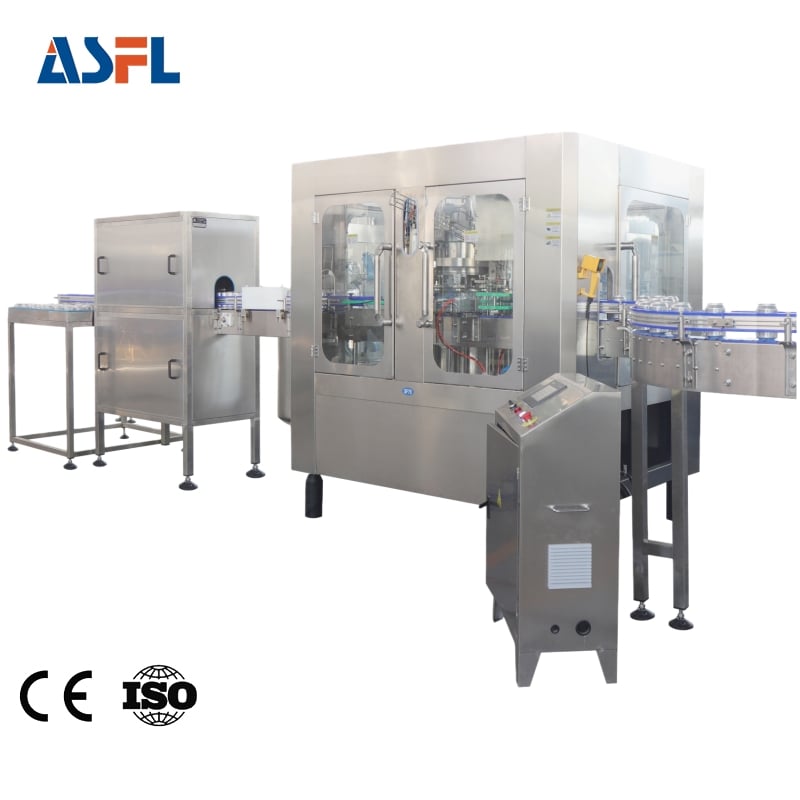
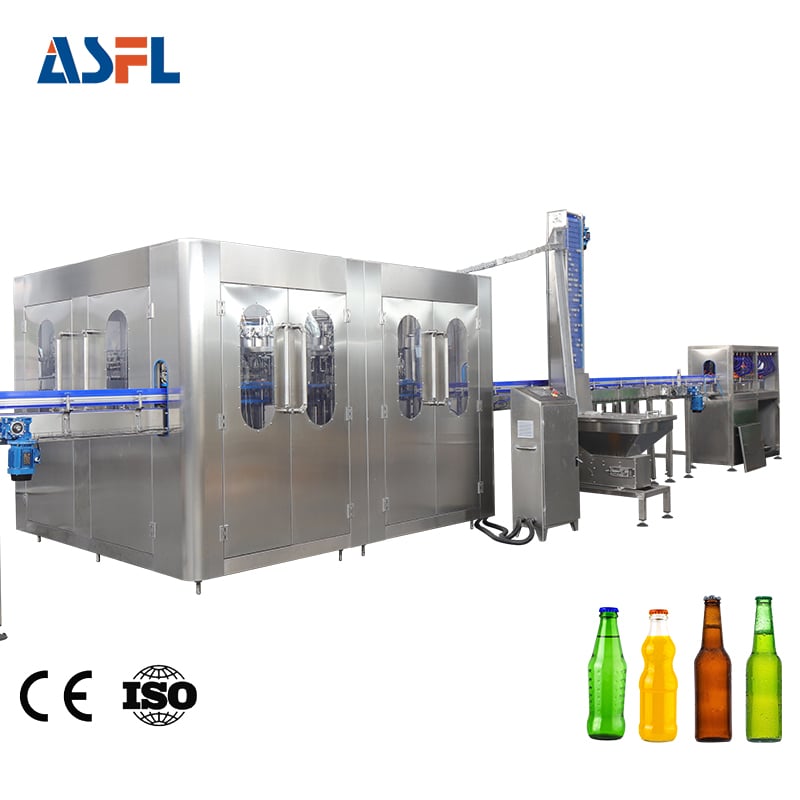
Establishing strict compliance with international hygienic frameworks is essential for any brewery seeking to protect product shelf stability and flavor integrity. Understanding which international beer bottling equipment sanitation requirements govern liquid-contact machinery allows brewery engineers to select fillers that eliminate wild yeast, Lactobacillus, and Pediococcus contamination. Because beer contains fermentable sugars, low pH, and alcohol, even microscopic microbial harborage inside dynamic valves causes cloudiness, off-flavors, and package re-fermentation.
Engineering a fully compliant filling monoblock requires integrating multiple global sanitary directives into the machine architecture. Adhering to recognized beer filler sanitary standards guarantees that fluid-contact alloys, dynamic rubber seals, internal surface polishes, and automated CIP loops perform reliably under aggressive washdown conditions. International frameworks such as EHEDG (European Hygienic Engineering & Design Group), 3-A Sanitary Standards, FDA 21 CFR 177, and ISO 22000 dictate structural parameters that prevent biofilm formation. Equipment manufactured by ACE-FILLING incorporates these core guidelines directly into physical equipment design, establishing reliable EHEDG beer bottling sanitation protocols and robust brewery bottling hygienic compliance across high-speed packaging plants.
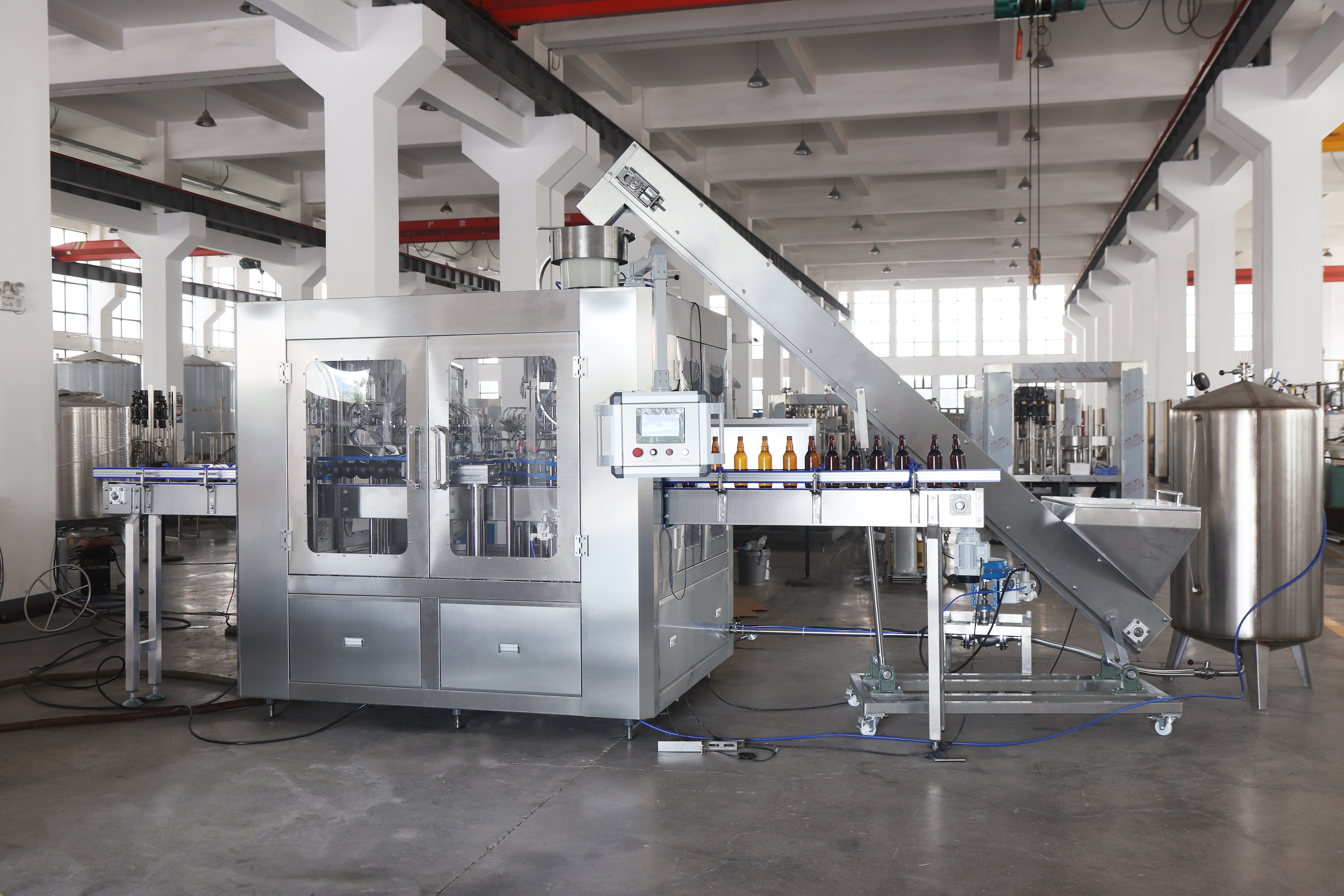
International regulatory bodies publish detailed technical specifications governing liquid packaging machinery construction. Each standard addresses distinct aspects of machine engineering, ranging from material metallurgy to automated washdown validation.
EHEDG Guidelines (Doc 8, 13, and 20): Enforce self-draining structural geometry, smooth internal radiuses, and zero-dead-leg valve designs to guarantee complete Clean-in-Place (CIP) fluid scouring across all internal channels.
FDA Title 21 CFR 177: Mandates that all dynamic rubber seals, gaskets, and synthetic diaphragms utilize food-grade polymers (such as EPDM, PTFE, and FKM) that resist thermal degradation and chemical leaching during 85 degrees Celsius caustic washes.
3-A Sanitary Standards (Class 78-00): Dictate physical criteria for spray cleaning devices, liquid storage bowls, and positive displacement pumps, enforcing high-precision surface roughness limits for all metal contact zones.
ISO 22000 and HACCP Protocols: Require comprehensive Hazard Analysis Critical Control Point tracking for food safety management, ensuring verifiable CIP temperature, pressure, and flow logging during commercial operations.
The following compliance matrix details how primary hygienic standards govern key mechanical subsystems within modern filling machinery:
| Regulatory Standard | Target Subsystem | Mandatory Engineering Specification | Impact on Beer Bottling Equipment Sanitation Requirements |
|---|---|---|---|
| EHEDG Guideline Doc 8 | Internal Liquid Bowl & Valves | Self-draining surfaces with internal radius > 6 mm | Eliminates liquid retention pockets, enhancing EHEDG beer bottling sanitation efficiency |
| FDA 21 CFR 177.2600 | Dynamic Seals & O-Rings | Non-toxic, non-absorbent EPDM/PTFE polymers | Prevents chemical leaching and seal erosion under beer filler sanitary standards |
| 3-A Sanitary Standard 78-00 | Stainless Steel Contact Parts | Mechanical & electropolished Ra <= 0.4 micrometers | Minimizes bacterial adhesion and biofilm growth to meet brewery bottling hygienic compliance |
| ISO 2852 / DIN 11851 | Sanitary Pipe Unions | Zero-dead-leg hygienic Tri-Clamp connections | Eliminates threaded pipe crevices that harbor wild yeast and bacteria |
Meeting rigorous beer bottling equipment sanitation requirements requires selecting precise materials and applying high-grade surface treatments across all liquid-touch zones. Standard industrial stainless steel alloys feature microscopic pitting and weld seams where microbial spores lodge, resisting standard sanitizing flushes.
To satisfy strict beer filler sanitary standards, contact components—such as the central beer bowl, gas manifolds, and filling valve bodies—are fabricated exclusively from AISI 316L stainless steel. Non-contact structural frames utilize AISI 304 stainless steel with sloped, self-draining profiles to prevent standing wash water.
Furthermore, liquid-contact channels undergo multi-stage mechanical polishing followed by electropolishing to achieve an ultra-smooth surface finish with a roughness average (Ra) value less than or equal to 0.4 micrometers. Electropolishing removes surface iron inclusions, creating a passive, chromium-rich oxide layer that resists localized pitting corrosion caused by acidic sanitizers and hot sanitizing steam. Adhering to these metallurgical parameters guarantees that EHEDG beer bottling sanitation guidelines are satisfied throughout years of continuous operation.
Relying on manual teardown for routine sanitation introduces human error and increases line downtime. Advanced brewery bottling hygienic compliance mandates automated Clean-in-Place (CIP) and Sterilization-in-Place (SIP) systems capable of executing multi-stage sanitization recipes without dismantling fluid distribution lines.
Automated Pneumatic CIP Fake Cups: Pneumatic actuators lower stainless steel recirculation cups over filling valve nozzles automatically, forming a closed fluid loop that circulates sanitizing chemicals through all dynamic valve seats.
Multi-Stage Chemical Circulation: Automated PLC routines execute sequential washes, including 80 degrees Celsius hot caustic (1.5% to 2.0% NaOH) for organic soil removal, followed by an acid rinse (peracetic acid or phosphoric acid) to neutralize mineral scale.
Turbulent Scouring Velocity: Electromagnetic flow meters verify that CIP wash solution maintains a minimum fluid velocity of 1.5 to 2.0 meters per second through all valve manifolds, providing physical mechanical scouring action against internal walls.
SIP Thermal Sterilization: Steam-capable filling monoblocks withstand saturated inline steam at 121 degrees Celsius for 30 minutes, achieving 100 percent microbiological destruction across all filling circuits.
Integrating these automated cleaning loops ensures that every packaging batch satisfies global beer bottling equipment sanitation requirements while protecting operational efficiency.
To confirm that packaging machinery complies with global beer filler sanitary standards, ACE-FILLING subjects every bottling system to rigorous pre-dispatch factory acceptance testing and hygienic validation.
Fluorescent Riboflavin Spray Coverage Testing: Technicians coat internal liquid contact surfaces with fluorescent riboflavin solution and execute an automated CIP cycle, verifying 100 percent removal of trace residues under ultraviolet light.
Surface Roughness Profilometer Audits: Digital surface roughness gauges inspect internal bowl welds, valve stems, and pipe fittings to confirm Ra values remain below 0.4 micrometers.
Hydrostatic Shell and Valve Pressure Testing: Product storage bowls and fluid manifolds undergo 4-hour hydrostatic pressure testing at 1.5 times working pressure to verify weld integrity and zero seal leakage.
Microbiological Swab and CIP Validation: Post-sanitization swab samples taken from dynamic valve seats, gas return tubes, and capping chucks are incubated to verify zero colony-forming units (CFU) for wild yeast, Lactobacillus, and Pediococcus.
Brewery directors, quality assurance managers, and packaging engineers seeking compliant, high-performance bottling solutions can examine complete technical specifications and modular machinery configurations at the official
 Hot News
2026-11-20
2026-11-20
2026-11-20
2026-11-20
2026-11-19
2026-11-19
 EN