 EN

Technical Foundations of Mechanical Shock and Thermal Stress Mitigation
Minimizing container damage on an automated bottling line requires a deep engineering focus on mechanical impact zones, thermal dynamics, and line synchronization. For high-speed bottling plants, learning how to reduce bottle breakage rate automatic glass bottle filling machine operations is vital to protecting product yield, preventing micro-shards from contaminating adjacent containers, and lowering overall equipment maintenance costs. Glass containers, while offering superior barrier properties and premium shelf appeal, possess brittle physical structures that react severely to physical misalignment and sudden temperature fluctuations.
A comprehensive approach to glass bottle filler breakage reduction begins with controlling mechanical contact points throughout container transport. When glass bottles collide along starwheel transfer guides, experience improper lift pedestal alignment, or undergo sudden thermal shocks during hot filling cycles, structural stress cracks propagate instantly into catastrophic fractures. Addressing automatic glass bottle filling machine breakage requires deploying precision servo-driven transfer mechanisms, cushioned bottle pedestals, and strict thermal gradient controls. Manufacturers like ACE-FILLING integrate these advanced structural safety mechanisms directly into their equipment designs, establishing robust glass bottle filling line breakage control standards that preserve glass container integrity under high-speed production conditions.
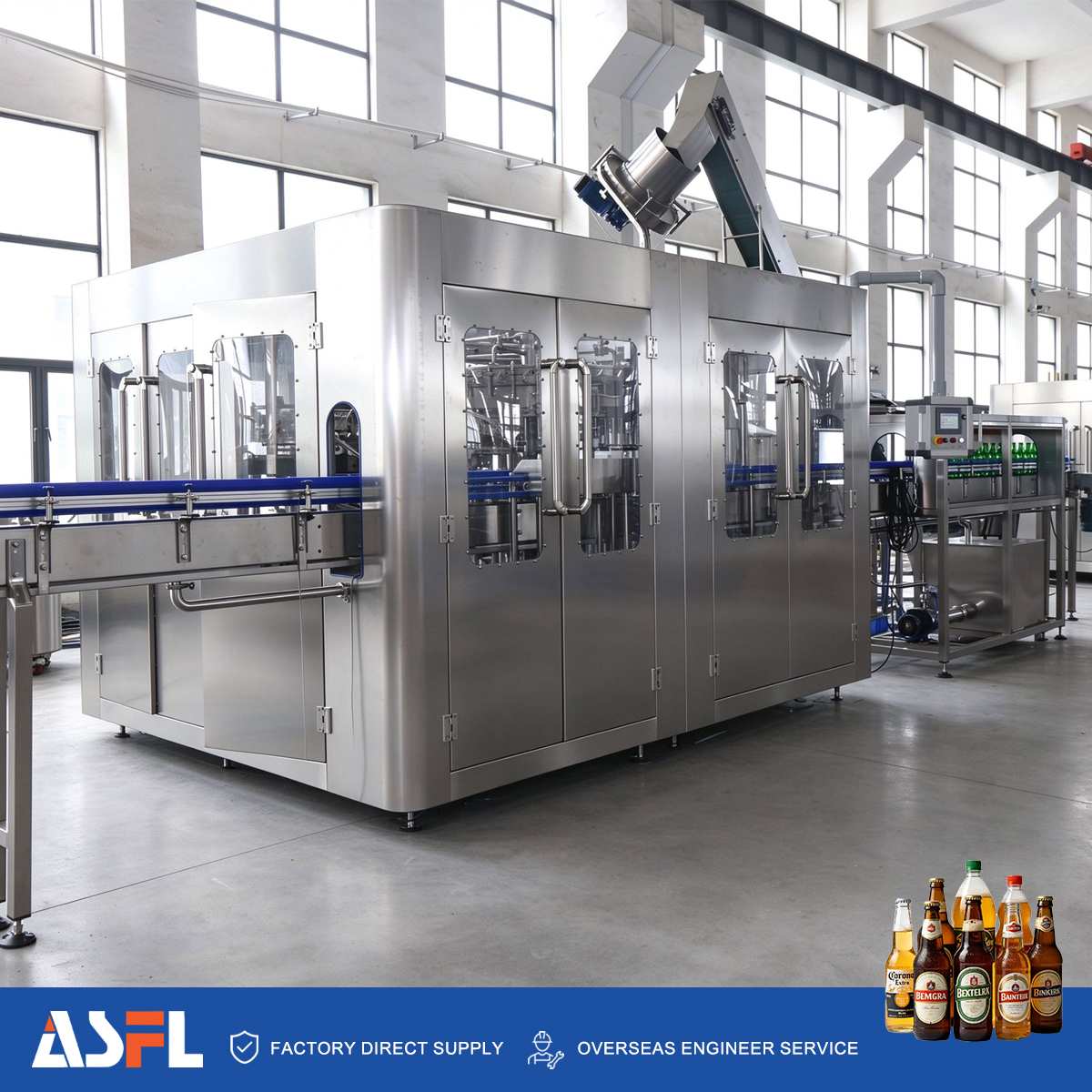
Mechanical Alignment and Soft-Conveying Turret Architecture
The primary mechanical driver of glass bottle fracturing during automated filling is off-axis impact between the bottle neck and the filling valve assembly. Achieving effective glass bottle filler breakage reduction requires maintaining absolute concentric alignment across every starwheel pocket, lift cylinder pedestal, and counter-pressure valve stem.
-
Pneumatic Lift Pedestal Cushioning: Mechanical spring pedestals can create high mechanical shock during upward bottle engagement. Replacing rigid springs with double-acting pneumatic lift cylinders featuring internal air buffering absorbs vertical contact spikes, making it easier to reduce bottle breakage rate automatic glass bottle filling machine lines experience.
-
Ultra-High Molecular Weight Polyethylene (UHMW-PE) Starwheels: Utilizing self-lubricating UHMW-PE guide plates and composite starwheels reduces surface friction coefficient during container transfers, preventing glass-to-metal impact scuffing and reducing overall automatic glass bottle filling machine breakage.
-
Soft-Start Infeed Timing Screws: Variable-pitch continuous timing screws accelerate incoming glass bottles smoothly, separating container queues into exact pitch intervals before starwheel entry to reinforce glass bottle filling line breakage control.
-
Torque-Limiting Safety Clutches: Integrating electronic overload torque sensors into the main drive carousel disengages rotation immediately upon detecting a jammed or tilted bottle, preventing downstream container crushing.
The following parameter comparison highlights structural modifications designed to prevent physical container failure across filling stations:
| Machinery Subsystem | Conventional Rigid Design | Anti-Breakage Optimized Specification | Operational Impact on Glass Bottle Filler Breakage Reduction |
| Bottle Lift Mechanism | Mechanical coil spring pedestals | Pneumatic buffering cylinders with proportional control | Prevents top-load crushing spikes and supports efforts to reduce bottle breakage rate automatic glass bottle filling machine setups face |
| Starwheel Contact Surface | Cast stainless steel guide rails | UHMW-PE wear plates with dampening inserts | Eliminates surface scuffing and reduces physical automatic glass bottle filling machine breakage risks |
| Main Drive Transmission | Legacy gear train with mechanical friction clutch | Synchronized multi-axis direct servo drives | Ensures smooth speed transitions, strengthening glass bottle filling line breakage control |
| Infeed Container Indexing | Fixed-pitch mechanical timing screw | Servo-driven variable pitch timing scroll | Minimizes container-to-container impact forces during high-speed line entry |
Thermal Gradient Control and Hot Fill Thermal Shock Prevention
Glass container failure frequently occurs during warm or hot liquid filling due to severe thermal shock. When cold glass bottles encounter hot liquids, thermal expansion occurs rapidly on the inner wall while the outer wall remains cold. If the temperature differential exceeds 40 degrees Celsius, internal tension forces exceed the tensile strength of the glass, causing instant stress fracturing.
Implementing rigorous thermal control protocols is essential to reduce bottle breakage rate automatic glass bottle filling machine operations encounter during hot beverage processing. Advanced glass bottle filling line breakage control strategies incorporate multi-stage bottle pre-heating tunnels before liquid enters the filling carousel.
-
Multi-Stage Pre-Heating Rinsers: Rinsing containers with progressively warmer water steps—raising container temperature from ambient 20 degrees Celsius to 55 degrees Celsius—prepares glass structures for 85 degrees Celsius liquid filling, supporting effective glass bottle filler breakage reduction.
-
Proportional Valve Temperature Monitoring: Automated temperature sensors monitor liquid bowl temperatures continuously, shutting down liquid feed valves if product temperatures drift beyond calibrated thermal shock limits.
-
Post-Fill Temperature Cooling Ramps: Gradual multi-zone cooling tunnels reduce bottle temperatures step-by-step post-capping, avoiding sudden thermal contraction fractures and controlling automatic glass bottle filling machine breakage.
Conveyor Line Lubrication, Pressureless Handling, and Burst Bottle Cleanup
Preventing container damage requires evaluating the entire line layout beyond the primary filling turret. High line pressure along single-file conveyors forces glass bottles against each other, creating hairline micro-fractures that burst under counter-pressure filling.
Proper glass bottle filling line breakage control relies on pressureless accumulation conveyors and specialized wet lubrication systems to minimize line pressure. Furthermore, when an unavoidable defective bottle bursts inside the filler, rapid automated cleanup protocols prevent glass shards from damaging surrounding valve seals or neighboring containers.
-
Automated Burst Bottle Washdown: High-pressure water spray nozzles activate automatically upon detecting a container pressure drop, washing away glass fragments from the lift pedestal before the next filling cycle, helping to reduce bottle breakage rate automatic glass bottle filling machine lines experience.
-
Sanitary Synthetic Line Lubrication: Applying FDA-compliant synthetic lubricants to stainless steel tabletop chains lowers friction coefficients below 0.1, allowing bottles to glide smoothly without tipping and reducing automatic glass bottle filling machine breakage.
-
Pressureless Accumulation Tables: Multi-strand side-shifting conveyor beds decouple upstream rinsing from downstream filling, eliminating inter-container pressure build-up.
Factory Quality Verification and Line Testing Protocols
To verify that structural anti-breakage features deliver measurable glass bottle filler breakage reduction, ACE-FILLING subjects all glass bottling machinery to rigorous pre-shipment acceptance testing.
-
Concentric Alignment Verification: Dial indicators measure vertical and rotational concentricity between lift pedestals and filling valve nozzles, maintaining alignment tolerances within 0.2 millimeters.
-
Dynamic Top-Load Pressure Testing: Pedestals undergo load cell testing to verify that vertical sealing pressure remains strictly within safe structural limits for specific glass wall thicknesses.
-
Thermal Gradient Challenge Trials: Glass bottles undergo simulated thermal shock cycles up to max rated temperature differentials to verify zero stress cracking across 5,000 consecutive containers.
-
Automated Burst Cleanout System Audit: Simulated bottle breakage tests confirm that automated washdown sprays purge 100% of glass debris from pedestals within 3 seconds.
Beverage manufacturers seeking to protect container integrity and optimize glass packaging efficiency can review comprehensive machinery specifications and customized tooling options at the official
 Hot News








