 EN

Technical Engineering Foundations for Packaging Line Speed Synchronization
Synchronizing automatic bottle packing machine speed with upstream filling line throughput is a core operational challenge in modern beverage and liquid packaging plants. If the downstream case packer or shrink wrapper operates slower than the primary filler, bottle accumulation zones flood rapidly, causing backpressure jams, container scuffing, and micro-stops. Conversely, if secondary packaging machinery runs excessively fast, intermittent dry cycles cause excessive mechanical wear and inefficient power consumption. Achieving optimal bottle case packer speed synchronization requires precise V-graph line balancing calculations, dynamic accumulation buffering, and automated communication architecture across the packaging line.
To establish precise packaging line speed balancing, process engineers evaluate the V-graph sizing principle. Under standard packaging line design standards, the primary filler serves as the critical line bottleneck and speed baseline (100% rated capacity). Downstream machinery—including labelers, cartoners, and case packers—must feature a continuous overspeed capacity of 10% to 20% to clear upstream surges during brief interruptions. Incorporating these principles into plant layouts engineered by ACE-FILLING ensures continuous container movement, minimizes mechanical shock, and stabilizes filling line throughput matching performance.
V-Graph Speed Sizing and System Dynamics Matrix
Balancing automatic bottle packing machine speed involves allocating strategic speed multipliers along the conveyor route. Downstream packaging equipment relies on progressive speed increments to prevent accumulation build-up when upstream machines recover from minor stoppages.
-
Primary Filling Monoblock Baseline: Functions as the operational speed anchor (e.g., 12,000 bottles per hour) to establish consistent filling line throughput matching.
-
Labeling Unit Sizing: Operates at 105% to 110% of filler speed to prevent bottle backing into the capping zone.
-
Case Packer Sizing: Operates at 115% to 120% of filler speed, providing instant surge capacity to clear conveyor accumulation zones after cardboard tray or film roll changes.
-
Palletizing System Sizing: Operates at 125% of filler speed to ensure total downstream clearance and prevent palletizer starvation.
The following engineering matrix outlines the technical parameters and overspeed ratios required to achieve optimal bottle case packer speed synchronization:
| Line Section | Machine Function | Speed Ratio vs. Filler | Technical Design Parameter | Operational Impact on Packaging Line Speed Balancing |
| Primary Stage | Isobaric/Gravity Liquid Filler | 100% (Baseline Target) | Constant-torque direct drive monoblock | Sets master pulse frequency for filling line throughput matching |
| Buffer Zone | Pressureless Accumulation Table | 3 to 5 Minutes Buffer Time | Multi-strand low-friction tabletop chain | Prevents line stoppages during brief downstream tape or film reel changes |
| Secondary Stage | Automatic Case Packer / Wrap-Around | 115% to 120% Overspeed | Multi-axis servo pick-and-place gantry | Ensures rapid clearance of accumulated bottles to preserve automatic bottle packing machine speed stability |
| tertiary Stage | Robotic/Gantry Palletizer | 125% Overspeed | High-payload servo gripper arm | Guarantees downstream clearance and reinforces overall bottle case packer speed synchronization |
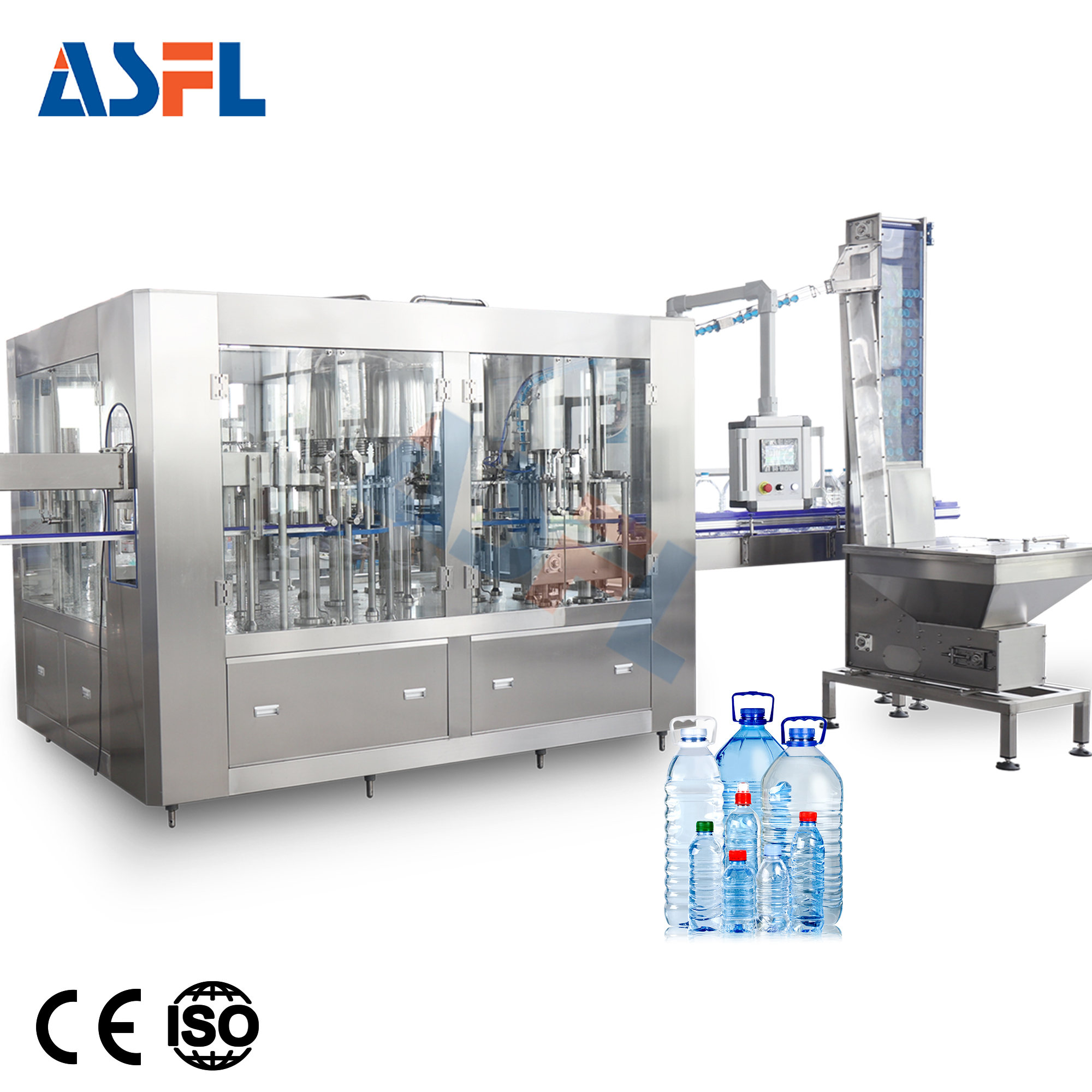
Variable Frequency Drives, Photo-Eye Sensors, and Closed-Loop PLC Control
Achieving real-time bottle case packer speed synchronization requires sophisticated industrial sensor feedback circuits and variable frequency drive (VFD) controls. Modern packaging lines eliminate manual speed adjustments by linking conveyor VFDs directly to programmable logic controllers (PLCs).
Photo-eye sensors positioned along conveyor lanes monitor container accumulation density. As bottle queues reach high-level thresholds, the PLC signals the downstream case packer VFD to accelerate smoothly, adjusting automatic bottle packing machine speed to match incoming flow without sudden stopping or starting.
-
Low-Level Pressure Sensors: Detect empty conveyor zones and signal downstream packers to decelerate or enter standby mode, reducing energy consumption and mechanical wear.
-
Pressureless Conveyor Dividers: Utilize variable-speed side belts to guide multi-lane bottle channels smoothly into case packer infeed lanes without bottle jamming.
-
EtherCAT Communication Protocols: Fieldbus protocols transmit real-time speed data between the filler monoblock and downstream packers, ensuring responsive packaging line speed balancing.
-
Servo-Driven Infeed Screw Feeders: Dynamically index bottle spacing at variable speeds, ensuring stable container pickup regardless of conveyor density changes.
Pressureless Accumulation Design and Line Buffer Calculations
An essential component of effective filling line throughput matching is the integration of pressureless accumulation tables between the labeling unit and the secondary packing machine. Accumulation zones decouple upstream filling from downstream packing, allowing the primary filler to continue operating during short case packer tape reloads or cardboard jam clearing.
Calculating accumulation size requires measuring the total reaction time needed for operators to rectify minor downstream issues. For a 12,000 bottle-per-hour line, a 3-minute buffer zone requires storing approximately 600 bottles. Implementing multi-lane low-friction tabletop chains prevents bottle-to-bottle pressure, protecting glass labels and thin-walled PET containers while maintaining constant automatic bottle packing machine speed flexibility.
-
Low-Friction Acetal Chains: Minimize surface drag and bottle tipping during accumulation surges.
-
Dynamic Modulating Conveyor Speed: VFD-driven conveyor tracks automatically ramp speed up or down based on real-time bottle density signals.
-
Zero-Pressure Lane Dividers: Prevent high-density bottle wedging at case packer entry gates, maintaining smooth bottle case packer speed synchronization.
Quality Inspection and Line Performance Testing Protocols
To verify that automatic bottle packing machine speed profiles harmonize perfectly with overall filling line throughput matching requirements, ACE-FILLING subjects every integrated packaging line to systematic Factory Acceptance Testing (FAT) before shipment.
-
Step-Load Speed Ramp Testing: Technicians vary filler operational speed from 50% to 105% capacity to verify that downstream VFDs modulate case packer speeds automatically without operator intervention.
-
Induced Downstream Stoppage Simulation: The case packer is stopped intentionally for 3 minutes during full-speed operation to verify that accumulation tables absorb incoming bottle volume without forcing a primary filler shutdown.
-
Transient Bottleneck Recovery Audit: Following a simulated stoppage, the case packer operates at 120% overspeed to clear accumulated inventory and restore standard baseline buffer levels.
-
Container Impact and Scuffing Verification: Bottle surface inspection sensors verify zero label scratching, glass scuffing, or PET container deformation during high-density line buffering tests.
Plant engineers and project teams seeking to optimize secondary packaging line efficiency can explore full equipment specifications and automated line integration options at the official




 Hot News








