 EN

A counter pressure beer bottle filler does more than move beer from a tank into a bottle. It manages the pressure relationship between carbonated beer, the bottle headspace, and the relief path while the line is running. When that relationship changes from bottle to bottle, foam, fill height, dissolved oxygen exposure, and capper performance can all become harder to control.
From a packaging-line engineering viewpoint, the useful question is not whether a counter pressure beer bottle filler can fill a bottle. It is whether the machine can repeat the same pressure sequence at the intended production rhythm. Stable back pressure gives the liquid a controlled environment in which to enter the bottle, rather than forcing carbonation to break out as soon as filling begins.
What back pressure does in a beer bottle filling cycle
Before product enters, a counter pressure beer bottle filler typically seals on the bottle, removes or displaces air according to the line design, and brings the bottle close to the pressure of the beer circuit. Product can then flow with a smaller pressure difference. A controlled relief route lets gas leave as beer occupies the bottle volume.
That sequence matters because carbonated beer reacts quickly to a large pressure drop. If bottle pressure is too low, or if the relief valve opens too quickly, carbon dioxide can come out of solution inside the bottle. The result may be excessive foam, variable fill levels, product loss, or a wet closure area. A stable counter pressure beer bottle filler keeps this transition predictable from one filling head and bottle to the next.
Why pressure variation becomes a production problem
Foam changes the effective fill volume
Foam is not only a visual nuisance. It changes the boundary between liquid and headspace while the bottle is being filled. On a multi-head counter pressure beer bottle filler, one head that vents faster than the others can produce a different foam profile and a different final fill condition. Operators may react by changing the overall setting, yet the underlying issue can remain isolated to a valve, seal, gas path, or bottle contact point.
Stable back pressure makes the gas release rate more repeatable. This gives the fill valve a more consistent flow environment and gives the line a clearer basis for judging whether an out-of-tolerance bottle comes from pressure control, product temperature, bottle condition, or timing.
Carbonation retention depends on the pressure path
A counter pressure beer bottle filler works with carbonated beer most effectively when the bottle pressure approaches the product pressure before product flow begins. There is no single pressure setting that applies to every beer: beer temperature, carbonation level, bottle geometry, filling speed, and valve design all matter. The operational principle is to avoid a sudden, uncontrolled pressure difference.
For day-to-day production, record actual pressure behavior rather than relying only on a regulator setpoint. A counter pressure beer bottle filler may show a nominally correct supply value while a restricted gas line, leaking O-ring, or drifting relief mechanism creates a different condition at the bottle. Looking at the pressure sequence and the resulting foam pattern together is more useful than treating either as an isolated symptom.
Pressure control supports oxygen management
Packaging guidance commonly describes dissolved oxygen as a process result influenced by temperature, pressure, residual air, leaks, agitation, and exposure time. A counter pressure beer bottle filler cannot make oxygen control a one-component task, but a stable filling cycle supports the rest of the program. Predictable purging, sealing, pressurization, filling, and closure timing reduce the number of process changes that must be investigated when oxygen results move.
A useful check is to compare measurements at the bright tank outlet, the beer manifold, and finished packages using the brewery’s validated method. If results rise near the counter pressure beer bottle filler, inspect fill-head seals, gas connections, product paths, and the interval between filling and capping. Some beer-quality references use finished dissolved-oxygen targets of 50 micrograms per liter or lower as a useful example, but each brewery should set and validate its own specification.
Where stable back pressure is lost
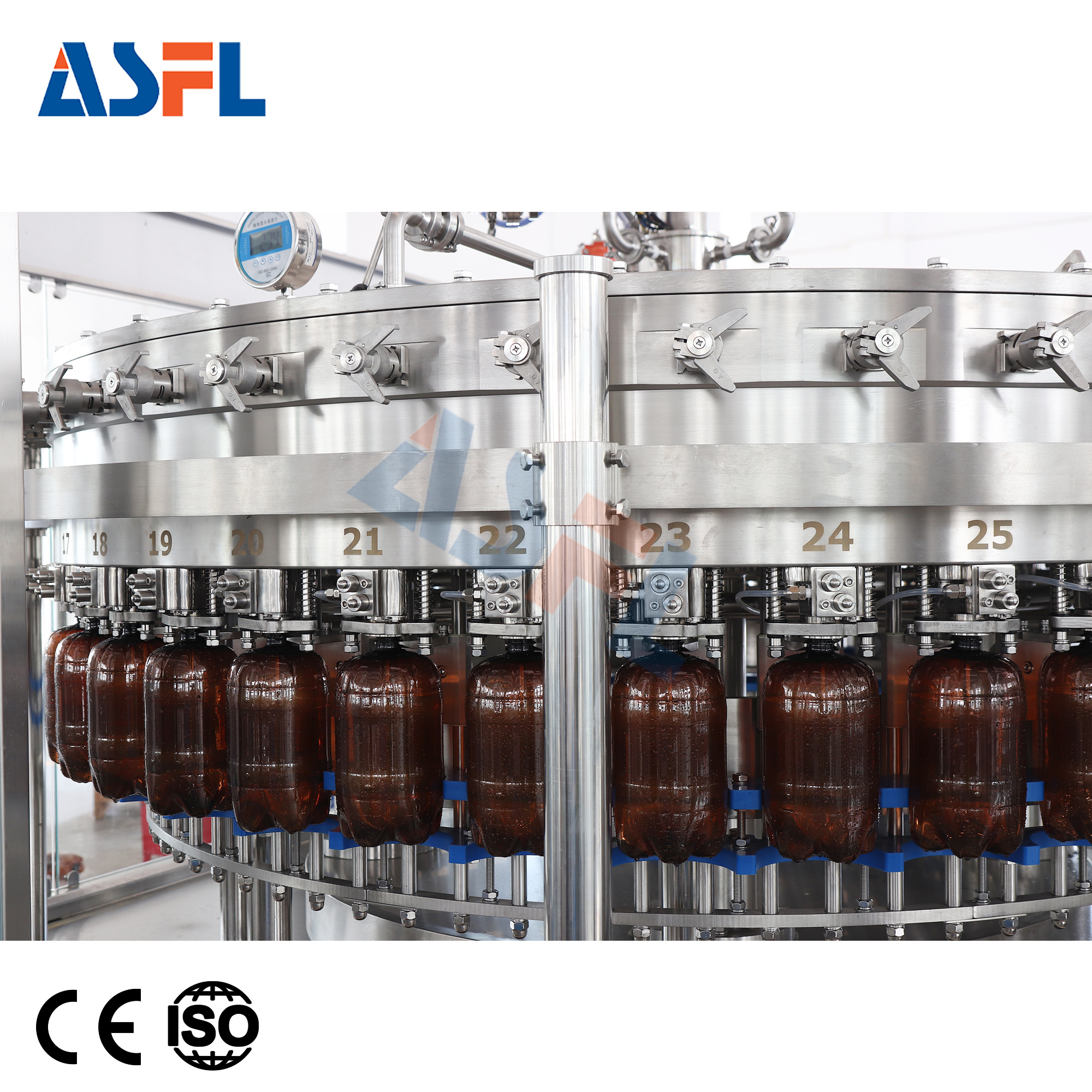
Most instability is not caused by one abstract “pressure problem.” It is usually a mismatch among hardware condition, process settings, and line connections. On a counter pressure beer bottle filler, common checks include the CO2 supply pressure at the machine, regulator response under demand, gas manifold restrictions, bottle-lift repeatability, centering bell condition, vent-valve travel, product temperature, and the coordination between filler discharge and capping.
- Gas supply and regulation: Verify that the supply remains stable when several heads cycle together, not only when the line is idle.
- Sealing contact points: Inspect centering bells, O-rings, bottle lifts, and bottle-mouth alignment for wear or inconsistent contact.
- Relief control: Check whether venting is smooth and repeatable rather than abrupt or delayed.
- Product condition: Record beer temperature and carbonation conditions whenever settings are adjusted.
- Line coordination: Confirm that filled bottles reach the capper without unnecessary delay or disturbance.
These checks also apply when an automatic beer bottle filler appears to run at the target speed but produces variable package quality. Rather than focusing only on nameplate speed, assess stable operating conditions. The filler, capper, conveyors, and utilities form one process, and a counter pressure beer bottle filler is sensitive to the connections around it.
A validation routine for stable production
Start with a controlled baseline. Run the counter pressure beer bottle filler with known beer temperature, bottle type, closure, line speed, and utility settings. Observe several heads and several cycles rather than judging one bottle. Record pressure values where the machine allows it, foam behavior, fill height, package appearance, and any rejected bottles.
Next, change only one condition at a time. If operators change relief timing, gas pressure, filler speed, and capper timing together, they cannot identify the source of the outcome. A structured trial gives the counter pressure beer bottle filler a defensible operating window and produces information that maintenance and quality teams can use later.
Finally, validate at normal production demand. A line that is calm during slow commissioning can react differently when multiple fill heads, conveyors, and the capper are operating at production rhythm. The right acceptance question is whether the counter pressure beer bottle filler produces repeatable package conditions across that intended operating window.
How to respond to recurring foam or fill variation
When recurring variation appears, resist the urge to adjust every regulator first. Check bottle seating and seal condition, compare individual filling heads, verify gas pressure at the machine during cycling, and review product temperature and carbonation records. Then assess the relief path and capper handoff. This sequence separates a genuine counter pressure beer bottle filler control issue from a product, container, or downstream timing issue.
For an automatic beer bottle filler, document the evidence after each change: which head was observed, the bottle format, the batch conditions, the setting changed, and the measured result. This recordkeeping makes troubleshooting repeatable instead of a sequence of isolated adjustments.
Stable pressure is a repeatability requirement
Stable back pressure is central to how a counter pressure beer bottle filler handles carbonated beer. It moderates the pressure transition into the bottle, helps keep foam behavior predictable, supports consistent fill conditions, and makes quality investigations more precise. It does not replace sanitation, oxygen monitoring, good bottle handling, or capper control; it gives those activities a more stable filling process to work with.
When evaluating or commissioning a counter pressure beer bottle filler, ask for a validation plan that covers pressure behavior under real line demand, not just a static setup value. That approach keeps the discussion focused on the conditions that matter in production: repeatability, traceable checks, and a process window the team can maintain.



 Hot News








