 EN

Frequent format changes are where a rotary soda filling machine is judged in day-to-day production. A line may run several PET bottle sizes, heights, diameters, or neck finishes across a week. The practical question is not whether the carousel can rotate; it is whether operators can change the bottle path, restore counter-pressure conditions, and release stable output without turning every schedule change into an extended troubleshooting session.
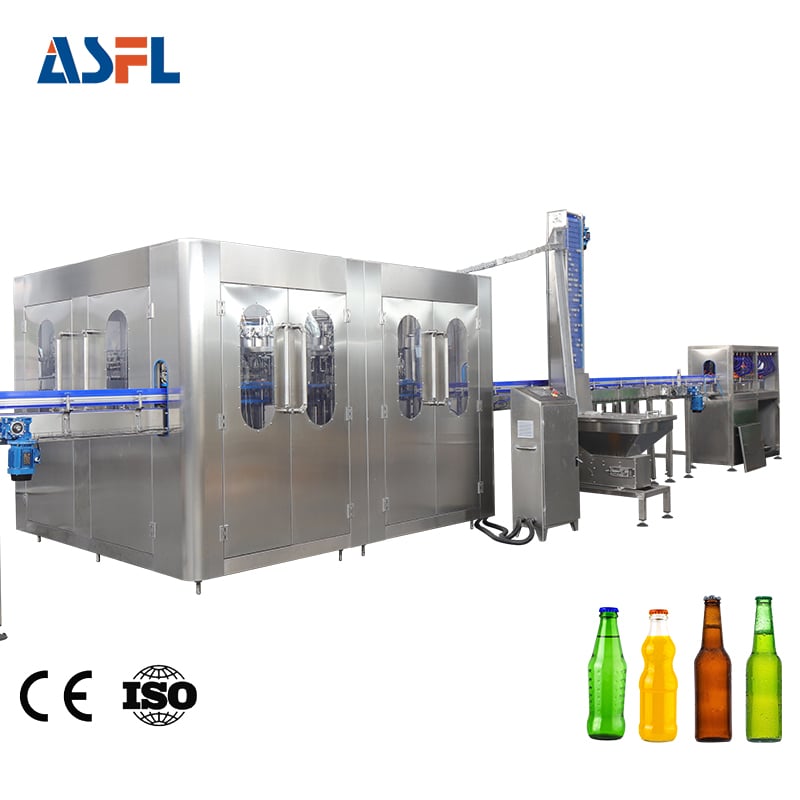
From a production-line engineering view, a rotary soda filling machine should be specified as a coordinated bottle-handling and carbonated-filling system. That distinction matters. A bottle that reaches the filler at the wrong height or with poor neck control can affect transfer, centering, filling, capping, and downstream accumulation. For a pet bottle soda filling machine, lightweight bottle behavior and dimensional variation deserve attention before a nominal speed comparison.
Start with the bottle data, not a generic changeover claim
Before selecting change parts, create a format sheet for every bottle that will run on the rotary soda filling machine. Record bottle diameter, overall height, neck finish, shoulder shape, base geometry, material, nominal fill volume, cap type, and any sleeve or label feature that affects guides. Include allowable dimensional tolerances from the bottle supplier. Two bottles with the same volume can require different handling if the neck ring or base profile changes.
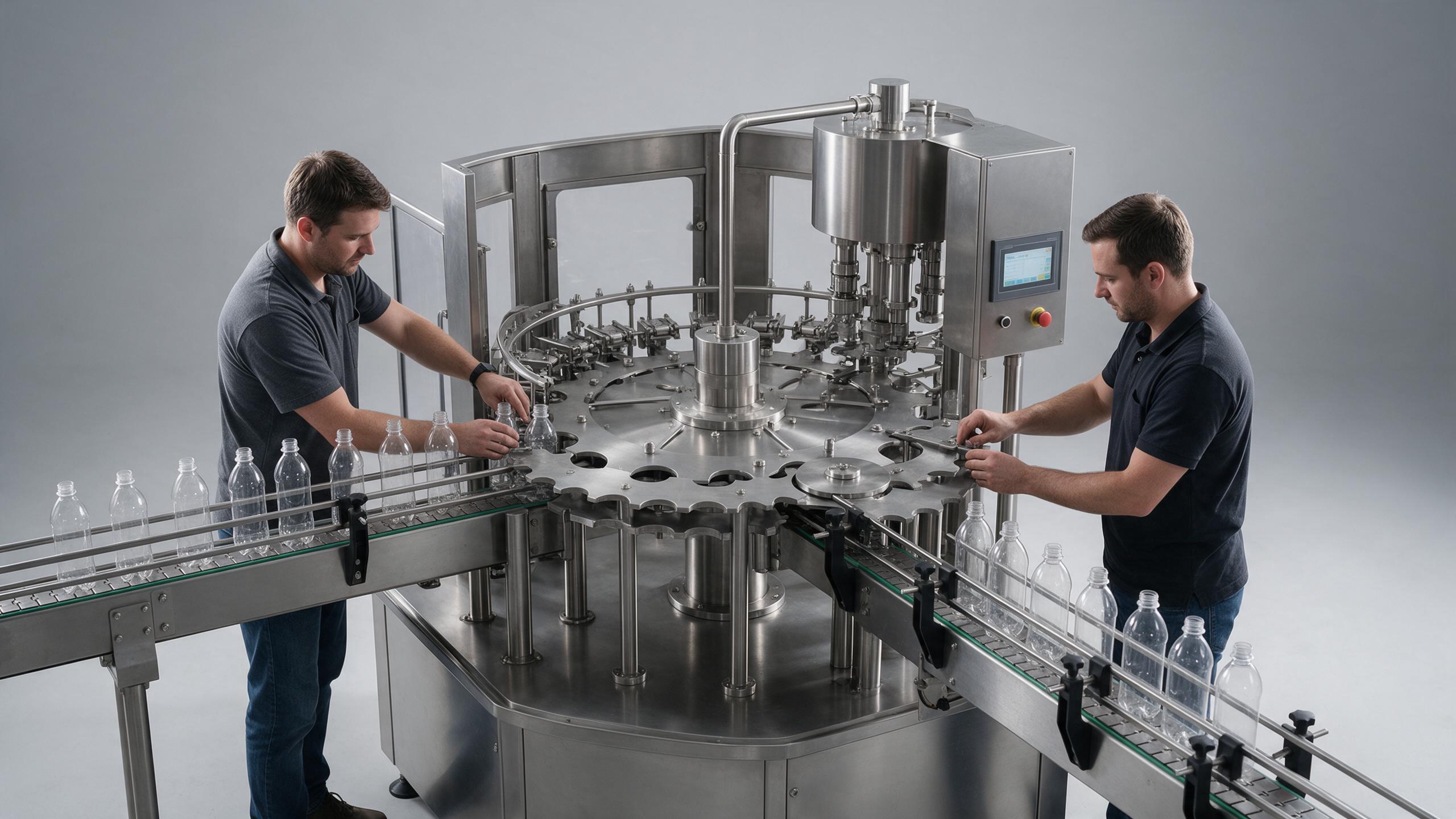
The sheet should also map each contact point: infeed screws, star wheels, guide rails, lift cams, bottle platforms, centering bells, filling valves, capper chucks, discharge stars, and conveyor guides. This turns a vague “format change” into a controlled list of contact points. It also makes quotations easier to compare because the buyer can see which parts are dedicated and which adjustments are shared.
Use format parts where geometry truly changes
A rotary soda filling machine adapts most predictably when the bottle is positively controlled through the carousel. In practice, that often means format-specific star wheels, guides, bottle lifts, or centering components for materially different diameters, heights, and neck dimensions. The goal is to carry the bottle without rubbing, tipping, or forcing it into position.
Do not assume that an “adjustable” rail replaces every change part. Tool-free or indexed adjustments can reduce setup time for modest dimensional shifts, but major differences in bottle body or neck geometry may need dedicated parts. The better question is: which components are quick-adjust, which are format-specific, and how are their positions verified after reassembly? Ask for a documented parts list and identification method so similar parts are not mixed between formats.
Keep carbonated filling conditions tied to the new format
Soda is commonly handled with counter-pressure filling, so bottle control and process conditions interact. When a new PET bottle specification is introduced, the team should recheck bottle seating, sealing contact, pressure equalization behavior, filling level, foam response, and cap application. A format that moves smoothly through the infeed can still need adjustment at the filling valve if its height or neck-contact geometry differs.
For that reason, a rotary soda filling machine changeover should include a short validation run rather than an immediate full-speed release. Begin at a conservative operating condition, inspect representative bottles, then verify fill level, cap placement, leakage, bottle stability, and the behavior at transfers. If foam or fill consistency shifts, address the relevant mechanical and process settings together rather than changing only line speed.
Design the infeed and discharge as part of the changeover
Many recurring problems appear outside the filler. Infeed screw timing, guide-rail width, transfer-star handoff, and discharge conveyor alignment must match the new bottle. A narrow PET bottle may need closer guide control; a taller bottle may need different upper restraint; a lightweight base may be more sensitive to accumulation pressure. These are line-integration questions, not optional accessories.
When evaluating a pet bottle soda filling machine, review the full travel path with the supplier using actual bottle samples. Request a run-off plan that includes normal bottles and samples near the permitted dimensional limits. This reveals whether a changeover is stable only under ideal samples or remains manageable with realistic packaging variation.
Build a repeatable changeover sequence
A useful sequence separates sanitation, mechanical work, and process release:
- Confirm the next format sheet, approved change-parts list, and bottle/cap samples.
- Complete the required cleaning or sanitation steps and protect exposed product-contact areas during the mechanical work.
- Install and identify the correct format parts; set indexed rails, guides, lifts, and capper-related adjustments.
- Hand-turn or jog the rotary soda filling machine to check clearance, bottle transfer, and interference before feeding production bottles.
- Run a controlled trial, checking bottle position, fill level, foam, cap application, leaks, and downstream transfer.
- Document final settings and release the format only after the agreed inspection criteria are met.
This approach is deliberately disciplined. It does not promise the same elapsed time for every format; the duration depends on how far the bottle geometry and closure differ. What it does provide is a way to identify where time is spent and improve the next changeover with measured adjustments rather than operator memory alone.
Specify the controls and records that support repeatability
Changeover capability is not only mechanical. A rotary soda filling machine benefits from clear format recipes, labeled parts storage, adjustment scales or indexed stops, and a release checklist. Where controls store recipes, define which settings are recipe-driven and which still require a physical confirmation. Operators should be able to confirm the active format, not merely select a name on a screen.
Maintenance also has a role. Inspect wear surfaces on guides, stars, centering parts, seals, and cap-handling components. A part that has gradually worn out of shape can make a formerly stable format look like a process problem. Keep a simple record of recurring adjustments by bottle family; it can indicate whether the remedy is an improved change part, a guide revision, or a bottle-tolerance discussion with the packaging supplier.
Questions to ask before committing to a configuration
- Which bottle dimensions can be covered by adjustment, and which require dedicated change parts?
- How are star wheels, guides, lifts, and capper settings identified for each format?
- What bottle and cap samples will be used for factory and site validation?
- How will counter-pressure filling performance be checked after a new format is installed?
- Which infeed, discharge, and conveyor adjustments are included in the documented procedure?
- What cleaning and inspection steps are required before the line is released?
Choose adaptability as a verification process
A rotary soda filling machine can support frequent bottle specification changes when the machine configuration, change-part strategy, bottle data, and validation routine are developed together. For a pet bottle soda filling machine, give equal weight to bottle handling and carbonated filling conditions. The most useful outcome is not a broad promise of flexibility; it is a verified format plan that shows how every bottle moves through the line, how operators set it up, and how the team confirms stable production after each change.
 Hot News








