 EN

Factory construction ends on a date; repeatable production begins only when people, utilities, containers, controls, and procedures work together. An automatic bottle filling system can shorten that interval when it is treated as a connected production project rather than a machine delivered to an empty floor. From a packaging-line engineering perspective, the useful question is not simply how fast the filler can run. It is whether the whole line can be installed, checked, taught, and released in a sensible sequence.
An automatic bottle filling system brings filling, bottle movement, and often capping or downstream handoff into one coordinated workflow. That coordination can reduce avoidable waiting between construction completion and the first stable production runs. It does not remove the need for validation. Instead, it gives the project team a clearer set of connection points to define early.
Why factory-ready may not yet mean production-ready
A newly built facility may have walls, drains, electrical panels, and a finished floor while the packaging area is still not ready to run. The common delays are usually at the handoffs: water or product supply reaches the wrong connection point, a conveyor has no confirmed accumulation space, bottle guides are not set for the actual container, or the control signals between stations have not been tested. A complete automatic bottle filling system plan makes these dependencies visible before the equipment arrives.
For food applications, cleanability and access are part of the layout decision, not a detail for the final week. U.S. food CGMP provisions in 21 CFR 117.40 describe equipment that is adequately cleanable and installed to facilitate cleaning and maintenance. The exact obligations depend on the product, market, and facility, but the practical lesson is broadly useful: leave access for service, cleaning, changeover, and inspection when the line is positioned.
Start with line connection points, not the filler alone
The first commissioning shortcut is to freeze a shared connection-point sheet while civil and utility work is still active. A production team should confirm bottle dimensions, cap format, target fill volume, liquid behavior, required utilities, floor drainage, and the route from empty bottles to packed product. With an automatic bottle filling system, those details influence infeed timing, filling method, nozzle and vessel configuration, capper handoff, and conveyor layout.
More accurately, speed is only one part of the decision. Viscosity, foaming tendency, particulates, temperature, and cleaning method can change what a stable filling cycle looks like. The same is true for bottles: neck finish, panel shape, base stability, and label area affect handling. Confirming those conditions before fabrication reduces late-stage mechanical adjustments that can consume the commissioning window.
Use modular work packages during construction
An automatic bottle filling system helps a project move faster when the site team can prepare its work in parallel. Divide the installation into work packages with clear acceptance points:
- Facility package: verify floor level, drains, safe access, lighting, and enough service clearance around the line.
- Utility package: label electrical, air, water, product, and drainage connection points; confirm their condition before equipment hookup.
- Mechanical package: position the filler, conveyors, capper, and guards; then check level, alignment, and access.
- Controls package: test sensors, interlocks, emergency stops, alarms, and station-to-station signals before product trials.
- Operations package: prepare sanitation, startup, changeover, fault-response, and quality-check instructions.
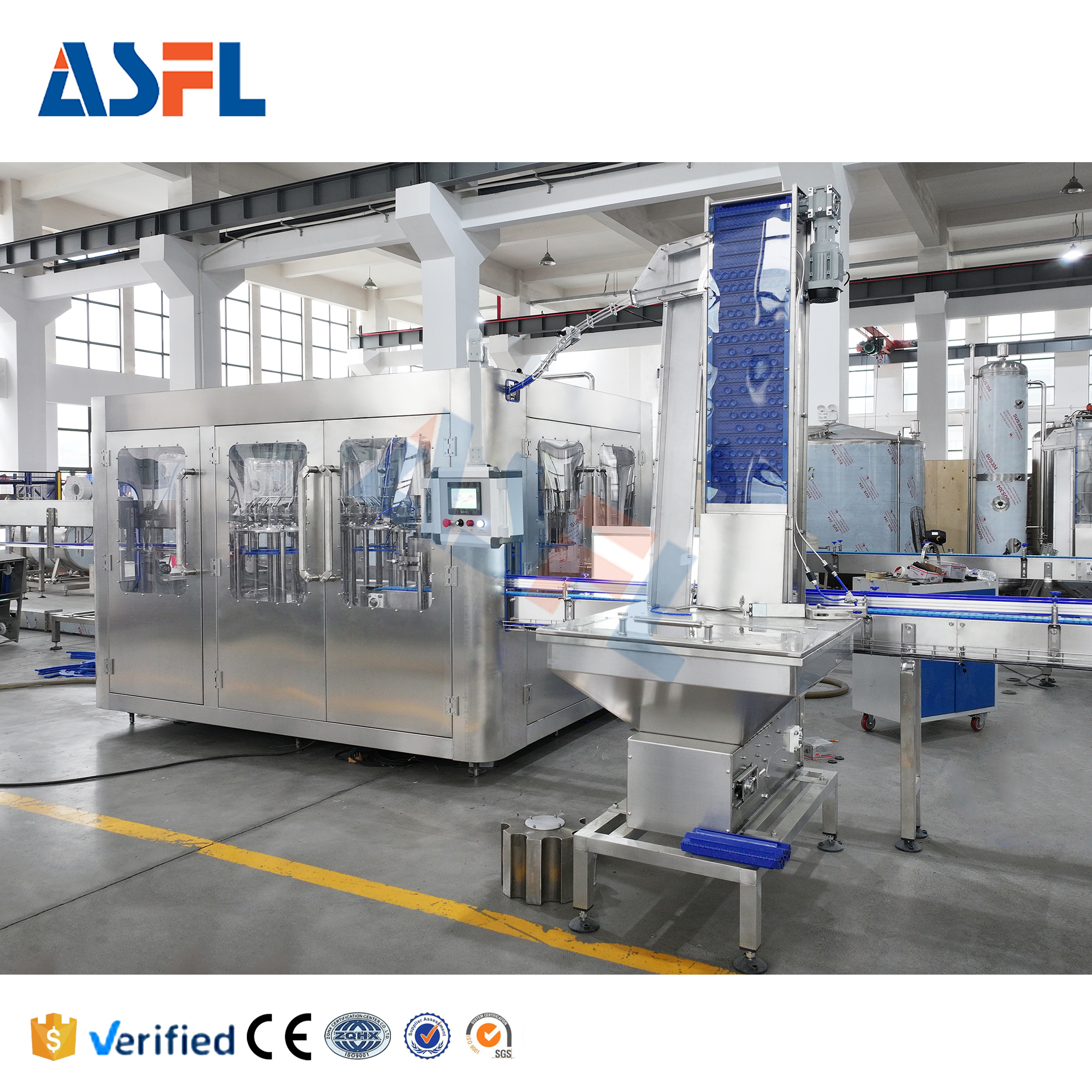
This structure turns an automatic bottle filling system into a sequence of smaller verifications. It also helps construction, maintenance, quality, and operations teams see what they own instead of waiting for one final, crowded commissioning event.
Commission from dry runs to controlled liquid trials
The fastest route is rarely a full-speed first run. Begin with a dry mechanical check, then use empty containers to observe transfers and guide settings. Next, introduce the process liquid at a conservative rate and document fill consistency, splashing or foaming, closures, rejects, and the response to deliberate stops. An automatic bottle filling system with clearly defined controls makes it easier to isolate whether a problem begins at supply, filling, bottle handling, capping, or discharge.
For an automatic bottle filling machine inline arrangement, the spacing between stations deserves special attention. A line can appear stable until downstream accumulation causes bottles to back up into the filler. Test the actual stop-and-restart pattern, not only steady running. That is also why an automatic bottle filling machine high-speed claim should be assessed against the complete operating condition, including product feed and the downstream process.
Make ramp-up a learning loop
After the first acceptable trial, run short planned production windows rather than changing every setting at once. Record the recipe, bottle and closure lot, operator actions, alarms, rejects, fill observations, and cleaning time. Then review one limiting condition at a time. An automatic bottle filling system shortens the path to mass production when its settings, alarms, and operating routines become repeatable from shift to shift.
Maintenance should be involved before the line is handed over. An automatic bottle filling machine maintenance checklist can cover lubrication where applicable, wear parts, sensor cleaning, guard checks, and a defined response to recurring alarms. That preparation reduces the chance that early output gains are lost because a simple inspection task was not assigned.
A practical release checklist
Before declaring the line ready for regular output, confirm that the documented product and bottle conditions match the setup; utilities are stable; sanitation and safety checks are complete; operators can perform routine stops and restarts; quality checks have an owner; and maintenance has access to the required records and parts. The goal is not a dramatic first-day number. It is a controlled handoff that the team can repeat.
In that context, an automatic bottle filling system reduces time from construction to mass production by making connection points testable and responsibilities visible. Select the configuration around the real liquid, container, hygiene, and operating conditions, then commission it in stages. That approach supports a steadier path from an empty facility to dependable daily production.

 Hot News








