 EN

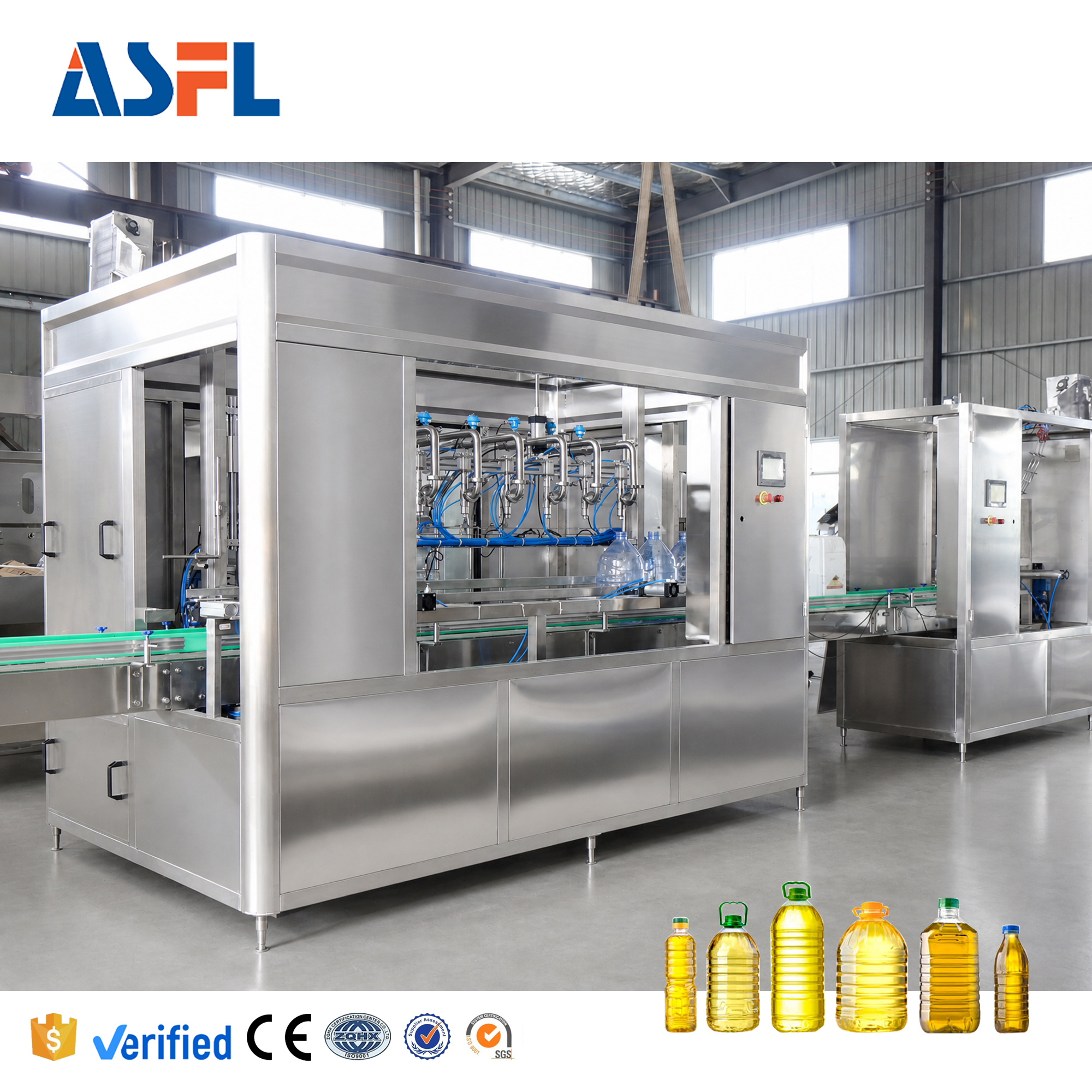
Choosing between PET and glass is not simply a packaging decision. For an edible-oil producer, the container changes how bottles enter the filler, how they are supported during dosing, A pet bottle oil filling machine is normally configured around lightweight, shape-sensitive containers, while a glass-bottle line must account for a heavier, more rigid and breakable package. Start by confirming the oil, bottle drawing, neck finish, target output, and cleaning plan.
From a liquid-filling selection perspective, a pet bottle oil filling machine should be assessed as part of the complete line rather than as an isolated filler. In particular, confirm the bottle geometry and conveyance handoffs before treating a quoted speed as the deciding number.
The short answer: PET and glass demand different handling
A pet bottle oil filling machine commonly uses container guidance and handling arrangements that protect a lightweight bottle from distortion, scuffing, or unstable positioning. Glass bottles are typically more rigid, but they bring higher mass, impact sensitivity, and different base and neck-support needs. Neither format is inherently suitable for every oil project. The useful question is which package can be filled, capped, inspected, and changed over with acceptable stability in the intended operating conditions.
| Decision area | PET bottle line | Glass bottle line |
|---|---|---|
| Container behavior | Lightweight; bottle-wall and shape stability merit close review. | Rigid and heavier; impact control and gentle transfer become prominent. |
| Infeed and transfer | A pet bottle oil filling machine often needs guides matched to bottle dimensions and shoulder shape. | Transfers should reduce bottle-to-bottle contact and accommodate higher container load. |
| Filling setup | Metering and nozzle height should be checked against bottle opening and oil behavior. | Metering principles can be similar, but bottle support and splash control may differ. |
| Changeover | Format parts may be driven by variations in PET shape, diameter, and neck finish. | Format parts must suit glass dimensions while preserving careful handling. |
| Downstream focus | Cap application, bottle appearance, and label positioning require validation. | Breakage management, cap torque, and inspection pathways require validation. |
1. Bottle rigidity affects how the filler supports the package
With PET, the bottle is light and its shape can be affected by side pressure, accumulated-back pressure, and poorly matched guide rails. That is why a pet bottle oil filling machine needs a practical trial with the actual bottle, not just a nominal volume. Bottle shoulder geometry, panel design, base shape, neck ring, and allowable tolerances all influence centering at the filling valve.
Glass generally holds its geometry more consistently under normal conveyance forces. However, its rigidity does not remove risk; it shifts the concern toward impact, chipping, and uncontrolled contact at transfers. In a glass application, review starwheel pockets, guide clearances, accumulation behavior, and the route between filler, capper, and inspection station. More accurately, rigidity makes bottle control different, not automatic.
2. The dosing method is chosen for oil and accuracy acceptance, not bottle material alone
Both PET and glass may be paired with volumetric or net-weight filling concepts, as reflected in relevant edible-oil equipment search results. The bottle material alone does not decide the dosing technology. A pet bottle oil filling machine should be selected after confirming oil viscosity at filling temperature, expected temperature variation, fill volume, headspace, and the agreed acceptance method.
For example, a processor may compare a volume-based configuration with a weight-based configuration when product density or temperature changes matter to its control plan. The point is not to assume one system has a universal advantage. Ask the supplier to demonstrate performance on the intended oil and bottle, using agreed sampling conditions. This turns accuracy from a brochure statement into an acceptance item.
3. Neck finish, capper fit, and drip control can change
Oil filling is often judged by what happens immediately after the valve closes. Residual drips, neck contamination, and inconsistent cap engagement can create downstream work regardless of the bottle material. On a pet bottle oil filling machine, the nozzle approach and bottle positioning should match the actual neck finish. PET bottle variation can make this validation especially important.
For glass bottles, the same questions apply, but container mass and neck design may call for different holding and transfer arrangements. Evaluate fill-nozzle clearance, cap presentation, and cap torque verification. Filling and capping should be observed together; a cap issue is not automatically a filler issue.
4. Conveyor design and line handoffs are often the real difference
When teams compare a pet bottle oil filling machine with glass equipment, they sometimes focus on the filling carousel and overlook the infeed and discharge. PET containers can be easy to accelerate, but their light weight can make guide alignment, air movement, and accumulation settings consequential. Glass containers impose more mass on handling equipment and require an approach that limits collisions.
Map the line from empty-bottle delivery through filling, capping, coding, labeling, inspection, and packing. Search results for edible-oil lines also commonly place filling and capping inside a wider conveying and downstream packaging system. This is a useful reminder: the stable output of a pet bottle oil filling machine depends on upstream bottle presentation and downstream flow, not only on the filler.
5. Cleaning, material compatibility, and food-contact checks remain project-specific
Whether a line uses PET or glass, confirm the liquid-contact materials, seals, cleaning path, and local food-contact requirements for the market where the packaged oil will be sold. Regulatory guidance on food packaging emphasizes that substances contacting food need appropriate consideration; it should not be read as a blanket approval for a particular line or package.
For a pet bottle oil filling machine, ask how cleaning procedures reach relevant wetted paths and how the selected process accommodates the production schedule. For glass, review the same wetted components plus the practical cleaning and breakage-control procedures around the container path. Cleaning convenience depends on design details, including areas that are difficult to access, so request a documented cleaning and inspection sequence.
6. Changeover and maintenance priorities differ
A pet bottle oil filling machine may need format changes for several bottle shapes that share a nominal volume but not a common body diameter or neck geometry. Record each change part, its adjustment point, and the verification needed before restart. If many formats are planned, calculate changeover using measurable steps rather than a broad estimate.
Glass lines need their own format-control discipline, with attention to transfer components and handling clearances. In both cases, look beyond the initial layout. Consider access for nozzle service, guide adjustment, lubrication practices where relevant, cleaning time, spare-format storage, and how operators will identify an abnormal bottle flow.
A practical selection checklist
- Provide filled-product samples and the actual PET or glass bottles for a trial.
- For a pet bottle oil filling machine, document bottle body dimensions, neck finish, wall behavior, and permitted appearance limits.
- For glass, document bottle weight, base geometry, transfer clearances, and breakage-response procedures.
- Define oil viscosity and temperature at filling, desired fill volume, target output, and acceptance sampling method.
- Confirm filler-to-capper, conveyor, inspection, labeling, and packing handoffs before finalizing the layout.
- Agree on cleaning, changeover, and maintenance checks as part of commissioning.
Which machine should you choose?
Choose a pet bottle oil filling machine when the project uses PET packaging and the proposed setup has been validated for the actual bottle shape, neck finish, oil, and production rhythm. Choose a glass-oriented configuration when glass is the chosen package and the line design addresses its mass and careful transfer requirements. The decision is not PET versus glass in the abstract. It is package behavior, filling conditions, capping, downstream handling, and the evidence gathered during a representative trial.
Before placing an order, prepare a short specification pack: bottle drawings, closures, oil data, planned formats, required output, cleaning expectations, and site constraints. That gives the engineering discussion around a pet bottle oil filling machine or glass-bottle line a clear, testable starting point.
Frequently asked questions
Can one filler handle both PET and glass bottles?
It may be possible when the equipment and format parts are designed for both packages, but it should be confirmed with the real bottles, closures, and target rate. A pet bottle oil filling machine is not automatically ready for glass simply because the nominal fill volume is the same.
Does PET require a different oil filling method than glass?
Not necessarily. The method should match the oil and acceptance criteria. A pet bottle oil filling machine still needs appropriate bottle support and nozzle positioning, while glass needs suitable handling through the full line.
What should be tested before commissioning?
Test bottle transfer, filling consistency, drip behavior, cap application, inspection, changeover, and cleaning on the actual package. For a pet bottle oil filling machine, add checks for bottle guidance and stability during operation.

 Hot News








