EN

When operating a modern packaging facility, plant engineers often encounter a counterintuitive scientific phenomenon: highly purified water is actually more chemically aggressive to industrial machinery than standard tap water. Purified water, whether produced via reverse osmosis or deionization, has a very low mineral content and an aggressive tendency to leach ions from surrounding metals. Because of this unique chemical characteristic, deploying untreated machinery can lead to rapid structural degradation. This is precisely why water bottle filling equipment anti corrosion measures are non-negotiable for any commercial beverage or water bottling plant.
In a typical production setup, water bottle filling equipment anti corrosion treatments protect critical contact surfaces from continuous exposure to mineral-free fluids. Purified water acts almost like a solvent, actively searching for ions to achieve chemical equilibrium. When it flows through standard carbon steel or low-grade metal pipes, valves, and nozzles, it strips microscopic metal particles away. This process not only damages the mechanical integrity of the machinery over time but also introduces heavy metal ions and impurities directly into the bottled product, compromising both safety and sensory attributes.
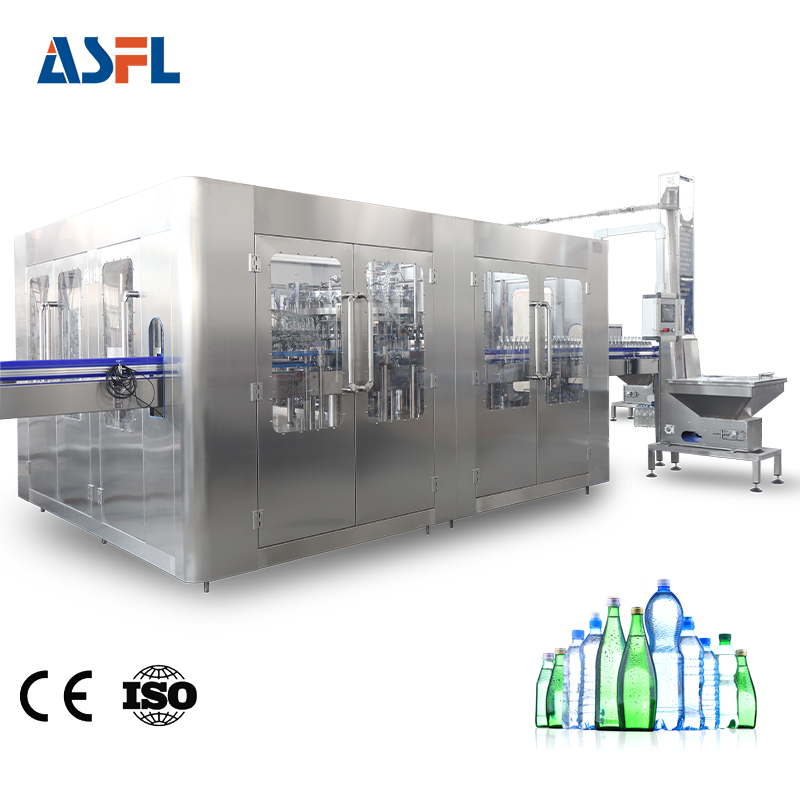
To learn more about advanced manufacturing setups that integrate these protective layers, you can explore the comprehensive framework provided by our main industry portal at ACE-FILLING water bottle filling equipment. Maintaining pristine product quality starts upstream with proper metallurgy and protective engineering before a single bottle is ever rinsed, filled, and capped.
Mechanism of Corrosion in Beverage Bottling Machinery
The structural breakdown of bottling machinery in ultra-pure fluid environments is driven by electrochemical reactions and active ion exchange. Unlike mineral-rich water, which forms protective scaling barriers on metal walls, purified water strips away these natural passivation layers. Without specialized intervention, a purified water filling machine corrosion protection protocol becomes the ultimate line of defense against pitting, crevice corrosion, and stress corrosion cracking.
Corrosion in these environments is accelerated by several operational factors unique to beverage plants:
-
High-speed fluid turbulence near filling nozzles and rotary valve manifolds.
-
Frequent Clean-In-Place (CIP) cycles utilizing harsh chemical sanitizers and elevated temperatures.
-
Oxygen concentration cells forming in stagnant pipeline pockets during scheduled plant downtime.
-
Micro-galvanic coupling caused by welding different metal grades together during assembly.
When these factors combine, untreated components experience localized structural failure within months of continuous operation. Implementing robust water bottle filling equipment anti corrosion engineering ensures that welded joints, seal housings, and internal fluid pathways remain impervious to chemical leaching and aggressive scrubbing agents.
Technical Specifications and Material Selection for Anti-Corrosion
Combating aggressive fluid environments requires rigorous material science and precise surface finishing. Standard commercial metals are entirely inadequate for long-term deployment in cleanroom bottling facilities. Modern stainless steel beverage bottling machinery relies heavily on specialized austenitic and duplex stainless steel grades, supplemented by electropolishing and passivation treatments to maximize surface smoothness and corrosion resistance.
The table below outlines the comparison of standard materials versus corrosion-resistant configurations utilized in high-performance bottling lines.
| Material Type | Primary Composition | Corrosion Resistance in Purified Water | Typical Application in Bottling Line |
| Standard Grade Steel (304) | 18% Chromium, 8% Nickel | Moderate; vulnerable to pitting under sustained deionized water contact | External frames and non-contact structural supports |
| Premium Grade Steel (316L) | 16% Chromium, 10% Nickel, 2% Molybdenum | High; superior resistance to chloride pitting and ion leaching | Fluid pathways, filling nozzles, and liquid tanks |
| Passivated / Electropolished 316L | Chemically treated surface layer | Excellent; ultra-low surface roughness prevents microbial and ion buildup | Precision dosing chambers, rotary valves, and contact manifolds |
| Fluoropolymer Coated Alloys | PTFE / PVDF linings over metal base | Exceptional; inert to ultra-pure water and aggressive CIP chemicals | Seal housings, gaskets, and specialized chemical dosing valves |
By upgrading contact parts to electropolished 316L stainless steel and applying verified purified water filling machine corrosion protection procedures, manufacturing plants drastically reduce micro-crevices where bacteria and rust can initiate.
Real-World Case Study from Production Lines
A practical example of these principles in action involves a large-scale spring water packaging plant that experienced premature valve degradation and trace metal contamination in their bottled product line. Initially equipped with standard stainless steel assemblies, the plant noticed elevated conductivity levels in their finished bottled water, signaling unwanted ion transfer from the machinery itself.
Upon consulting with our engineering division, the facility upgraded their entire liquid handling architecture to incorporate advanced water bottle filling equipment anti corrosion specifications. The retrofit included replacing standard valves with electropolished 316L components, optimizing CIP chemical concentrations to prevent over-exposure, and introducing passivated fluid transfer tubing.
The results within six months of implementation were profound:
-
Metal ion leaching dropped to undetectable levels, satisfying strict consumer safety parameters.
-
Maintenance downtime associated with valve seal replacement was reduced by over sixty-five percent.
-
Overall equipment effectiveness (OEE) improved significantly across all three high-speed bottling lines.
-
Finished product purity consistently met international beverage safety certifications without interruption.
This case highlights how proactive anti-corrosion engineering protects both capital investments and brand reputation in competitive beverage markets.
Compliance with International Standards and Quality Assurance
Deploying corrosion-resistant technology is not only a matter of mechanical durability; it is a strict regulatory requirement enforced across global food and beverage packaging sectors. Regulatory bodies mandate that all bottle filling plant sanitation standards and equipment construction guidelines meet rigorous hygiene and material safety criteria. Equipment must be engineered to prevent chemical migration, toxic leaching, and microbial harborage.
Key compliance frameworks governing modern bottling machinery include:
-
FDA regulations regarding food-contact surface safety and non-reactive material composition.
-
ISO quality management standards ensuring consistent manufacturing traceability and weld inspection protocols.
-
EHEDG guidelines for hygienic design, ensuring all internal surfaces can be thoroughly cleaned and sterilized without dead legs.
During the manufacturing process, strict quality control procedures are applied to verify surface finish roughness (typically maintaining a Ra value below 0.4 micrometers for critical contact areas). This meticulous attention to detail ensures that the integrated water bottle filling equipment anti corrosion measures meet the highest benchmarks demanded by multinational beverage brands and regulatory authorities worldwide.
Best Practices for Maintenance and Longevity in Packaging Plants
Even the highest-grade corrosion-resistant machinery requires disciplined operational protocols to maintain peak performance over its operational lifecycle. Plant operators must balance sanitization efficacy with material protection to avoid accelerating wear through improper chemical usage or thermal shock.
Recommended maintenance and operational practices include:
-
Monitoring CIP chemical concentrations, temperature, and contact duration strictly according to equipment specifications.
-
Conducting routine passivation maintenance passes on stainless steel surfaces after major mechanical overhauls.
-
Utilizing high-purity rinse water during shutdown cycles to prevent stagnant concentration cell formation.
-
Performing regular endoscopic inspections of internal pipe welds and valve seats to detect early-stage pitting before structural failure occurs.
By adhering to these structured operational guidelines, facilities utilizing stainless steel beverage bottling machinery ensure maximum uptime, pristine product integrity, and an extended operational lifespan for their entire production ecosystem.
 Hot News