 EN

Why Water Bottle Filling Equipment Needs Anti-Corrosion Treatment for a Purified Water Environment
Purified water looks gentle, but it does not automatically create a low-corrosion process. For a water bottle filling equipment project, the real exposure condition includes incoming-water variability, cleaning chemistry, residual moisture, temperature, welded joints, and places where liquid can sit after production. A line may run clear water for hours, then see a different chemical environment during cleaning and sanitizing. That is why anti-corrosion treatment is a design and verification topic, not merely a material label on a quotation.
From a process-compatibility perspective, start with the wetted path rather than the nameplate. The practical question is not simply whether a frame or tank is called stainless steel. It is which surfaces contact product or cleaning solution, how those surfaces were fabricated, and whether the system drains completely. More accurately, corrosion control begins with a documented operating envelope.
Purified water does not remove every corrosion driver
Water-treatment equipment can reduce minerals and contaminants, but the finished filling system still encounters more than product water. Chloride-bearing residues, acidic or alkaline cleaners, oxidizing sanitizers, high temperatures, deposits, and trapped liquid can all change the local environment. Localized attack is especially important because it may start in a small imperfection or oxygen-starved crevice while the rest of the surface still appears sound.
For water bottle filling equipment, common attention points include filler bowls, product manifolds, valves, nozzles, return lines, pump housings, tank bottoms, clamps, gaskets, threaded interfaces, and heat-affected zones near welds. A narrow gap below a gasket or an uncleaned weld discoloration can hold liquid longer than an open pipe run. In other words, a purified-water specification should be evaluated together with the whole cleaning and drainage condition.
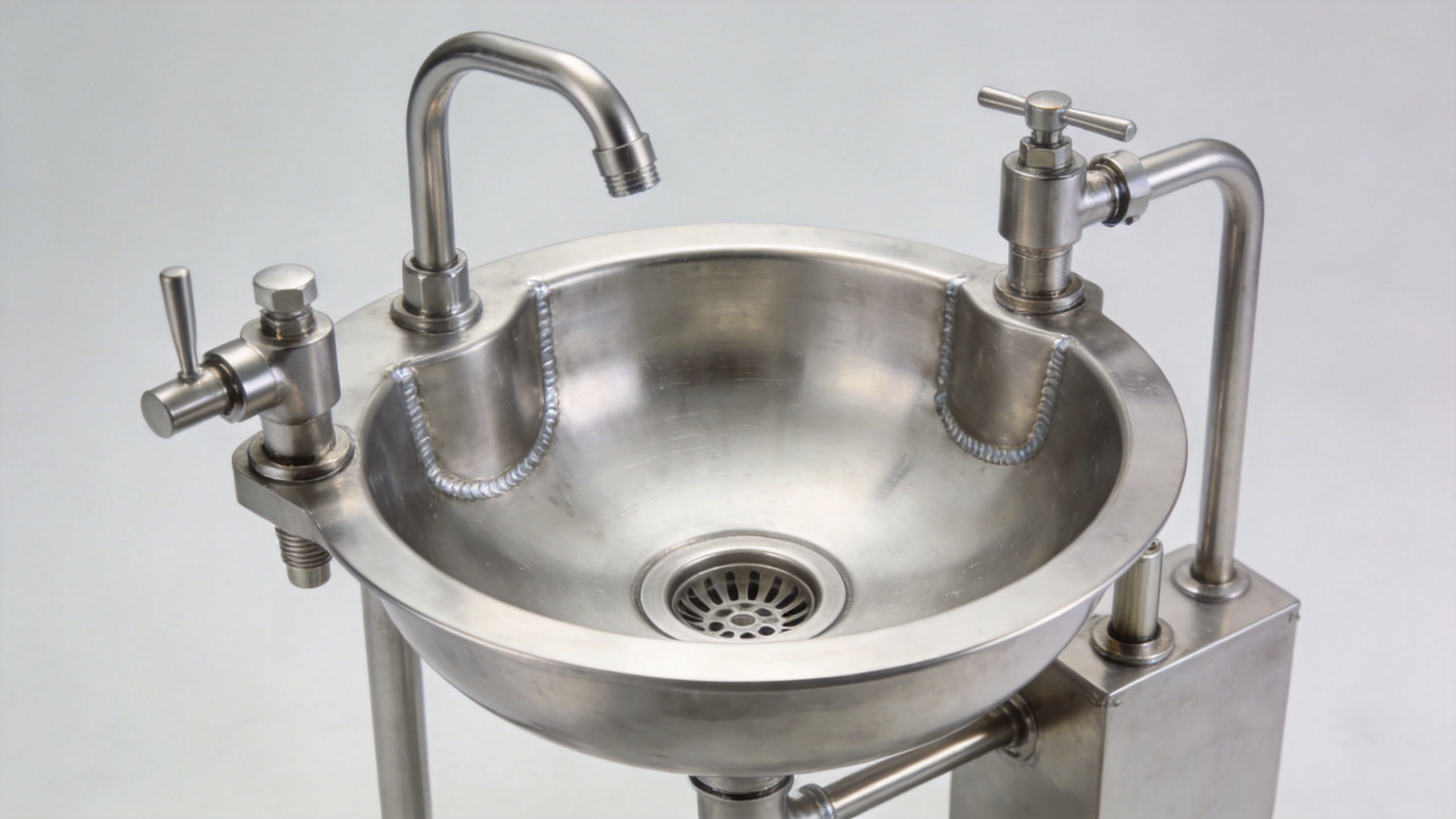
Why anti-corrosion treatment supports hygiene and uptime
Corrosion is not only an appearance issue. Roughened or pitted contact surfaces can retain deposits, complicate cleaning verification, and create maintenance work that interrupts a stable filling schedule. When a water bottle filling plant is expected to run repeatable sanitation cycles, the condition of the metal surface and the geometry around seals matters as much as the filler’s nominal speed.
Anti-corrosion treatment generally means a coordinated approach: suitable material selection, controlled fabrication, cleaning of weld oxides where applicable, surface finishing appropriate to the service, passivation or restoration of the stainless passive layer when specified, and routine inspection. It should not be treated as a promise that any grade will withstand any chemistry indefinitely. Grade choice remains conditional on actual chlorides, pH, temperature, sanitizer concentration, contact time, and rinse effectiveness.
Material selection: compare the service, not just 304 and 316L labels
304 stainless steel can be appropriate in many ordinary beverage-processing conditions. Where chloride exposure, aggressive cleaning, elevated temperature, or extended wet hold time is more demanding, 316L is often evaluated for its stronger resistance to localized pitting and crevice corrosion. That comparison is useful, but it is not a substitute for a process review. A 316L component with stagnant cleaner trapped in a poor joint still needs attention; a correctly designed and cleaned 304 component may serve well in a less aggressive location.
Ask the supplier to separate the wetted circuit from non-contact guarding, supports, and covers. Then request the material grade for each critical wetted component, including valve bodies, nozzles, piping, tank internals, and pump contact parts. This turns a broad request for “anti-corrosion” into a traceable list of verification items.
Check fabrication and geometry alongside the grade
From material name to contact-point confirmation is the useful shift. Smooth accessible surfaces, properly finished welds, and drainable routing reduce opportunities for deposits and trapped liquid. Dead legs, poorly oriented branches, unnecessary threaded pockets, damaged surfaces, and crevices under unsuitable seals deserve review during design and site acceptance. If a component cannot be adequately rinsed or inspected, its nominal alloy grade alone offers limited assurance.
Make CIP and sanitation chemistry part of the specification
Cleaning-in-place settings can be more corrosive than the product water. Define the cleaner and sanitizer types, concentration ranges, temperature, circulation time, rinse sequence, and residual-water expectations before finalizing the water bottle filling equipment. The goal is not to prescribe a generic chemical program; it is to ensure the proposed wetted materials, elastomers, surface treatment, and drainage design are compatible with the plant’s actual routine.
During commissioning, confirm that the circuit reaches the intended flow and temperature, drains after the cycle, and does not leave visible residue around valves, joints, filler nozzles, or tank bottoms. Keep a record of deviations, especially recurring discoloration, rough spots, leakage at seals, or unusual residue. Early inspection is easier than responding after localized corrosion has created a sanitation concern.
A practical anti-corrosion acceptance checklist
- Map the wetted path: identify all product- and CIP-contact components, including less obvious branches and valve cavities.
- Confirm grades by location: request material documentation for critical contact parts instead of relying on a single overall equipment statement.
- Review weld and surface condition: specify accessible, cleanable weld areas and clarify how fabrication residues and heat tint are handled.
- Test drainage: verify that product water, rinse water, and cleaning solutions do not remain in low points or sealed crevices after the intended cycle.
- Validate chemicals and elastomers: compare CIP and sanitizer conditions with the material and seal compatibility information supplied for the line.
- Plan inspection: include routine checks of nozzles, filler bowls, valves, gaskets, and recirculation points for deposits, discoloration, roughness, or leakage.
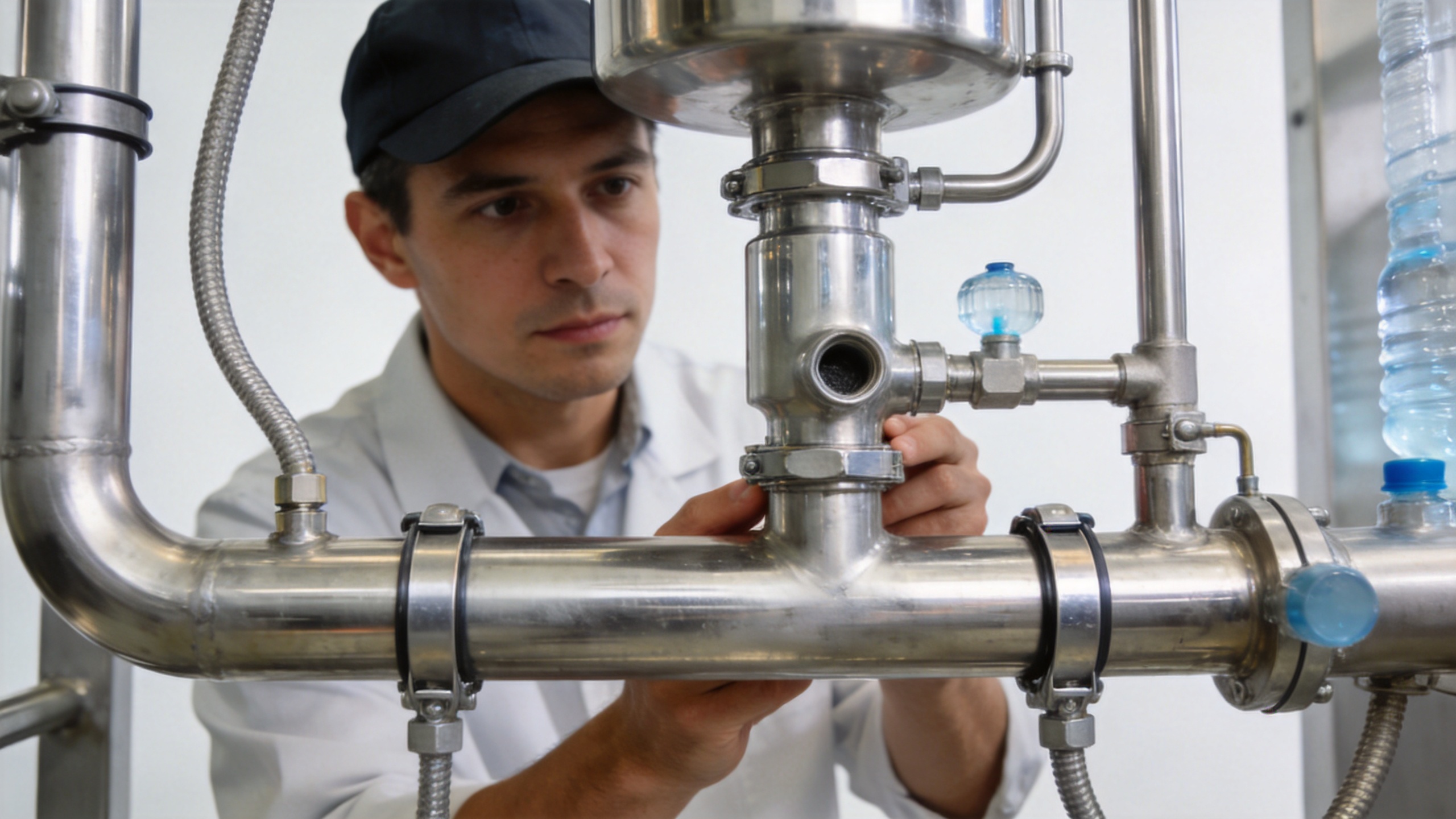
Specify a verifiable result for water bottle filling equipment
For buyers, the strongest requirement is not “use corrosion-resistant steel” in isolation. It is a verifiable package: defined wetted materials, appropriate surface and fabrication controls, a CIP compatibility review, drainability checks, and an inspection routine. This approach is especially valuable when comparing a water bottle filling plant configuration, because it connects the equipment design to the actual purified-water and sanitation environment.
Ace-Filling can discuss the liquid, bottle format, target throughput, cleaning program, and site conditions needed to build that verification list. Before deciding, provide the expected water analysis, cleaner and sanitizer information, operating temperatures, and any chloride-related site constraints. Those details make it possible to assess water bottle filling equipment on the conditions that matter in operation rather than on an alloy label alone.

 Hot News








