EN

An oil bottle filling machine is often specified around output, filling accuracy, bottle range, and automation. Those are important, but they do not settle a basic reliability question: what happens inside the wetted path after months of contact with oil, cleaning solutions, moisture, and occasional production interruptions? Internal corrosion treatment deserves the same scrutiny as pumps, nozzles, and controls because a compromised surface can affect cleaning, flow stability, maintenance planning, and confidence in the finished package.
From an operator’s perspective, the value of an oil bottle filling machine shows up in whether changeovers, cleaning, and abnormal-condition handling are clear. A cleanable internal surface is not simply a material specification on a quotation. It is a design and fabrication outcome involving steel grade, weld quality, surface preparation, passivation or other appropriate treatment, drainage, seals, and the chemicals used during sanitation.
Corrosion starts where the process is hardest to see
Oil itself may not look aggressive, yet the liquid path is rarely exposed to oil alone. Water introduced during washing, residues from cleaning chemicals, dissolved salts, product additives, ambient humidity, and prolonged hold-up in low points can create conditions that challenge a metal surface. The concern becomes greater around filling valves, manifolds, pump cavities, threaded connections, weld heat-affected areas, and interfaces between dissimilar metals.
Stainless steel is widely used in food-contact machinery, but “stainless” is not a substitute for surface control. Fabrication can leave free iron, heat tint, scale, abrasive debris, shop contamination, or rough areas that disrupt the protective passive surface. Crevices under gaskets and poorly drained pockets are especially relevant because they can retain liquid or cleaning residue. In service, these locations can become harder to inspect and clean than an open tank wall.
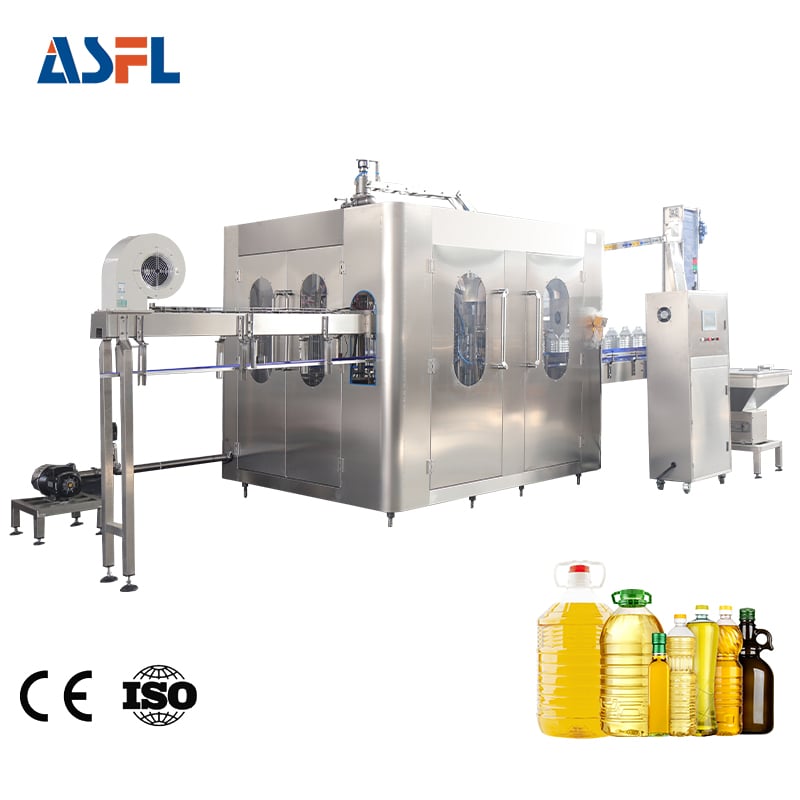
For a pet bottle oil filling machine, buyers should also think beyond the visible bottle-handling components. A smooth, properly finished product path helps support repeatable cleaning routines while the PET-container format often brings frequent format changes and close attention to drips, cap-area cleanliness, and line housekeeping. The internal condition of the filler is part of that operational picture.
What anti corrosion treatment actually protects
Anti corrosion treatment is not one universal coating or one automatic promise. The suitable approach depends on the component material, fabrication history, oil type, cleaning regime, temperature, and the customer’s hygiene specification. For stainless-steel internal parts, the work commonly begins with thorough cleaning and removal of contaminants. Where weld scale or heat tint is present, an appropriate descaling or pickling step may be needed before a passivation process. Passivation is intended to remove free iron and foreign matter so the chromium-rich passive surface can form more uniformly; it does not hide a poor weld, repair an unsuitable alloy, or replace good drainage design.
ASTM A967 is one useful reference when a purchaser needs to define chemical passivation and evidence of effectiveness for stainless-steel parts. It includes several treatment routes and alternative verification methods. The practical lesson for an oil bottle filling machine project is not to request a standard name without details. Ask which parts are treated, what condition they are in before treatment, which acceptance test is appropriate, and how treatment records relate to the actual material grade and application.
The operational consequences of neglected internal surfaces
Cleaning becomes less predictable
Roughness, staining, pits, and crevices increase the number of places where residues can remain. That does not mean every mark causes a production problem, but it does make visual inspection and routine cleaning less straightforward. In an edible-oil process, a maintenance team may then spend more time isolating whether an issue comes from product residue, cleaning chemistry, a seal, or the metal surface itself.
Filling consistency can be harder to maintain
Deposits or localized corrosion around a valve seat, nozzle passage, or pump component can change how easily a liquid path drains or responds. The exact effect depends on the filling principle and oil properties, so it should not be assumed from appearance alone. Still, evaluating internal surfaces alongside valve design and cleaning access gives a more complete basis for protecting stable operation.
Small defects can turn into larger maintenance work
A surface issue identified before commissioning is usually simpler to evaluate than one discovered after repeated cleaning cycles and production stops. This is why life-cycle cost deserves attention in addition to initial configuration. The most useful question is not whether an oil bottle filling machine has an anti-corrosion claim; it is whether the supplier can show where treatment is applied, how internal welds and low points are handled, and how the system can be inspected later.
Where to focus the technical review
Use the process flow drawing to trace every wetted section rather than reviewing only the tank and external panels. The following areas merit a deliberate discussion:
- Product-contact material: Confirm the proposed grade for tanks, pipes, valves, nozzles, manifolds, and pump parts against the oil and cleaning conditions.
- Welds and transitions: Ask how internal welds are finished and whether heat tint, scale, and fabrication contamination are addressed before final treatment.
- Crevices and seals: Review gasket seats, threaded zones, dead legs, and clamp connections for cleanability and drainage.
- Surface-treatment scope: Identify whether passivation or another treatment covers only fabricated assemblies, replacement parts, or the full wetted circuit.
- Cleaning chemistry: Match cleaner concentration, temperature, contact time, and rinse practice to the materials and seals. Strong chemicals or extended exposure used outside their intended conditions can create their own compatibility issues.
- Verification: Define what documents, inspection points, or agreed tests will demonstrate that the requested treatment was completed.
Automatic operation does not remove the need for human checks. A practical handover plan can include baseline photographs of accessible product-contact areas, a list of treatment records, cleaning instructions, and a scheduled inspection of filters, nozzles, valve seats, and drain points. This gives operators a reference before normal wear obscures the original condition.
Material and treatment selection should follow the actual duty
There is no useful one-size-fits-all material statement for every oil-filling line. Edible oil, flavored products, industrial lubricants, and blends can have different compatibility considerations, and the cleaning regime often drives the corrosion discussion as much as the product does. Temperature, chloride exposure, water quality, and the frequency of wet cleaning should be captured during technical clarification.
For example, a project with frequent washdown and complex manifolds may require closer attention to weld finishing, drainage, and cleaning validation than a simple, low-throughput configuration. Conversely, choosing a higher-cost alloy without clarifying the surface condition, cleaning process, and component geometry may not solve the root cause. Speed and changeover flexibility are also worth weighing against access for inspection; a compact valve block may save space while demanding a more careful maintenance plan.
A procurement checklist for an oil bottle filling machine
- Provide the oil type, expected temperature range, bottle format, target throughput, and planned cleaning method.
- Request a wetted-parts list that distinguishes product-contact components from external frames and guards.
- Ask for the internal-finish and corrosion-treatment scope, including treatment after welding, machining, or repair where relevant.
- Review drawings for low points, trapped volumes, inaccessible joints, and mixed-metal contact.
- Agree on documentation and inspection criteria before fabrication, not only at final acceptance.
- Plan operator training around cleaning, changeover, drainage checks, and the signs that warrant a maintenance review.
A supplier focused on liquid, paste, and sauce filling equipment can help structure these questions around the product path and the intended operating routine. The goal is a configuration that can be technically clarified and tested with your samples, not a generic corrosion statement detached from the line’s actual duty.
Conclusion
Anti corrosion treatment is critical for an oil bottle filling machine because the inside of the system must remain cleanable, inspectable, and dependable through fabrication, cleaning, and daily production. It supports—not replaces—appropriate material selection, careful weld finishing, sensible product-path design, compatible cleaning procedures, and documented verification. When comparing a pet bottle oil filling machine, make internal treatment part of the technical review from the start. Your bottle format, oil, cleaning schedule, and target output should all be available for the supplier’s engineering discussion.
 Hot News