 EN

What factors affect total cost of ownership for juice filling line equipment
Purchase price is only the first number in a juice filling line decision. A credible total-cost-of-ownership review asks what the line will cost to install, run, clean, change over, maintain, validate, and recover after an interruption. For a buyer comparing proposals, this is more useful than treating the lowest equipment quote as the lowest-cost option.
A juice filling line also has to fit the product process. Juice acidity, pulp level, viscosity, carbonation, package format, production schedule, and required shelf life can all change the equipment configuration and the operating burden. The practical approach is to turn those conditions into a multi-year comparison sheet before awarding the project.
Start with the cost boundary, not the filler price
Define the boundary of the juice filling line before comparing offers. It may include product preparation connections, heat treatment, transfer piping, filling and capping, conveying, labeling, inspection, coding, secondary packaging, utilities, controls, installation, commissioning, and operator training. If a quote stops at the filler while another includes more of these connections, the headline figures are not comparable.
Use the same time horizon for every alternative—often the expected useful life or a defined planning period. Then capture one-time costs and recurring costs separately. This makes a more expensive juice filling line configuration easier to evaluate when it may reduce repetitive manual work, cleaning time, changeover losses, or unplanned stoppages under the buyer’s actual conditions.
1. Product process and hygienic design
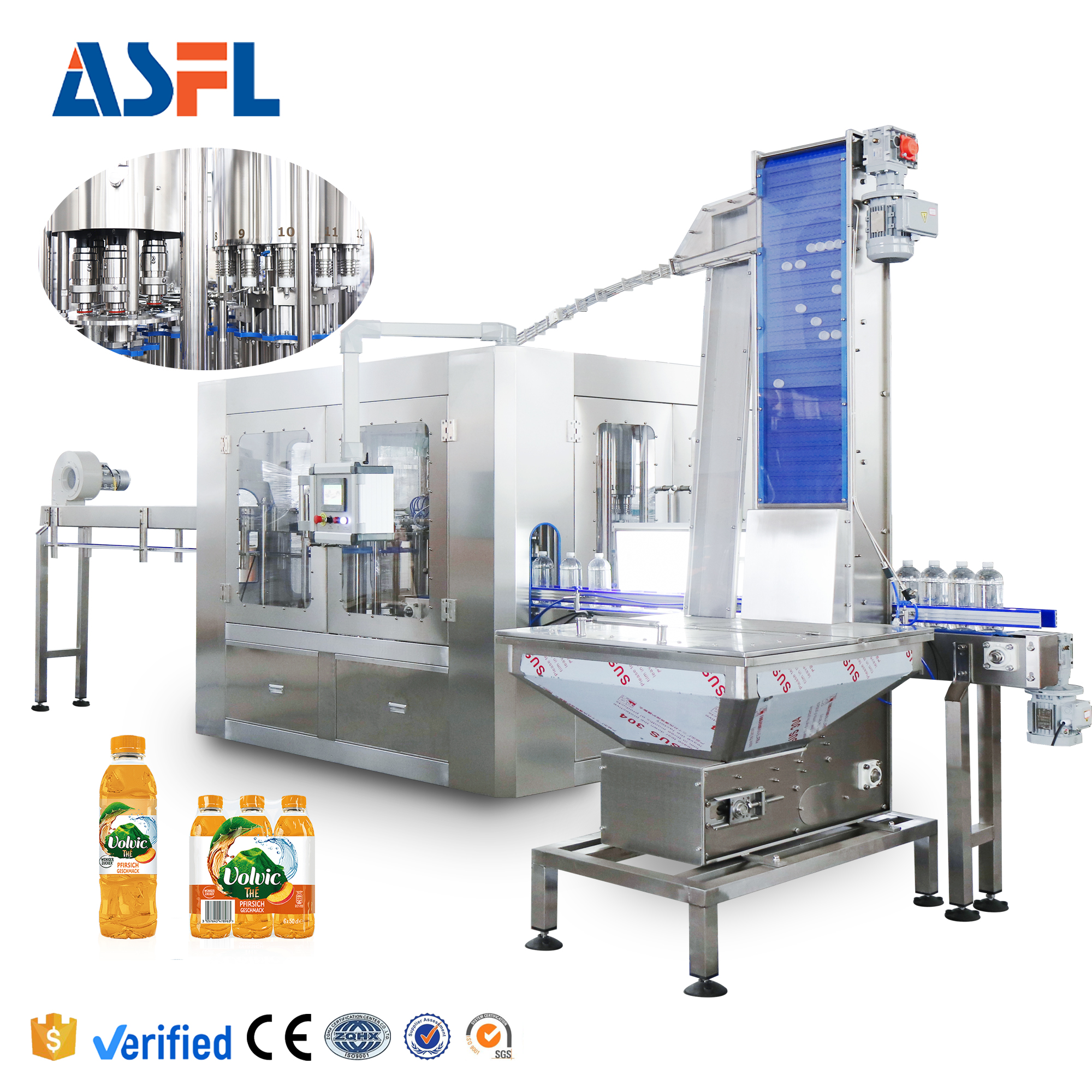
The process route is a major ownership-cost driver. A hot-fill application, for example, may place different demands on product handling, bottle compatibility, controls, and cleaning than an aseptic filling process. The choice between an aseptic route and a thermal route should follow the product, shelf-life target, packaging, local requirements, and validation plan—not a generic preference.
In applicable U.S. juice operations, FDA guidance discusses monitoring time and temperature as critical limits in pasteurization arrangements and emphasizes process verification. That does not prescribe a universal line design, but it shows why sensors, records, calibration, validation work, and operator procedures belong in the TCO budget. A juice filling line with the right monitoring architecture may require more initial scope yet avoid costly retrofits or documentation gaps later.
Ask suppliers to map every product-contact area, drain point, valve cluster, gasket, and clean-in-place path. Cleaning convenience depends on dead-leg control, access, recipe discipline, and confirmation procedures. A lower-priced juice filling line can carry a higher operating burden if cleaning takes longer than the production plan allows or requires frequent manual intervention.
2. Utilities, consumables, and energy use
Energy is not simply the nameplate power of the filler. Estimate the full utility picture for the juice filling line: electricity for drives and auxiliaries, compressed air, water, steam or hot water where used, chilled water if relevant, and wastewater associated with cleaning. Include the hours the line is energized but not producing, because warm-up, sanitation, standby, and recovery time can matter in short production runs.
Consumables deserve the same treatment. Caps, labels, coding supplies, filters, lubricants, cleaning chemicals, gaskets, and wear parts have different consumption patterns. The operating team should provide realistic shift schedules, package mixes, and cleaning frequency rather than relying on a single maximum-speed assumption. For lifecycle comparisons, record each assumption and test how the result changes when utility prices, run hours, or product mix change.
3. Capacity should be measured as saleable output
Rated speed is a starting point, not the ownership-cost answer. A juice filling line may have a strong nominal output while losing saleable output through bottle instability, cap feeding interruptions, foaming, inspection rejects, upstream starvation, or downstream accumulation limits. Higher speed does not necessarily produce steadier operation.
Ask for a line-balance review that considers the slowest practical station, buffer behavior, and the conditions used to state output. Request a commissioning and acceptance plan that defines product, bottle, cap, ambient conditions, run length, reject handling, and measurement method. This helps avoid comparing a high stated speed on one proposal with an established sustained rate on another.
Changeover is equally important for mixed portfolios. The cost of a juice filling line includes lost production during format changes, cleaning between products, adjustment checks, and the labor needed to restart consistently. Break each changeover into observable steps and compare the tooling, adjustments, parts storage, and verification required for each format.
4. Reliability, maintenance, and spare-parts strategy
Unplanned downtime can outweigh a small difference in capital cost, especially where filling, capping, and conveying must remain synchronized. Assess the juice filling line as a system: accessibility around drives and valves, diagnostic information, recommended preventive-maintenance intervals, local service arrangements, lead times for critical parts, and the skill level needed for common repairs.
A useful bid worksheet separates planned maintenance from corrective maintenance. Planned work includes inspections, lubrication, calibration, and replacement of known wear items. Corrective risk covers failures that stop production and may require outside support. For each proposal, list the recommended start-up spares, annual consumables, critical long-lead components, training, and remote-support terms. Do not assume that more automation eliminates the need for operator checks; it changes the maintenance profile.
5. Integration, installation, and commissioning
Site work is often undercounted. The installed cost of a juice filling line can include civil changes, drainage, ventilation, power distribution, utility piping, controls integration, guarding, material handling, commissioning labor, trial materials, and production ramp-up. Clarify who owns each handoff boundary and where responsibility changes between suppliers.
Use a staged acceptance checklist: mechanical completion, dry run, water run where appropriate, product run, cleaning verification, format-change verification, and documented handover. The checklist should reflect the actual product and packaging plan. It is less costly to expose a handoff issue before commercial production than after a launch date has been set.
6. A practical TCO worksheet
| Cost group | What to capture | Question for the proposal review |
|---|---|---|
| Capital and installation | Equipment, freight, site work, utilities, integration, commissioning | What is excluded or assigned to another party? |
| Operation | Labor, energy, water, air, thermal utilities, cleaning chemicals, consumables | Which inputs depend on throughput, format, or cleaning schedule? |
| Availability | Planned maintenance, unplanned stops, changeovers, rejects, ramp-up loss | What conditions were used for the stated performance? |
| Compliance and quality | Monitoring, calibration, records, validation, inspection, training | Which controls are needed for the target market and process? |
| Support and renewal | Spare parts, service travel, software or controls support, future format additions | What is the response path and likely parts lead time? |
For each year, add projected operating costs to initial investment, then state the assumptions behind production hours, output, scrap, utility rates, maintenance events, and discounting if the finance team uses it. The goal is not a false-precision number. It is a transparent comparison that shows which variables control the decision.
Questions to resolve before selecting a juice filling line
- What product properties and sanitation route must the line support?
- What saleable output is needed by package, shift, and season?
- How long do cleaning and format changes take under documented conditions?
- Which utilities, validation tasks, and site connections are included?
- Which spare parts and maintenance tasks are needed in the first operating year?
- What acceptance criteria will demonstrate that the juice filling line meets the agreed conditions?
The soundest purchase decision views a juice filling line as an operating system, not a standalone machine. Compare the full installed scope, cost drivers, assumptions, and acceptance conditions. That approach makes trade-offs visible early and gives operations, quality, engineering, and procurement a common basis for evaluating total cost of ownership.
 Hot News








