 EN

Maintaining stringent Good Manufacturing Practice (GMP) standards in a beverage production facility requires strict microbial isolation, predictable sanitization cycles, and zero cross-contamination during liquid transfer. In high-care production environments—such as functional beverages, dairy-based drinks, cold-pressed juices, and pharmaceutical-grade liquid dietary supplements—manual or semi-automated packaging lines introduce high contamination risks through human contact, uncontrolled ambient exposure, and irregular CIP validation.
Integrating a fully enclosed automatic filling system transforms a standard processing plant into a certified GMP beverage production workshop. By automating container handling, liquid metering, valve actuation, and inline sanitization, beverage manufacturers establish repeatable process control that satisfies global food safety audits while maximizing production efficiency.
Core Engineering Advantages of Automatic Filling System for GMP Standards
Achieving full compliance inside a GMP beverage production workshop depends heavily on how liquid contact surfaces, pneumatic actuators, and mechanical drive assemblies are designed. A high-efficiency automatic filling system addresses structural hygienic bottlenecks through three foundational engineering innovations.
Automated CIP and SIP Integration
Standard filling machinery often requires partial disassembly for line sanitization, exposing clean piping to ambient plant air and introducing human error into chemical concentration ratios. An automatic filling system built for a GMP beverage production workshop features integrated Clean-In-Place (CIP) and Sterilize-In-Place (SIP) recirculation channels with automatic dummy cups.
-
Closed-Loop Sanitization: Caustic wash, acid rinse, and superheated steam (up to 121°C) circulate through all liquid pathways, filling valves, and manifold headers without operator intervention.
-
Dead-Leg Elimination: Piping geometries adhere to ASME BPE standards, maintaining smooth internal surface roughness (Ra < 0.4 µm to 0.8 µm) to prevent bio-film accumulation.
Controlled ISO Class 5 Cleanroom Isolation
Controlling atmospheric cleanliness during high-speed bottling is mandatory under GMP protocols. Modern automated filling carousels incorporate stainless steel laminars equipped with HEPA/ULPA filtration units (Class 100 / ISO 5).
-
Positive Differential Pressure: High-efficiency blowers maintain continuous positive air pressure inside the filling zone, forcing airborne microbes and dust particulates outward away from exposed container necks.
-
Glove-Port Operation: Operators monitor and adjust production using external PLC touchscreens, keeping human intervention completely outside the sterile filling zone.
Parameter Comparison: Traditional Packaging vs. Automatic Filling System
The table below highlights key technical operational metrics contrasting conventional filling equipment against an automated GMP beverage production workshop setup:
| Technical Parameter / Feature | Conventional Manual / Semi-Auto Line | Advanced Automatic Filling System |
| GMP Cleanliness Class | ISO Class 8 or Unclassified | ISO Class 5 (Class 100 Enclosure) |
| Sanitization Method | Manual Strip & Clean / Spray Down | Automated Closed-Loop CIP / SIP |
| Wetted Contact Materials | Standard 304 Stainless Steel | AISI 316L Electro-polished Stainless |
| Dosing Control Method | Mechanical Level / Timer Valves | Mass Flow Meter / Electromagnetic Metering |
| Batch Traceability Data | Manual Paper Logging | Automated SCADA / 21 CFR Part 11 Audit Trail |
| Contamination Rejection Rate | High (1.5% - 3.0% batch risk) | Ultra-Low (< 0.01% batch risk) |
Implementing an automatic filling system inside a GMP beverage production workshop eliminates manual variance, ensuring every batch meets regulatory specifications.
Regulatory Compliance Standards for GMP Beverage Facilities
Deploying an automatic filling system ensures complete compliance with international food and beverage manufacturing requirements. Regulatory agencies inspect physical machinery layouts, surface finishes, and batch validation records during operational audits.
Key Global Hygienic Standards
-
FDA 21 CFR Part 117 (CGMP for Food): Mandates sanitary equipment construction, easy cleanability, and protection against food product contamination from drip oil, lubricants, and metal fragments.
-
EHEDG Guidelines (Doc 8 & Doc 14): Defines hygienic engineering metrics for liquid packaging equipment, specifying self-draining surfaces, radius corners (> 3mm), and shadow-free welding.
-
ISO 22000 & FSSC 22000: Establishes strict Hazard Analysis Critical Control Point (HACCP) monitoring along the bottling line, requiring real-time logging of pasteurization and filling temperatures.
Real-World Case Study: Functional Botanical Beverage Line Audit
A functional beverage enterprise producing prebiotic herbal teas faced compliance issues during a third-party audit of their GMP beverage production workshop. Their legacy semi-automatic filling line suffered from inconsistent CIP sanitization cycles and unsealed neck transfer zones, leading to micro-bacterial spoilage in 1.8% of finished retail units.
Upgrade Implementation
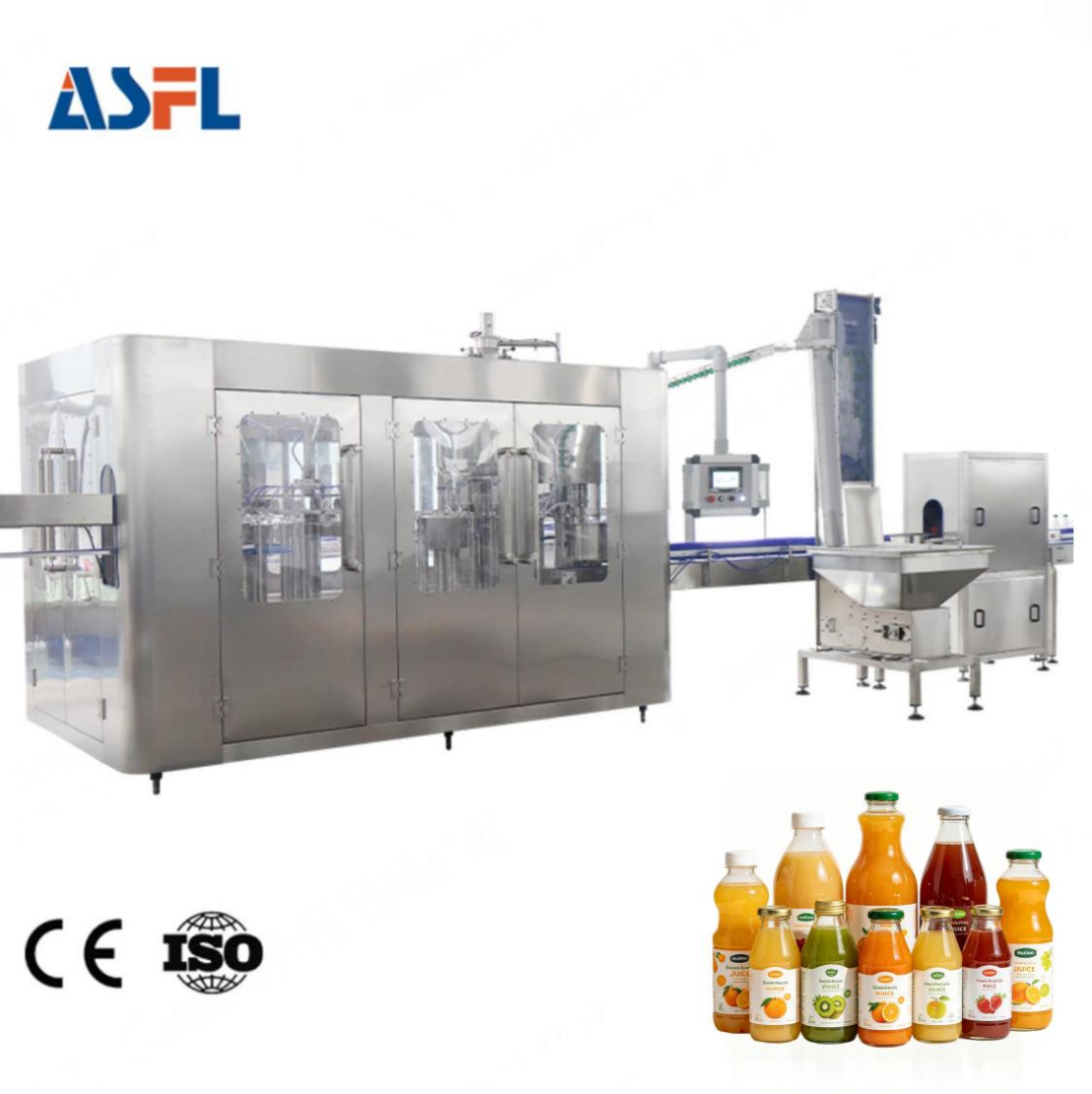
ACE-FILLING designed and installed a fully enclosed 3-in-1 monoblock automatic filling system engineered specifically for high-hygiene requirements:
-
Integrated electro-polished AISI 316L stainless steel manifold with automated CIP dummy cups.
-
Positive-pressure HEPA filtration enclosure surrounding the rinsing, filling, and capping carousels.
-
Electromagnetic flow meter dosing heads providing non-contact liquid filling into glass bottles.
Measured Results
-
Microbial Compliance: Zero bacterial contamination recorded across 12 consecutive months of audit sampling.
-
Product Yield: Batch rejection rates dropped from 1.8% to 0.002%, saving over $85,000 annually in wasted raw materials.
-
Audit Certification: The plant successfully achieved full FSSC 22000 and FDA CGMP certification on its initial re-inspection.
Strategic Implementation Checklist for Facility Engineers
When specifying an automatic filling system for an upcoming facility renovation or greenfield project, engineering teams must verify critical facility integration prerequisites:
-
Utility Capacity Verification: Ensure plant steam generation, purified water loops (PW/WFI), and oil-free compressed air lines supply sufficient pressure during simultaneous CIP cycles.
-
Floor Drainage & Sloping: Verify floor gradients beneath the filler feature corrosion-resistant stainless steel trench drains designed to handle hot CIP acid and caustic discharges.
-
Material & Operator Airlocks: Separate raw container inlet channels from finished product outlets using high-speed air curtains or airlocks to preserve cleanroom pressure balance.
-
Validation Documentation Package: Require your machinery vendor to provide comprehensive Factory Acceptance Testing (FAT), Site Acceptance Testing (SAT), Installation Qualification (IQ), and Operational Qualification (OQ) protocols.
To review sanitary monoblock configurations, custom cleanroom integration plans, and complete liquid line specifications, visit





 Hot News








