EN

Packaging carbonated beverages requires strict pressure equilibrium to prevent foaming and preserve carbon dioxide (CO2) dissolved in the liquid matrix. When filling beer under atmospheric conditions, the sudden pressure drop causes rapid CO2 breakout, leading to severe surface fobbing, inconsistent fill volumes, and excessive dissolved oxygen (DO) pickup.
An automatic beer bottling machine equipped with counter pressure (isobaric) technology resolves this instability by equalizing internal bottle pressure with the filling tank pressure prior to beer introduction. By maintaining controlled isobaric conditions throughout the filling phase, commercial breweries protect beer head retention, achieve precise fill heights, and extend package shelf life.
The Four-Phase Counter Pressure Cycle Explained
The counter pressure filling valve assembly operates through a synchronized multi-stage mechanical and pneumatic sequence. Each phase protects liquid stability and limits Total Pick-Up Oxygen (TPO).
1. Vacuum Evacuation and CO2 Purging
Before beer enters the container, the sealing rubber bell creates a hermetic seal over the bottle finish. A double-evacuation vacuum pump draws ambient air out of the bottle, reducing oxygen content down to under 5%. Immediately following evacuation, pure CO2 gas pressurizes the bottle interior. Repeating this double pre-evacuation cycle lowers dissolved oxygen pickup to less than 30 ppb (parts per billion).
2. Isobaric Pressurization
Once purged, the CO2 gas valve remains open until the pressure inside the bottle matches the internal head pressure of the filling bowl (typically 1.5 to 2.5 bar, depending on carbonation levels and product temperature). Because the pressure across the filling valve orifice is equalized, no liquid can discharge prematurely.
3. Gravity Liquid Discharge
With pressure fully balanced, a heavy-duty return gas tube opens alongside the main liquid valve spring. Gravity draws cold beer (typically 0°C to 2°C) down the inner walls of the glass or PET bottle in a smooth laminar layer. The displaced CO2 inside the bottle flows backward into the top manifold of the automatic beer bottling machine through the return gas channel.
4. Pressure Snifting and Venting
When liquid reaches the lower tip of the return gas tube, flow automatically stops. The main liquid valve shuts down, and a needle-throttled exhaust valve—known as the snift valve—slowly vent excess pressure from the bottle headspace into an exhaust manifold. Gradual decompression prevents sudden flash-foaming before the container passes into the crowning station.
Technical Comparison: Counter Pressure vs. Atmospheric vs. Vacuum Filling
The selection of filling valve design directly affects carbonation stability, shelf-life longevity, and mechanical complexity:
| Mechanical Metric | Counter Pressure (Isobaric) Filling | Atmospheric Gravity Filling | Pure Vacuum Level Filling |
| Target Beverage | Carbonated Beer, Cider, Sparkling Wine | Still Water, Juices, Edible Oils | Spirits, Vinegar, Wine |
| CO2 Retention | Ultra-High (Zero CO2 gas loss) | Low (Severe degassing occurs) | Moderate to Low |
| DO Pickup Level | Extremely Low (< 15 - 30 ppb) | Uncontrolled (> 200 ppb) | Moderate (> 100 ppb) |
| Operating Pressure | 1.5 bar – 4.0 bar positive pressure | Ambient (0 bar relative) | Negative pressure (-0.4 bar) |
| Sanitizing Method | Automatic CIP / SIP closed loops | Manual wash down | Semi-automatic spray ring |
Global Standards and Quality Control for Brewery Packaging
Operating an automatic beer bottling machine under commercial production conditions requires adherence to global food safety and pressure vessel compliance frameworks. High-pressure CO2 piping and sanitary liquid contact manifolds must meet rigorous engineering certifications.
Core International Standards
-
ASME Section VIII / PED 2014/68/EU: Governs design and burst pressure ratings for stainless steel counter pressure balance tanks and CO2 manifold chambers.
-
FDA 21 CFR 177.2600 & EHEDG: Mandates food-contact synthetic seals (EPDM, FKM, PTFE) to prevent flavor leeching, micro-fissure bacterial harborages, or degradation under acidic CIP wash cycles.
-
ISO 9001 & CE Packaging Machinery Directives: Ensures mechanical safety, emergency pressure relief valve calibration, and electrical panel protection (IP65/IP67) against washdown water ingress.
Industrial Case Study: Craft Brewery Bottling Line Upgrade
A commercial regional brewery producing bottle-conditioned craft IPAs and lagers experienced high product returns due to premature oxidation and variable fill levels. Operating an aging gravity-assisted filler, their packaged beer exhibited Total Pick-Up Oxygen (TPO) levels exceeding 150 ppb, causing staling within 60 days of distribution.
Machinery Upgrade Implementation
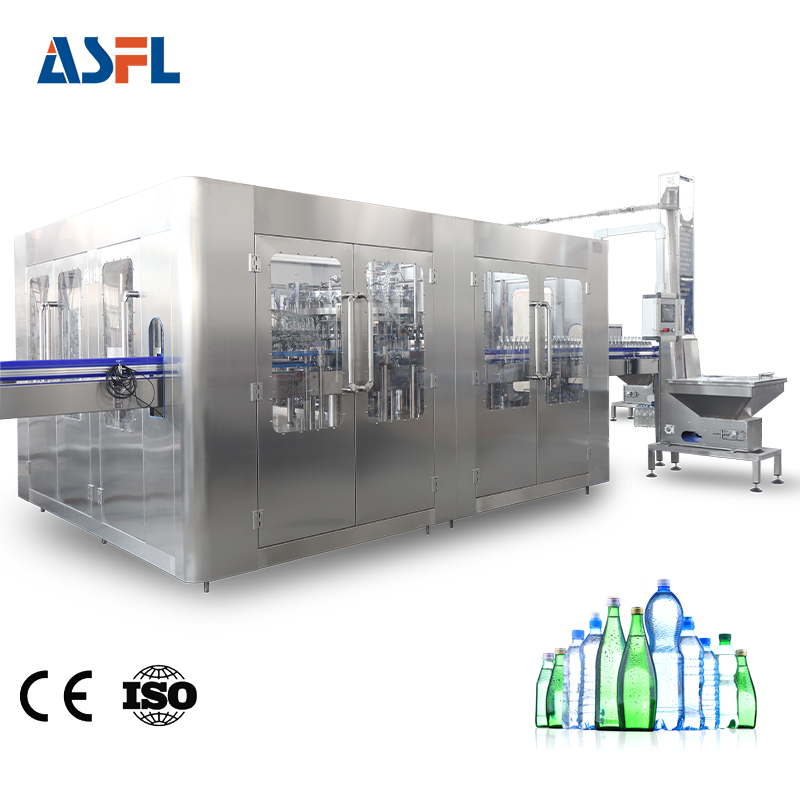
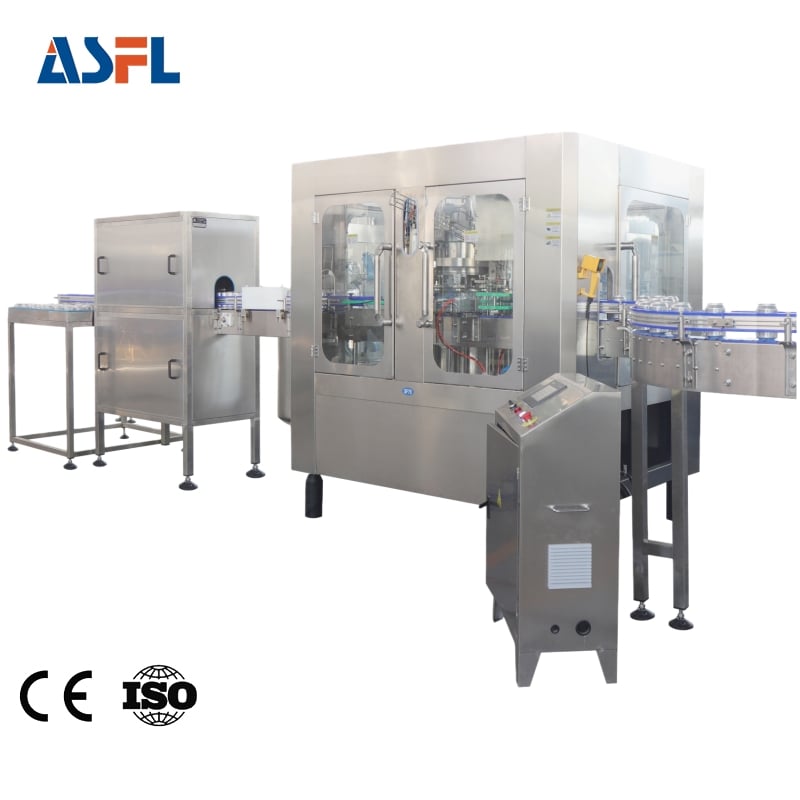
ACE-FILLING designed and installed a high-efficiency 18-head monoblock automatic beer bottling machine featuring:
-
Double-stage pre-evacuation vacuum pumps paired with dedicated pure CO2 purging channels.
-
Electro-pneumatically controlled counter pressure filling valves with precision snifting needles.
-
Integrated high-pressure jetting (fobber) unit prior to crown application to purge residual neck air.
Quantifiable Operational Improvements
-
Dissolved Oxygen Reduction: TPO dropped from 150 ppb to under 25 ppb, extending product shelf life from 2 months to over 12 months.
-
Fill Level Consistency: Volumetric variations dropped from ± 4.5mm down to ± 0.8mm, eliminating off-spec package rejections.
-
Foam Management: Snifting control eliminated foam boil-over, reducing liquid waste by 3.2% per production shift.
Essential Operation and Maintenance Checklist
To maintain optimal isobaric stability and prevent mechanical air leaks on an automatic beer bottling machine, engineering teams must adhere to routine preventative maintenance:
-
Inspect Sealing Bells: Examine rubber bottle-neck seals daily for cracks or deformation to guarantee airtight sealing during CO2 pressurization.
-
Calibrate Snift Valves: Audit snift venting speed weekly; overly rapid venting induces flash-foaming, while slow venting creates line bottlenecks.
-
Verify Vacuum Pump Efficiency: Test double pre-evacuation vacuum levels routinely to ensure manifold suction reaches -0.85 bar relative pressure.
-
Sanitize CIP Circulation Loops: Execute daily three-step Clean-In-Place cycles (hot caustic, sterile water rinse, peracetic acid) using automatic CIP dummy cups to preserve sterile valve pathways.
For custom rotary monoblock designs, counter pressure specs, and turnkey brewery line layouts, visit
 Hot News