 EN

Executing a Site Acceptance Test (SAT) or Factory Acceptance Test (FAT) for a carbonated drink filling line acceptance process requires verifying strict mechanical, microbiological, and volumetric metrics. Carbonated soft drinks (CSD), sparkling waters, and energy beverages contain dissolved carbon dioxide gas under pressure, making them sensitive to temperature fluctuations, fluid turbulence, and pressure drops during bottling.
Commissioning a carbonated drink filling line acceptance protocol ensures that the machinery meets designed rated speeds, minimizes product yield loss, preserves carbonation stability, and guarantees long-term compliance with international food safety standards before final sign-off and commercial operation.
Core Key Performance Indicators (KPIs) for Acceptance Testing
A thorough carbonated drink filling line acceptance evaluation relies on quantifiable technical indicators. Facility engineers must audit five primary operational dimensions during full-speed test runs.
1. Carbonation Retention and Dissolved CO2 Stability
Preserving target carbonation levels (typically 3.0 to 4.2 volumes of CO2) is vital during bottling. During a carbonated drink filling line acceptance run, technicians sample filled bottles across all filling heads using temperature-compensated CO2 meters.
-
Pressure Drop Limit: Internal gas pressure drop from the carbonator vessel to the capped bottle must remain within ± 0.1 bar.
-
Temperature Stability: Product feed temperatures must remain controlled between 2°C and 4°C to prevent degassing during valve transfer.
2. Dissolved Oxygen (DO) Pickup Control
Excess atmospheric air introduced into liquid during high-speed filling causes premature oxidative degradation. Double pre-evacuation counter pressure valves minimize air contact.
-
Target Benchmark: Total Pick-Up Oxygen (TPO) increase during liquid transfer must not exceed 30 ppb to 50 ppb.
-
Vacuum Level Verification: Evacuation manifolds must maintain stable negative pressure (-0.85 bar to -0.90 bar) prior to CO2 gas pressurization.
3. Fill Level and Brix Consistency
Volumetric accuracy protects profitability and regulatory compliance. Mass flow meter or isobaric electronic level sensors must maintain tight fill tolerances:
-
Volumetric Standard Deviation: Fill height variance must stay under ± 0.8 mm across a 1,000-bottle sample batch.
-
Brix Precision: In-line refractometer monitoring must verify consistent syrup-to-water blending ratios without sugar stratification.
Technical KPI Acceptance Matrix: Testing Benchmarks
Evaluating a carbonated drink filling line acceptance procedure requires comparing operational metrics against industry benchmarks:
| KPI Performance Category | Minimum Pass Threshold | Industry Benchmark | Testing Method / Tool |
| Line Efficiency (OEE) | >= 90% over 8-hour continuous run | >= 95% continuous output | Automated SCADA logger |
| Bottling Speed (BPH) | 98% of rated mechanical speed | 100% rated capacity | In-line photo-eye counters |
| Capping Removal Torque | Within closure specs (e.g., 1.2–2.0 Nm) | Precise torque uniformity | Digital torque analyzer |
| Container Damage Rate | < 0.05% total run bottles | < 0.01% (zero scuffing) | Visual inspection / sensor check |
| CIP Sanitization Time | Completed within 45 – 60 minutes | Fully automated closed-loop | Conductivity & temperature sensors |
Executing this matrix during carbonated drink filling line acceptance verifies that every valve, starwheel, and capper head operates within strict technical boundaries.
Global Compliance Standards for CSD Filling Lines
Fulfilling a carbonated drink filling line acceptance procedure demands strict alignment with global engineering and hygiene standards. International compliance protects equipment safety, product purity, and factory audit approval.
Relevant Regulatory Frameworks
-
FDA 21 CFR 117 / BRCGS Food Safety: Governs hygienic construction, food-contact surface cleanliness, and protection against lubricants or foreign matter.
-
ISBT (International Society of Beverage Technologists): Mandates CO2 gas purity testing, closure removal torque guidelines, and beverage carbonation measurement standards.
-
ISO 22000 & CE Machinery Directive (2006/42/EC): Certifies pressure vessel safety standards (PED 2014/68/EU) for counter pressure carousels and emergency shut-off protocols.
Real-World Case Study: 24,000 BPH CSD Line Acceptance Test
A major regional CSD manufacturer commissioned a 24,000 BPH packaging line for PET bottle carbonated soft drinks. Previous line installations suffered from excessive surface foam, leading to high rejection rates during initial testing.
Acceptance Protocol Implementation
ACE-FILLING executed a structured 72-hour continuous carbonated drink filling line acceptance trial, monitoring critical parameters:
-
Deployed high-precision electro-pneumatic counter pressure valves with integrated snift throttling.
-
Verified double pre-evacuation efficiency using pure CO2 gas flushing.
-
Conducted continuous automated torque tests across all 12 capping heads.
Measured Testing Results
-
OEE Performance: Achieved 94.6% overall equipment effectiveness across 32 consecutive production shifts.
-
Carbonation Preservation: Maintained 3.8 volumes CO2 with a variance of less than ± 0.03 volumes.
-
Dissolved Oxygen Control: Recorded average TPO pickup of only 22 ppb, easily passing the customer's 40 ppb limit.
-
Final Sign-Off: The line successfully passed initial audit review, meeting all formal contractual requirements on schedule.
Essential Site Acceptance Testing (SAT) Checklist
Engineering teams conducting a carbonated drink filling line acceptance audit should follow this practical step-by-step verification checklist:
-
Perform Dry Mechanical Run: Verify starwheel alignment, bottle handling guide clearances, and safety interlocks without liquid feed.
-
Audit Pressure Vessel Certificates: Check CE, ASME, or PED stamp documentation for counter pressure bowls and manifold tanks.
-
Conduct 8-Hour Continuous Liquid Run: Run the machine at 100% rated speed to measure temperature stability, energy consumption, and OEE.
-
Validate Automatic CIP Cycles: Audit Clean-In-Place cup positioning, flow rates, and chemical residual clearance post-wash.
-
Inspect Capping Torque Integrity: Verify removal torque across all capping heads to prevent gas micro-leakage during transit.
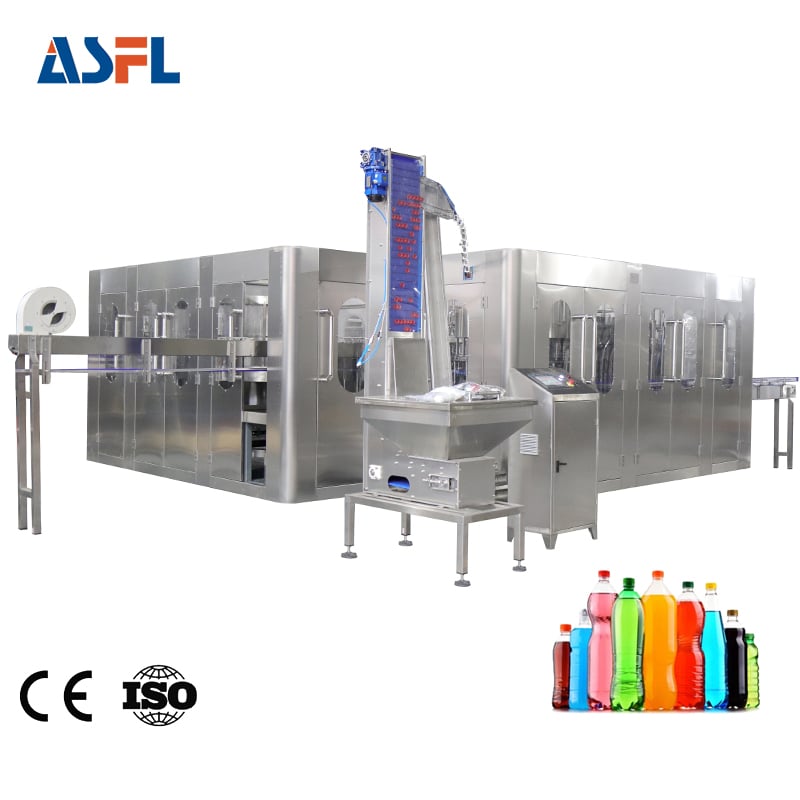
To view custom carbonated monoblock options, turnkey CSD line configurations, and engineering specs, visit



 Hot News








