 EN

Understanding Efficiency Metrics in Modern Beverage Packaging
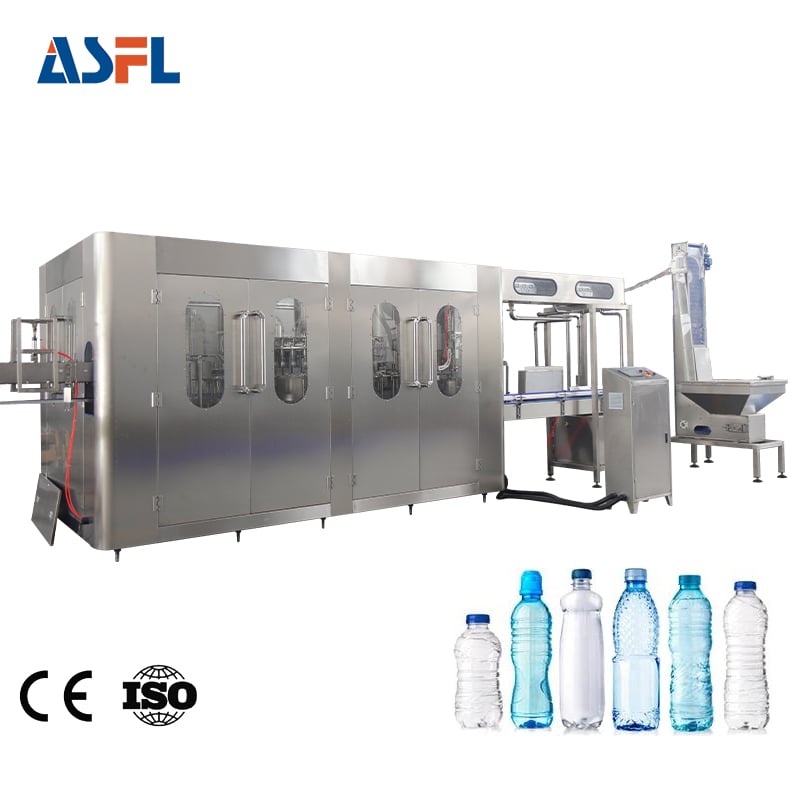
Maximizing production output while minimizing waste is the primary objective of any industrial facility operating a fully automatic mineral water bottling plant. In high-speed packaging lines, measuring raw output volume alone provides an incomplete picture of operational success. Equipment can run fast while generating massive container scrap or suffering constant micro-stoppages. To achieve true manufacturing excellence, plant managers rely on Overall Equipment Effectiveness (OEE) as the gold standard metric. Determining the actual OEE value of a fully automatic mineral water bottling plant requires tracking three foundational pillars: Availability, Performance, and Quality.
Calculating the actual OEE value transforms abstract factory observations into actionable data. For a fully automatic mineral water bottling plant, this calculation accounts for every lost minute, uncaptured speed potential, and defective bottle produced during a scheduled shift. Without precise OEE tracking, hidden inefficiencies drain profitability through unexpected downtime, excessive utility consumption, and material waste.
Core Components of the OEE Calculation Framework
The mathematical foundation of OEE is elegant yet powerful, multiplying three distinct percentage ratios together. To evaluate a fully automatic mineral water bottling plant accurately, plant engineers must define and measure each component using real-time production telemetry rather than theoretical nameplate capacities.
Availability measures the percentage of planned production time that the machinery is actually running. It accounts for all unplanned stops, such as equipment jams, raw material shortages, and unexpected mechanical failures, as well as planned stops like mold changeovers and CIP sanitation cycles.
Performance evaluates the speed at which the fully automatic mineral water bottling plant operates while running. It compares the actual number of bottles produced during operating time against the designed nameplate speed of the machinery, highlighting losses caused by minor stops, sensor faults, and starwheel transfer hesitation.
Quality calculates the proportion of good, sellable bottles produced relative to the total number of containers processed. This metric captures losses from defective seals, incorrect fill levels, damaged preforms, and container scrap generated during startup and shutdown phases.
Operational Loss Categories and Impact Parameters
Identifying where production time and material disappear is essential for improving the actual OEE value of a fully automatic mineral water bottling plant. The table below outlines the primary loss categories mapped across the three OEE pillars.
| OEE Pillar | Typical Bottling Plant Loss Factor | Measurement Parameter | Impact on Fully Automatic Mineral Water Bottling Plant |
| Availability Loss | Unplanned mechanical breakdown | Minutes lost per shift | Stops the entire monoblock rinsing, filling, and capping line |
| Availability Loss | Format changeover and setup | Total changeover duration | Reduces total available operating time per production day |
| Performance Loss | Minor stops and idling (< 5 mins) | Frequency of sensor pauses | Starves downstream labelers and creates micro-delays |
| Performance Loss | Reduced operating speed | Actual speed vs. rated speed | Lowers hourly output below engineering expectations |
| Quality Loss | Startup and transition scrap | Defective bottles discarded | Wastes purified water, caps, and preform material |
| Quality Loss | Inaccurate fill level rejection | Rejected bottles at optical check | Lowers net yield of sellable finished product |
Analyzing these parameters helps plant engineers isolate whether downtime stems from mechanical unreliability, operator bottlenecks, or substandard packaging materials.
Step-by-Step Mathematical Calculation Guide
To compute the actual OEE value of a fully automatic mineral water bottling plant during a standard eight-hour production shift, plant operators must execute a clear, step-by-step arithmetic sequence.
Consider a practical production scenario:
-
Total Planned Production Time: 480 minutes (one 8-hour shift).
-
Planned Maintenance and CIP Time: 60 minutes.
-
Net Planned Operating Time: 420 minutes (480 minus 60).
-
Unplanned Downtime (Jams and Faults): 42 minutes.
-
Actual Operating Time: 378 minutes (420 minus 42).
-
Designed Line Speed: 12,000 bottles per hour (200 bottles per minute).
-
Total Bottles Produced (Gross): 65,000 bottles.
-
Defective or Rejected Bottles (Quality Loss): 1,200 bottles.
-
Good Sellable Bottles Produced: 63,800 bottles.
Step One: Calculate Availability. Availability equals Actual Operating Time divided by Planned Operating Time. Calculation: 378 minutes divided by 420 minutes equals 0.900, or 90.0 percent.
Step Two: Calculate Performance. Performance equals Total Gross Bottles Produced divided by the output possible during actual operating time at rated speed. Possible output at rated speed: 378 minutes multiplied by 200 bottles per minute equals 75,600 bottles. Calculation: 65,000 gross bottles divided by 75,600 possible bottles equals 0.8598, or 86.0 percent.
Step Three: Calculate Quality. Quality equals Good Sellable Bottles divided by Total Gross Bottles Produced. Calculation: 63,800 good bottles divided by 65,000 gross bottles equals 0.9815, or 98.2 percent.
Step Four: Calculate Final OEE Value. OEE equals Availability multiplied by Performance multiplied by Quality. Calculation: 0.900 multiplied by 0.860 multiplied by 0.982 equals 0.7599, yielding an actual OEE value of 76.0 percent for the fully automatic mineral water bottling plant.
Digital Integration and Equipment Reliability
Achieving world-class OEE benchmarks in a fully automatic mineral water bottling plant requires shifting from manual shift-sheet logging to automated PLC data acquisition. Modern packaging lines incorporate integrated SCADA systems that record every fault code, micro-stoppage, and bottle count in real time, eliminating human error and estimation bias.
Leading machinery manufacturers, such as ACE-FILLING, design fully automatic mineral water bottling plant solutions featuring advanced diagnostics, quick-change tooling, and servo-driven transfer mechanisms that minimize micro-stoppages and format changeover times. By combining robust sanitary engineering with real-time data connectivity, plant operators can continuously optimize their actual OEE value, reduce operational overhead, and maximize line profitability. Facility managers and technical specifiers can explore advanced bottling machinery configurations and documentation by visiting
Summary of OEE Improvement Strategies
To elevate the actual OEE value of a fully automatic mineral water bottling plant, production teams must implement targeted continuous improvement initiatives:
-
Eliminate Unplanned Downtime: Focus preventive maintenance schedules on critical wear points like filling valves, capping chucks, and conveyor drives.
-
Minimize Minor Stoppages: Use automated optical sensors and intelligent PLC logic to resolve photoelectric eye misalignments instantly.
-
Optimize Changeover Speed: Adopt tool-less quick-change starwheels and guided format parts to cut setup times from hours to minutes.
-
Ensure Raw Material Consistency: Standardize bottle preform quality and cap tolerances to eliminate jams and reduce startup scrap.
By embracing these disciplined operational strategies, beverage manufacturers ensure their fully automatic mineral water bottling plant delivers maximum throughput, superior product quality, and sustained financial success.



 Hot News








