 EN

A carbonated drink filling line does not reduce carbon dioxide use simply by running at a higher speed. The useful question is whether the gas delivered to the process becomes product carbonation, controlled working atmosphere, or avoidable loss. From a production-line engineer’s perspective, the practical route is to stabilize the conditions around the carbonated drink filling line, measure deviations by operating period, and correct the source rather than raising a pressure setpoint after every foaming event.
Every carbonated drink filling line has a legitimate CO2 demand set by the recipe, target carbonation, package size, and production schedule. That baseline should not be confused with waste. A plant starts finding improvement when it compares gas use against accepted product volume and then investigates changes around startups, stops, changeovers, rejects, and cleaning recovery.
Start with a usable CO2 balance
Before changing equipment settings, assign one person to build a simple daily balance for the carbonated drink filling line. Record bulk-gas or manifold consumption, accepted packaged volume, rejected containers, runtime, planned stops, unplanned stops, and the product and package being run. Keep the same reporting boundary each day. If one shift includes mixer losses and another does not, the comparison cannot explain the filling area.
The most useful first indicator is gas used per accepted unit of product or per accepted packaged volume, tracked separately for each SKU. A carbonated drink filling line producing a small PET format will not necessarily have the same pattern as one running glass or cans. Trend the indicator through stable production, startup, shutdown, and changeover rather than relying only on an end-of-month total.
Why pressure balance matters
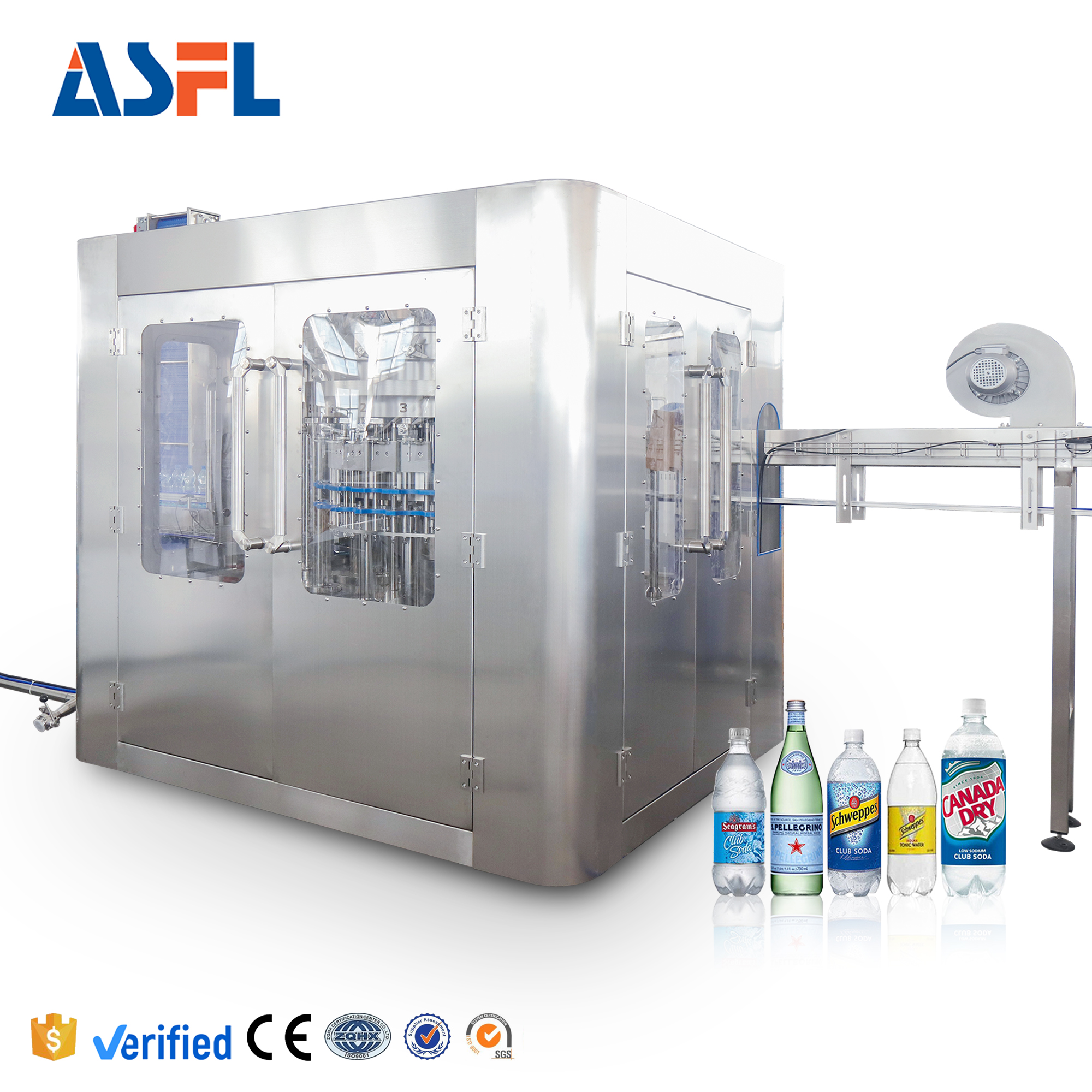
Counter-pressure, or isobaric, filling uses a controlled gas pressure around the beverage during the filling sequence. On a carbonated drink filling line, large differences between product condition, bowl pressure, container pressure, and filling timing can show up as foam, unstable fill levels, or frequent intervention. Those symptoms can send more gas through the system without improving accepted output.
The response is not to select an arbitrary higher pressure. Check the approved recipe, product temperature, carbonator condition, bowl-pressure stability, and the filling-valve sequence together. More precisely, confirm that instruments agree with their maintenance status and that operators are not compensating for a mechanical or process issue by repeatedly changing a setpoint. A carbonated drink filling line should use the validated setpoints for the product, with deviations investigated and documented.
Control temperature before blaming the filler
Carbonated product condition strongly influences how calmly the fill cycle behaves. When product temperature drifts outside the validated range, a carbonated drink filling line may show more foam or inconsistent fills even if the valve hardware is intact. Review the cold-side process before focusing only on the filler: product hold conditions, transfer time, line pauses, and the timing of restart all matter.
Use a short escalation routine. When foam increases, first verify product temperature and carbonation data according to the plant’s testing method. Next, compare bowl and gas readings with the recipe. Then inspect whether the event began after a stop, a package change, or a maintenance action. This sequence turns a vague “high gas use” complaint into a specific operating event for the carbonated drink filling line.
Reduce loss during startup, shutdown, and stops
Stable continuous production is usually easier to evaluate than intermittent running. The carbonated drink filling line deserves a separate startup and restart checklist because gas losses often become visible when product flow, container flow, and pressurization are not yet synchronized. The checklist should cover line clearance, product readiness, gas supply status, bowl stabilization, container feed, and the first accepted samples.
During short stops, record whether the carbonated drink filling line follows the approved hold procedure and whether any purge or vent action is required by the machine documentation. During longer stops, distinguish a planned controlled transition from an interruption that requires troubleshooting. Do not judge an adjustment by sound or appearance alone; compare rejected containers, accepted output, and the gas-use trend before and after the change.
Keep valves, seals, and container handling under observation
Individual filling valves matter because a small repeated deviation can become material across many cycles. On a carbonated drink filling line, inspect valve behavior as part of the maintenance plan: opening and closing consistency, visible leakage, seal condition, return-gas paths, and cleanability. Follow the equipment supplier’s maintenance intervals and approved spare-parts specification rather than treating all leakage symptoms as an operator-setting issue.
Container handling belongs in the same review. Poor bottle or can positioning, damaged finishes, unstable infeed, or capper timing issues can create rejects and stop-start instability around the carbonated drink filling line. Observe the transition into filling and the handoff out of filling. A fault at an adjacent handoff point can be mistaken for a filler issue, especially when it occurs only at a particular line speed or package format.
Use changeovers and CIP recovery as control points
A carbonated drink filling line can lose consistency after a changeover if format parts, guides, recipe selection, and first-piece checks are treated as separate tasks. Break the changeover into measurable steps and note the time, settings confirmation, first-pass acceptance, and any adjustment made. This is more useful than recording only the total changeover duration.
After CIP, verify that the line has returned to the validated production configuration before using gas-consumption data as a performance judgment. Cleaning and sanitation procedures vary by product and plant. The relevant operational point is to confirm readiness, check the first production period, and record exceptions instead of assuming every restart has the same behavior.
Create a daily review that leads to action
A practical carbonated drink filling line review can be brief. At the end of each shift, compare CO2 use per accepted output with the relevant SKU baseline. Flag a deviation only after checking product conditions, runtime, rejects, and downtime category. Then assign one owner and one verification point for the next run. This approach keeps the investigation tied to evidence.
- Confirm the SKU recipe and approved process settings.
- Review product temperature and carbonation results using site procedures.
- Compare bowl and gas-pressure readings with the validated operating window.
- Separate stable-run use from startup, stop, and changeover use.
- Inspect repeat valve, seal, container-handling, and handoff-point symptoms.
- Record the corrective action and check its effect on accepted output and CO2 use.
Conclusion
A carbonated drink filling line reduces avoidable carbon dioxide consumption when the plant uses gas use as a process signal, not only as a utility bill. Stable temperature and pressure relationships, disciplined restart routines, maintained valves and interfaces, and SKU-level measurement make it easier to locate loss sources. Actual results depend on the beverage, package, validated recipe, and equipment configuration, so changes should be reviewed through controlled operating data before they become standard practice.
For teams evaluating a carbonated drink filling machine, the same principle applies: ask how the filling process will be measured, maintained, and verified in daily operation. The right operating routine gives a carbonated drink filling line a clearer path to stable output and more accountable CO2 management.




 Hot News








