 EN

Buying a hot juice filling machine is not simply a matter of choosing a stated output. In hot-fill production, the beverage, bottle, closure, filling zone, and cooling path work as one process. An automatic juice filling machine can support a repeatable workflow, but its configuration has to match the validated product process rather than a catalogue number alone.
From a process-fit perspective, begin with the liquid and package. Then check speed, automation, and line interfaces. That order is useful because hot juice behavior at the filler can change with pulp level, foam, temperature loss, bottle geometry, and upstream supply stability.
Start with the hot-fill process, not the machine speed
A hot juice filling machine handles juice that reaches the filler after the producer's approved thermal process. Supplier materials commonly describe hot filling in the region of 85–92 °C, but this is planning context, not a universal setpoint. The required temperature, holding conditions, and package treatment depend on the formulation, process authority, destination market, and validated production plan.
For example, U.S. rules for acidified foods identify an equilibrium pH of 4.6 or lower and require process controls. That does not mean a filler alone establishes compliance. It means the filler must reliably maintain the conditions specified for the actual beverage and package. Ask the process team to define the inlet temperature range, allowable temperature drop, target fill level, closure sequence, and cooling method before comparing an automatic juice filling machine.
Map the beverage characteristics to the filling method
The right hot juice filling machine depends on how the product behaves in motion. Clear, low-viscosity juice, nectar, and juice with suspended pulp can place different demands on product handling and filling control. A product that foams readily may need gentler product delivery, a filling profile that limits splash, and enough time to observe level stability at production conditions.
- Viscosity and particulates: confirm whether the selected valves and product path suit the liquid and any pulp size or concentration.
- Foam tendency: test fill accuracy and bottle appearance with the actual beverage at the intended temperature.
- Temperature sensitivity: define where temperature is measured and how alarms or line stops are handled.
- Cleaning requirements: review product-contact surfaces, drainability, access points, and the clean-in-place sequence with the sanitation team.
It is worth correcting a common assumption here: a higher rated speed does not automatically create a stable process. Stable liquid supply, bottle transfer, and controlled filling conditions are what allow a hot juice filling machine to sustain a practical rate.
Check the bottle, cap, and post-fill sequence together
Hot fill is a package process as well as a filling process. The bottle must tolerate the intended thermal and mechanical conditions, and the closure must be applied consistently after filling. Depending on the validated process, the package may need controlled contact between hot product and the closure or headspace, followed by a defined hold, inversion, or cooling sequence.
This is why an automatic juice filling machine should be evaluated with its capper and downstream equipment. Bottle neck finish, cap torque requirements, transfer timing, and cooling layout can affect the result even when fill volume looks correct. If a line uses several bottle formats, request a documented changeover sequence and verify which parts, guides, and settings change for each size.
Decide how much automation is useful
An automatic juice filling machine can reduce manual handling and improve repeatability, but automation still needs human checks. At minimum, clarify how operators confirm product temperature, fill level, cap application, rejects, and cleaning readiness. Also ask what happens after a conveyor backup, low-product condition, or planned stop: does the system pause safely, retain usable settings, and make restart checks clear?
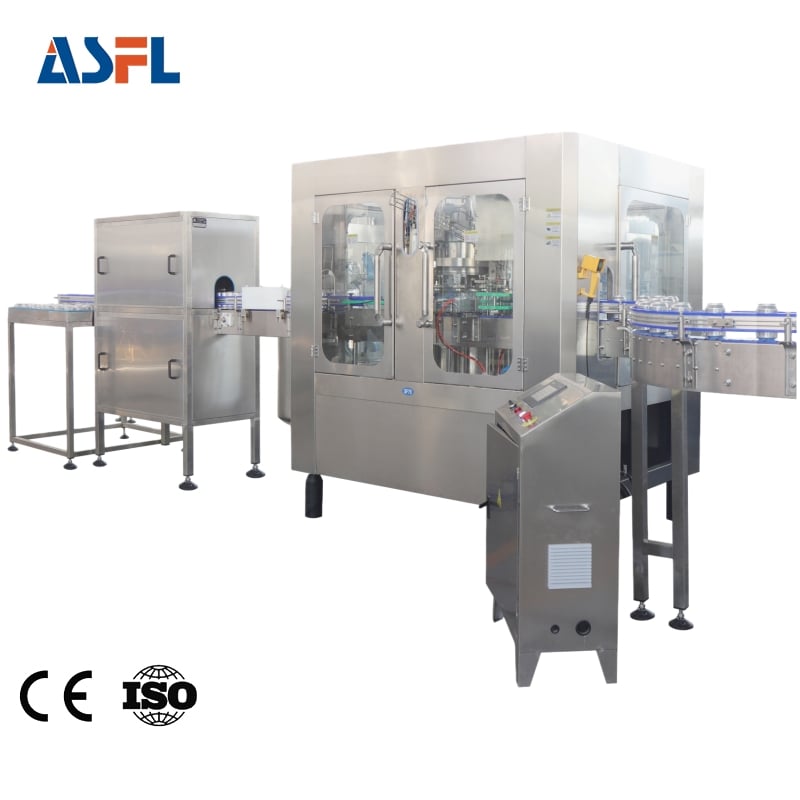
For a new line, a monoblock arrangement may reduce transfer points by combining functions such as rinsing, filling, and capping. For an existing line, a separate filler may be easier to integrate. Neither layout is inherently right; the decision depends on floor space, maintenance access, upstream preparation, and the existing capper, conveyors, and cooling equipment.
Specify hygiene and cleanability in measurable terms
Stainless construction is only one part of a hygienic design review. Ask which components contact product, how seals and valves are accessed, whether the product path drains fully, and how cleaning validation will be documented. A useful question is not “is it sanitary?” but “which product-contact locations are cleaned, inspected, and released before the next run?”
Also define the boundary between the hot juice filling machine and the wider cleaning system. Product tanks, piping, return paths, cap handling, and cooling sections may sit outside the filler scope while still affecting hygiene and startup time. Clear responsibility at these interfaces avoids a gap between machine delivery and production readiness.
Use acceptance testing to turn claims into evidence
Before selecting an automatic juice filling machine, agree on a test plan using representative juice, bottles, caps, and production conditions where possible. The objective is to verify the agreed process window, not merely to watch an empty machine run.
| What to confirm | Why it matters for hot fill | How to verify |
|---|---|---|
| Inlet and fill temperature | Supports the approved process window | Use calibrated measurements at agreed points during a representative run |
| Fill level and repeatability | Protects pack presentation and headspace control | Measure multiple bottles after steady operation and format changes |
| Foam and product handling | Can affect fill consistency and closure conditions | Run the actual beverage at intended temperature and observe the full sequence |
| Cap application and transfer | Filling and closure must work as one package process | Inspect capped bottles through downstream handling and cooling |
| Cleaning and changeover | Influences uptime and sanitation readiness | Time the documented procedure and inspect access points with operators |
Questions to send with your inquiry
A concise requirement sheet improves the quality of any proposal for a hot juice filling machine. Include:
- Product description, viscosity range, pulp or particulate details, and foam observations.
- Approved process conditions, including the target temperature range and how it will be validated.
- Bottle drawings, neck finish, cap type, fill volume, and planned formats.
- Required output expressed as a sustainable line target, not only a peak rate.
- Current and planned upstream/downstream equipment, utility details, and available floor space.
- Hygiene, cleaning, documentation, commissioning, and acceptance-test expectations.
Make the final choice around verification
The most useful hot juice filling machine is the one whose configuration can be checked against your beverage, package, and operating routine. Put the product and package conditions first; then assess automation, filler layout, maintenance access, and line speed. When the supplier, process team, and production team share one verification list, an automatic juice filling machine becomes easier to specify and commission without relying on broad claims.
For hot-fill projects, request a technical discussion that starts with the process sheet and package samples. That conversation will reveal whether the proposed solution fits the actual production line and which assumptions still need a trial.

 Hot News








