 EN

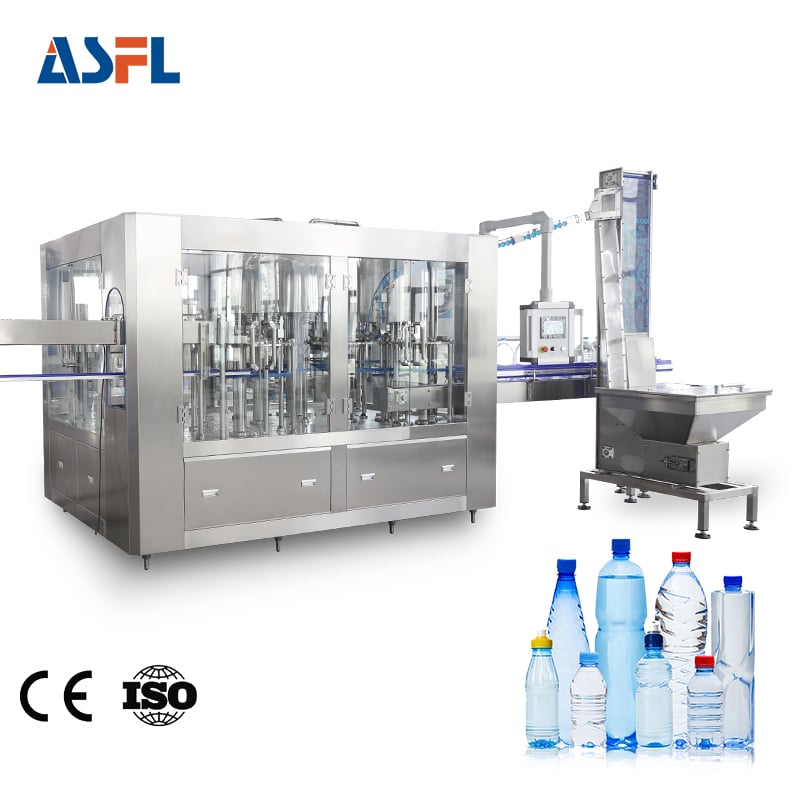
Unplanned equipment downtime and microbiological contamination are the leading threats to high-speed bottling efficiency. Establishing rigorous, standardized maintenance routines for a mineral water filling line is vital to securing maximum OEE (Overall Equipment Effectiveness) while upholding product purity.
Because mineral water lacks sugar and preservatives, natural spring water and purified water lines rely strictly on mechanical hygiene, precise torque control, and immaculate sterile barrier seals. Implementing systematic water packaging line maintenance procedures prevents scaling, seal degradation, and bottle alignment failures before they interrupt production. Leading equipment OEMs like ACE-FILLING build advanced bottling systems with self-diagnostic maintenance tracking, allowing plant managers to transition from reactive firefighting to predictive mineral water filling line maintenance.
Daily Preventive Care and CIP Cleaning Cycles
Daily maintenance forms the frontline defense against microbial growth and micro-particulate buildup in high-speed bottling plants. Operators must carry out specific sanitation and mechanical check routines prior to every shift startup and after production shutdown.
Key daily protocols include:
-
Clean-In-Place (CIP) Thermal Sanitation: Circulating ozonated rinse water or thermal hot water (85°C for 20 minutes) through internal SS316L liquid manifolds to sterilize fill valves and flow meters.
-
Nozzle and Membrane Inspection: Checking rubber seals, mechanical diaphragms, and spring actuators on filling heads for micro-cracks or wear.
-
Optical Sensor Cleaning: Wiping down bottle-entry photo-eyes, starwheel star-pocket proximity sensors, and cap-chute photo sensors using lint-free isopropyl alcohol wipes.
-
Conveyor Belt Lubrication: Checking dry-lube or food-grade water-soluble conveyor dosing systems to ensure smooth bottle transfer and prevent bottle tipping at high speeds.
Weekly and Monthly Mechanical Overhauls
Beyond daily operational wipes, structured weekly and monthly mineral water filling line maintenance routines focus on mechanical wear components, drive assemblies, and pneumatic pressure valves.
During weekly audits, maintenance personnel calibrate magnetic capping heads. Incorrect capping torque leads to either leaking bottle caps or damaged threads during consumer opening. Monthly overhauls require inspecting liquid flow meters, checking servo timing synchronization between the bottle-feeding worm screw and the rotary starwheel, and verifying pneumatic pressure stability across all diving nozzles.
Preventative Component Replacement & Calibration Benchmarks
To avoid unscheduled line stops, wearable sealing components and high-friction mechanical parts must be replaced according to strict running-hour schedules rather than waiting for part failure.
Maintenance Schedule & Component Lifecycle Comparison
| Equipment Sub-System | Maintenance Frequency | Key Inspection Benchmark | Replacement / Service Trigger |
| Filling Valves & Seals | Weekly Inspection / Every 2,000 Hours | Visual crack inspection, CIP pressure test | Leakage, rubber deformation, or volume variance > ±0.5% |
| Magnetic Capping Heads | Monthly Calibration | Hysteresis torque measurement (1.2–1.8 Nm) | Cap slip, skewed caps, or thread damage |
| Conveyor Starwheels & Guides | Bi-weekly Alignment | Polyethylene guide wear depth, bottle friction | Excessive bottle scratching or entry jamming |
| Pneumatic Solenoids & Cylinders | Monthly Air Audit | Air pressure leak test (6.0 Bar stable) | Sluggish diving nozzle response or pressure drops |
| Main Transmission Gearbox | Quarterly Inspection | Synthetic gear oil level & temperature check | Oil contamination, abnormal vibration, or noise |
ISO 22000 & FDA Compliance in Water Line Hygiene
Standardizing your water packaging line maintenance procedures directly impacts regulatory compliance during third-party food safety audits. Certified bottled water facilities must align every maintenance activity with ISO 22000, HACCP, and FDA 21 CFR Part 129 regulations.
-
Food-Grade Lubricants (NSF H1): All mechanical grease points located above bottle neck level—such as capper spindle slides and rotary carousel bearings—must exclusively use NSF H1 registered food-grade lubricants.
-
Digital Maintenance Logging: Modern automated filling lines store automated maintenance alerts and CIP temperature logs. Documenting every valve replacement and sanitation cycle provides verifiable traceability during safety audits.
-
Air Filtration Standards: Compressed air used for bottle blowing, pneumatic valve actuation, and capper head purging must pass through 0.01-micron sterile air filters, replaced according to differential pressure readings.
For detailed guidelines on integrating these hygienic engineering standards into complete production systems, consult our foundational reference on the
Real-World Case: Overcoming Unscheduled Downtime in High-Speed Bottling
A commercial spring water producer operating a 24,000 bottle-per-hour bottling plant suffered recurring micro-stoppages caused by inconsistent capper torque and premature filling valve diaphragm fatigue.
Partnering with technical specialists from ACE-FILLING, the plant completely restructured its maintenance framework:
-
Targeted Upgrades: Installed quick-release FDA-grade EPDM filling valve seals, implemented digital torque wrenches for weekly capper calibration, and automated CIP cycle tracking via Siemens PLC.
-
Measurable Results: Line efficiency (OEE) rose from 76% to 92% within 60 days. Unscheduled downtime dropped by 38%, and routine valve replacement time was cut from 4 hours to under 45 minutes per carousel.
Checklist for Plant Maintenance Managers
Executing consistent maintenance routines for a mineral water filling line requires clear technician training and standardized OEM spare part inventories. Plant operators should verify:
-
Availability of original OEM spare seal kits (EPDM/PTFE) matched to exact valve part numbers.
-
Calibrated digital pressure gauges and magnetic torque meters on-site.
-
Strict adherence to NSF H1 food-grade lubrication protocols across all upper carousels.
-
Automated alarm settings integrated into the HMI to alert operators when preventative maintenance thresholds are reached.

 Hot News








