 EN

A carbonated beverage filler should be judged by the carbon dioxide that remains in the sealed beverage, not by a single pressure reading on the machine. A useful check compares a representative product sample before filling with finished packages taken under the same test conditions. This gives production, quality, and engineering teams a shared way to see whether the filling process is holding carbonation within the plant’s own specification.
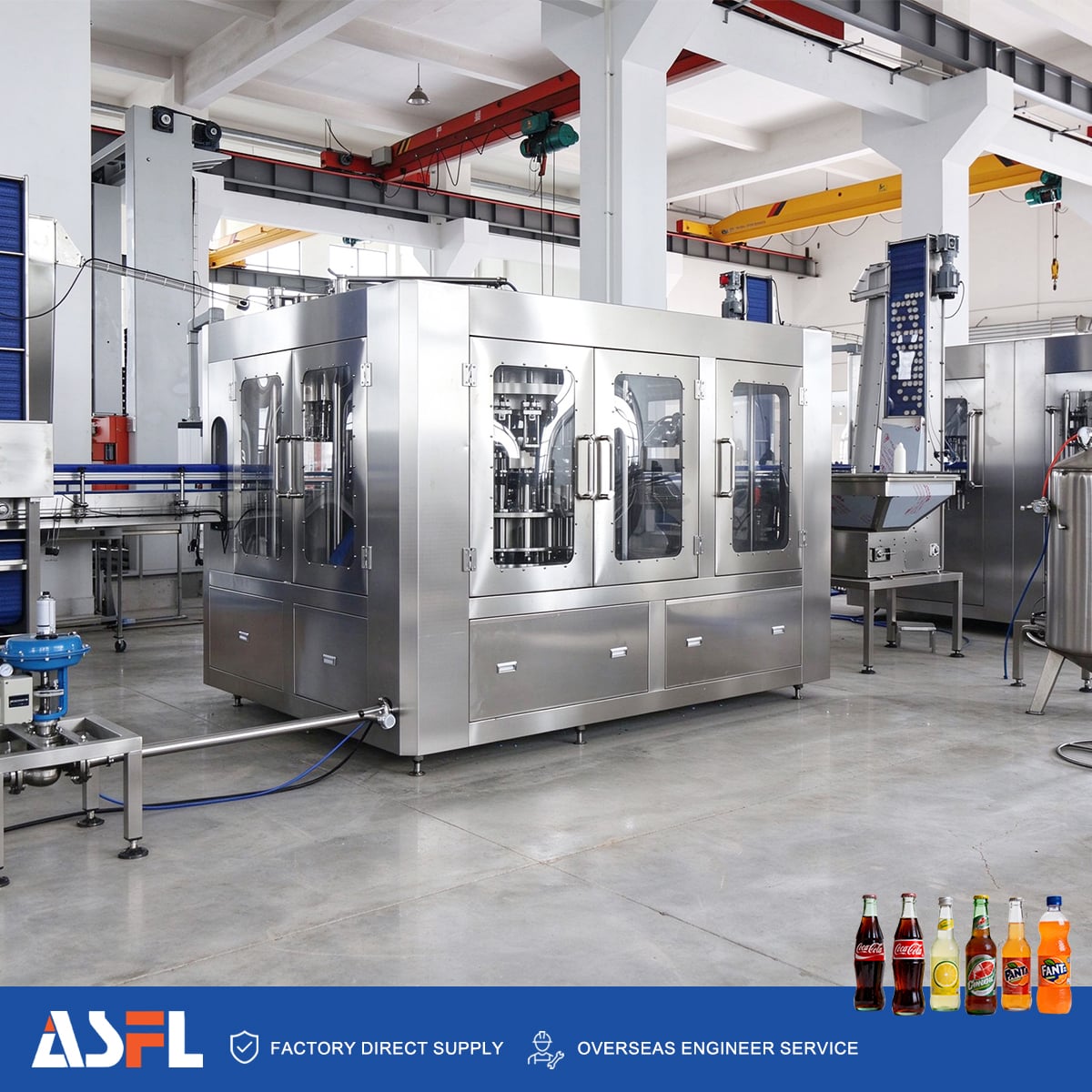
From a process-adaptation perspective, a carbonated beverage filler must be considered with the beverage, package, closure, temperature, and target line rhythm. The practical question is not simply whether the filler runs. It is whether the finished drink retains the intended dissolved CO2 after filling, capping, and a defined stabilization period.
Define carbon dioxide retention before testing
Start by agreeing on the reporting unit. Dissolved CO2 is commonly expressed as grams per liter or as volumes of CO2 per volume of liquid. Choose one unit for the test sheet and use it for every sample. A carbonated beverage filler can then be evaluated against an inlet reference and a finished-package result without mixing units or changing calculation methods.
For an operating check, define retention rate as: retained dissolved CO2 divided by dissolved CO2 in the agreed pre-fill reference sample, multiplied by 100. Record the absolute difference as well. The percentage helps compare runs, while the loss in g/L or volumes helps show the process effect in a form that operators can investigate.
The reference sample should come from a defined point after carbonation and before the carbonated beverage filler changes the product condition. If the line has a buffer tank, sampling valve, or transfer point, document exactly which location is used. Do not compare a cold inlet sample with a warm finished bottle; temperature changes can make the comparison misleading.
Prepare a repeatable sampling plan
Good sampling reduces arguments about whether a carbonated beverage filler or the test procedure caused the result. Use clean, pressure-suitable sample containers where needed, label every package immediately, and record the line conditions at the time of collection. Include the run date, product, package size, filler speed, product temperature, bowl or tank pressure where relevant, closure condition, and the name of the test method.
Take multiple samples rather than relying on one bottle. A practical plan can include an inlet reference, several finished packages from different filling valves or positions, and a repeat set after a process adjustment. Keep the timing consistent: for example, test all finished packages after the same defined period of stabilization. This separates short-term handling effects from the performance of the carbonated beverage filler.
Control the variables that alter CO2 readings
- Temperature: condition reference and packaged samples to the same defined temperature before measurement.
- Sampling location: keep the pre-fill point fixed for every comparison.
- Package integrity: reject visibly damaged, leaking, or poorly closed samples from the primary comparison and investigate them separately.
- Test timing: use the same post-fill interval so the carbonated beverage filler is not judged against inconsistent package settling.
- Method discipline: follow the validated procedure for the plant’s carbonation meter, pressure-based tester, or laboratory method.
Measure dissolved CO2 consistently
A plant may use a calibrated beverage analyzer, a pressure-and-temperature method, or another validated laboratory technique. The instrument choice is less important than applying its procedure consistently. For example, a pressure-based approach may release dissolved gas into headspace through controlled agitation and use the resulting pressure with temperature data. Some package and instrument combinations may also support optical or headspace-oriented measurement. Confirm the method’s suitability for the beverage and package before using the result for acceptance.
Before the run, verify calibration status, inspect seals and sample interfaces, and confirm that operators know the handling sequence. A carbonated beverage filler test loses value if samples are vented, shaken excessively, warmed, or opened before the measurement sequence requires it. Record the actual temperature alongside every CO2 result, not only the target temperature.
Calculate and interpret the retention rate
Use the same equation for every run:
CO2 retention rate (%) = (finished-package dissolved CO2 / pre-fill reference dissolved CO2) × 100
Suppose the reference sample measures 6.0 g/L and the averaged finished-package result measures 5.7 g/L under the same defined conditions. The retention rate is 95%, and the observed loss is 0.3 g/L. This example is a calculation illustration, not a universal pass limit. Each product owner should set its own acceptance range based on formula, carbonation target, package, sensory requirement, and validated production conditions.
Look beyond the average. If one valve position gives lower retained CO2 than the rest, the carbonated beverage filler may need a valve-level inspection. If all positions fall together after a speed increase, evaluate the wider process: product temperature, transfer stability, bowl pressure, purge behavior, fill profile, closure timing, and conveyor handling can all influence the result.
Investigate a low retention result in sequence
When results decline, first check whether the test conditions were comparable. Then move from product preparation to the carbonated beverage filler and finally to package handling. This sequence avoids treating a measurement variation as a mechanical fault.
- Verify the inlet reference, sample temperature, analyzer condition, and calculation sheet.
- Review carbonation consistency upstream and confirm that product feed conditions remained stable during sampling.
- Inspect the carbonated beverage filler for pressure balance, filling-valve behavior, fill-height consistency, and abnormal foaming.
- Review capping or sealing timing and inspect sampled packages for closure defects.
- Check downstream guides, transfers, and accumulation points for vibration, impact, or warm exposure that could disturb packages.
- Repeat the defined sample set after one controlled change, rather than making several adjustments at once.
Here it helps to separate two issues: a carbonated beverage filling machine can show a stable mechanical cycle while the complete line still loses carbonation through unstable product conditions or package handling. Moving from a single machine parameter to a validation checklist makes the root-cause discussion more useful.
Build the check into routine production control
For a carbonated beverage filler, routine CO2 retention checks are most useful when the data sheet is simple enough to use on a live line. Include the product identifier, target CO2, reference result, individual package results, average, retention rate, test temperature, relevant operating readings, package observations, and corrective action. Trend the results by product and package format rather than combining all beverages into one average.
Review results after changeovers, maintenance, recipe changes, unusual foam events, or speed adjustments. If the liquid properties and package format are stable, the comparison becomes more meaningful. If they are not stable, note the difference and reset the reference conditions before drawing a conclusion about the carbonated beverage filler.
Use a validation mindset, not a single claim
A carbonated beverage filler should support a controlled process, but retained CO2 is an outcome measured across carbonation, filling, sealing, and handling. The most reliable practice is to agree on the reference point, condition samples consistently, measure with a validated method, calculate both percentage retention and absolute loss, and investigate patterns by valve and line condition.
Before specifying changes to a carbonated beverage filler, prepare the beverage temperature range, carbonation target, package drawings, closure details, intended speed, and current test records. Those inputs turn a general CO2 concern into a testable production question and give the technical team a clearer basis for evaluating the next run.





 Hot News








