 EN

Labor cost in a beverage workshop is not simply the number of people standing beside bottles. It is the total time spent positioning empty containers, starting and stopping filling, placing caps, watching bottle flow, correcting jams, checking levels, and reworking poorly sealed packs. An automatic beverage filling machine can reduce the repetitive handling inside that sequence, but the useful question is more specific: which labor tasks disappear, which move to one operator, and which still require trained people?
From a packaging-line engineering view, filling and capping should be assessed together. A machine that fills bottles quickly but creates a queue before capping merely moves the labor burden downstream. In a compact workshop, the more practical goal is a steady, observable flow from empty-bottle infeed to capped-bottle discharge.
Where manual labor accumulates in a beverage workshop
On a manual or partly manual line, one person may feed and align bottles, another runs filling valves, and a third places or tightens caps. During a busy shift, those jobs are interrupted by cap shortages, bottle misalignment, inconsistent liquid supply, cleanup, and changeovers. The staffing chart may look simple, yet labor hours grow because people repeatedly wait for the next handoff or recover from small interruptions.
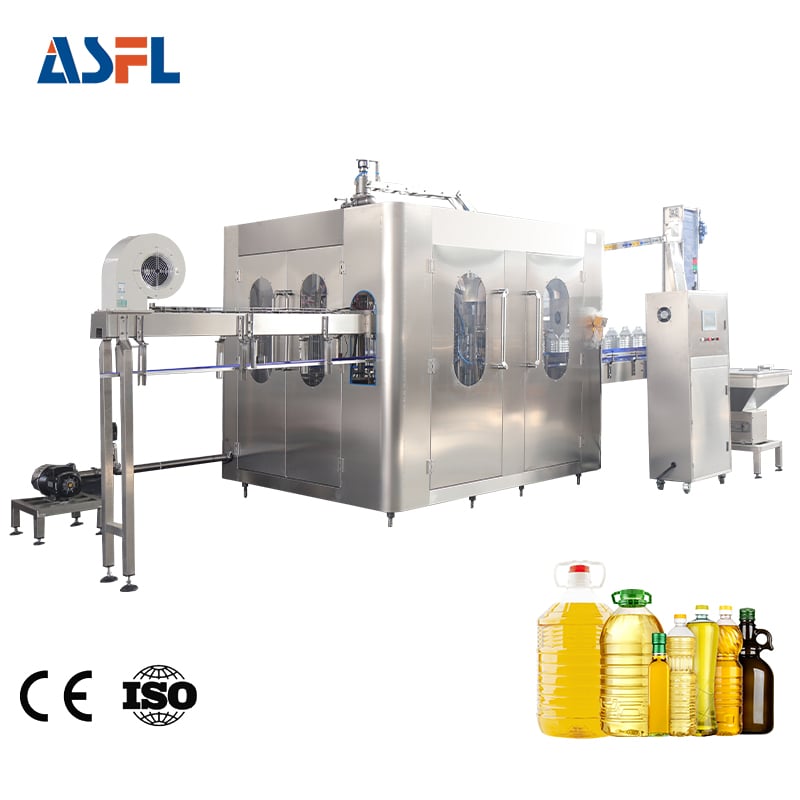
An automatic beverage filling machine changes this pattern by coordinating several repeatable motions: bottle spacing, filling initiation, discharge timing, and—when configured as an integrated unit—cap feeding and capping. The gain comes from reducing touchpoints, not from assuming that supervision is no longer needed. Operators still need to confirm the product, container, cap, fill level, equipment condition, and sanitation status.
How filling and capping automation changes the labor map
1. Repetitive bottle handling becomes a controlled sequence
With manual handling, operators place bottles at the filling point and move filled bottles to the next station. An automatic filling and capping machine can use an infeed and conveyor sequence so the bottle is presented, filled, transferred, capped, and released in a controlled order. This can consolidate several hand movements into monitoring work, especially where bottle format and product conditions remain stable.
The important boundary is bottle control. Bottle neck dimensions, base stability, and spacing tolerance should be checked before a labor projection is approved. If bottles frequently tip, snag, or arrive out of position, the operator may spend the saved time clearing interruptions instead.
2. Cap application becomes more consistent to inspect
Manual cap placement creates a recurring handoff and can make it harder to see whether capping issues originate in cap supply, bottle positioning, or the capping head. An integrated automatic filling and capping machine can sequence cap delivery with bottle movement, allowing the operator to watch one process window rather than walk between separate stations.
That does not make cap control automatic in every respect. Cap orientation, torque or tightening settings, cap quality, and bottle-neck compatibility need routine checks. A useful practice is to log exceptions by process node—cap feed, bottle position, capping action, or discharge—rather than treating every bad cap as a filling-machine problem.
3. One operator can focus on exceptions rather than constant handling
After a stable setup, the operator’s role typically shifts from repetitive placement to replenishing consumables, confirming settings, sampling output, responding to alarms, and recording deviations. In other words, an automatic beverage filling machine may replace continuous hand motions with periodic control tasks. For a workshop owner, that shift matters because the same person may support preparation, quality checks, or downstream packing during normal running.
Calculate labor cost from the current line, not a generic saving claim
A reliable investment discussion starts with a before-and-after task map. Record how many people are assigned to filling and capping, their loaded hourly cost, planned run time, typical stoppage minutes, reject or rework time, and time spent on changeovers and cleaning. Then compare the future state using the planned machine layout and the same production requirement.
| Measure | Manual or semi-manual baseline | Automated target to validate |
|---|---|---|
| People assigned during normal running | List each filling, cap-placement, and transfer task | List operator, material replenishment, and quality-check tasks |
| Labor hours per production run | Include waiting, handling, cleanup, and rework | Include setup, monitoring, cleaning, and planned inspection |
| Lost time | Record jams, handoff delays, and missing caps | Record alarms, replenishment, and changeover stops |
| Output acceptance | Track fill-level and cap-quality checks | Use the same acceptance checks after automation |
A simple comparison is: labor cost per accepted bottle = total direct labor cost for the run ÷ accepted bottles from that run. It is more useful than comparing nameplate speed alone. Faster production is not automatically lower cost if frequent stops, product loss, or difficult cleaning consume the extra capacity.
Labor savings depend on stable upstream and downstream conditions
An automatic beverage filling machine works as part of a line. Liquid supply must remain stable, empty bottles must arrive consistently, caps must be available in the correct orientation, and discharge capacity must match the machine rhythm. When any of these conditions varies, a compact workshop may need an operator nearby more often than its initial labor model assumed.
Consider the transition between filling and capping as a shared control point. Filling quality affects what reaches the capper, while capping interruptions can cause filled bottles to accumulate. Reviewing the two stations together helps identify whether an added conveyor section, cap feeder capacity, buffer, or revised layout is needed before labor can actually be reassigned.
Do not remove the checks that protect beverage quality
Automation changes work; it does not remove responsibility for hygiene, verification, and maintenance. For operations subject to U.S. food rules, 21 CFR Part 117.40 requires equipment to be adequately cleanable and installed so cleaning and maintenance can be performed. Requirements differ by market, but the operating principle travels well: leave access around the machine, define cleaning steps, and ensure food-contact surfaces and controls can be inspected.
Before a shift, confirm the product and container match the approved setup. During a run, verify fill level, cap condition, leaks, bottle flow, and alarms at a planned frequency. After the run, clean relevant product-contact areas and record abnormal events. These tasks may take less continuous labor than manual filling, but they need capable ownership.
A practical validation plan before committing to automation
- Map the current work. Time each touchpoint from empty-bottle handling through capped-bottle discharge.
- Define the real product conditions. Confirm beverage characteristics, bottle dimensions, cap type, target output, sanitation routine, and available floor space.
- Set acceptance criteria. Agree on fill-level checks, cap-quality checks, changeover steps, and what counts as an interruption.
- Run representative trials. Use the actual bottle and cap where possible, and observe both routine running and replenishment events.
- Compare accepted output and labor hours. Review the total cost per accepted bottle after including operators, setup, cleaning, and foreseeable maintenance.
Conclusion: reduce handling, retain control
An automatic beverage filling machine can help a beverage workshop reduce labor cost when it replaces repeatable bottle handling and integrates filling with capping in a stable flow. The financial case is strongest when the workshop measures fewer handoffs, lower rework time, and better use of skilled operators—not when it relies on a universal staffing promise. Start with the present task map, validate the equipment around real bottles and caps, and keep hygiene, inspection, and maintenance responsibilities visible in the new workflow.





 Hot News








