 EN

Choosing a bottle water filling machine supplier is not just a matter of comparing a quoted output rate and a total price. A filling line has to work with your water treatment, bottle and cap format, hygiene program, utilities, operators, and downstream packing equipment. A useful comparison asks each supplier to show how its proposed system will perform under defined conditions—not simply what it can do in an ideal demonstration.
For a buyer assessing a water bottle filling machine, begin with the product and package, then use the same evidence-based questions for every bidder. That approach makes differences in scope, risk, and support easier to see.
Start with a written operating brief
Before inviting proposals, make a one-page operating brief. It should state the water source and treatment route, target bottle materials and sizes, neck finish, cap type, desired net fill range, shifts, expected annual volume, available floor space, utility conditions, and downstream equipment. Also note whether bottles arrive as preforms or empty containers and whether the line must connect with labeling, shrink wrapping, case packing, or pallet handling.
This is more important than it sounds. A supplier may quote the same nominal capacity while assuming a single bottle size, a short transfer path, or a stable upstream buffer. If your plant will run several formats, ask each bidder to identify every part changed during a format change and the labor, tools, and verification involved. A stated machine speed is meaningful only when the bottle, liquid, closure, and line conditions are clear.
Compare the filling method with the water and package
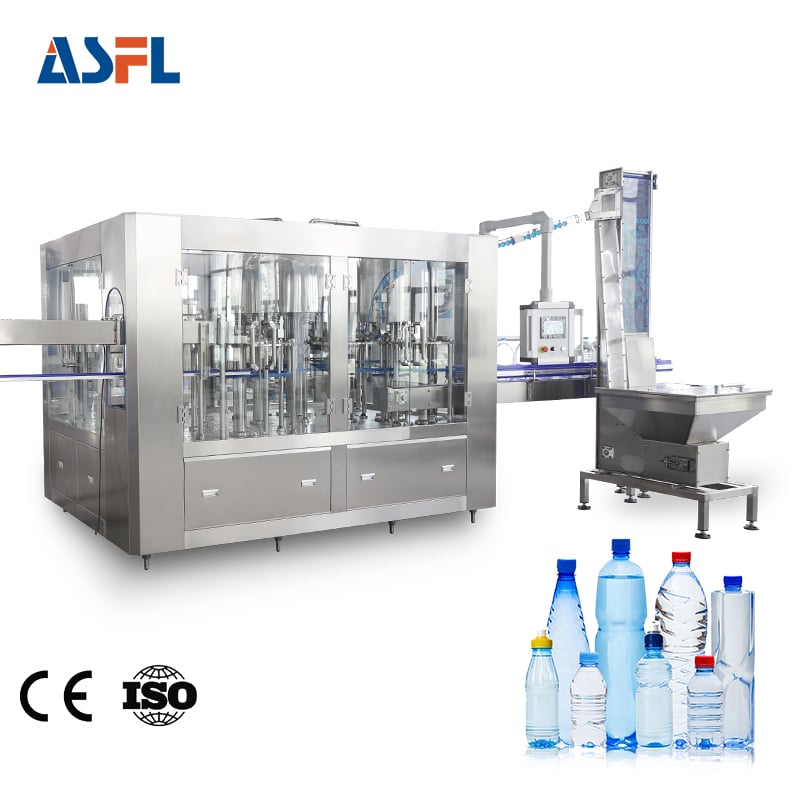
Ask the supplier to explain the filling principle and why it fits your application. Water is relatively low in viscosity, but filling behavior can still be affected by temperature, pressure, dissolved gas, foaming, bottle geometry, and the chosen fill level. Request drawings or descriptions of the bottle handling path, nozzle-to-bottle positioning, drip control, and any measures used to manage splash or foam.
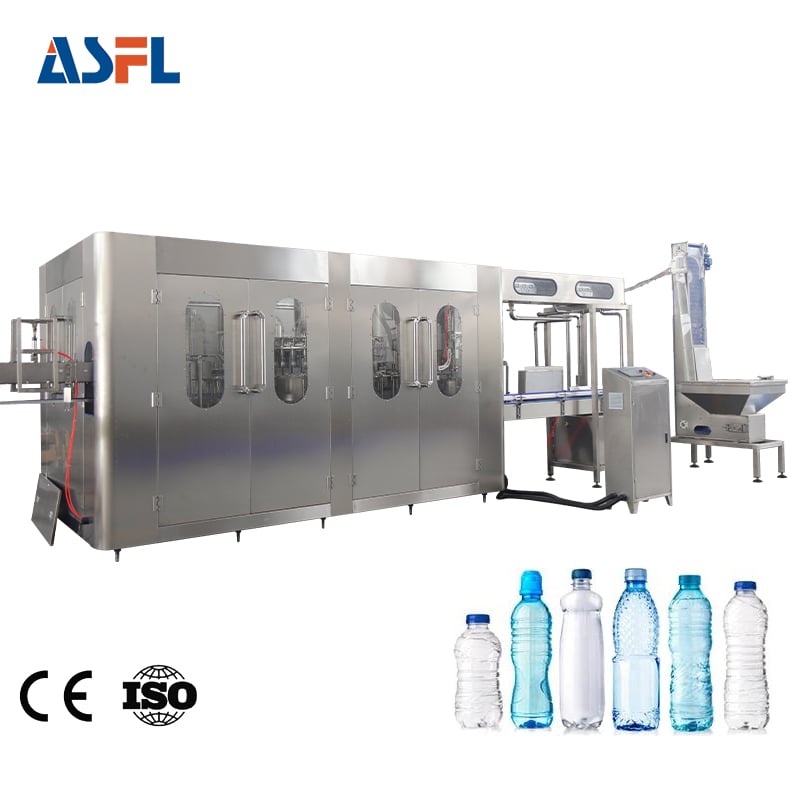
For each proposed bottle water filling machine, compare the conditions behind the capacity claim: bottle size, number of filling heads, product temperature, fill volume, reject rate, and line configuration. Ask whether the quoted throughput is a mechanical maximum, a sustained operating target, or an output observed during a specified acceptance test. The distinction prevents a high headline figure from becoming a difficult production target.
Examine hygienic design and cleanability
Hygienic design should be reviewed as a practical maintenance question, not a material label on a quotation. For example, U.S. bottled drinking water operations are subject to current good manufacturing practice requirements in 21 CFR Part 129. Equipment requirements in 21 CFR 117.40 also emphasize cleanable equipment, corrosion-resistant food-contact surfaces where applicable, and installation that facilitates cleaning and maintenance. Local regulations and your product process may impose different or additional requirements, so confirm the applicable standard with your quality team.
Ask each supplier to identify food-contact materials, surface finishes, seals, hose specifications, drain points, and locations that require manual access. Request the cleaning sequence, the parts that must be removed, expected cleaning time, and the records or instructions supplied with the line. A sound evaluation looks for accessible nozzles, logical drainage, protected product paths, and enough clearance around the equipment for safe inspection. Stainless steel alone does not answer those questions.
Evaluate controls, traceability, and line integration
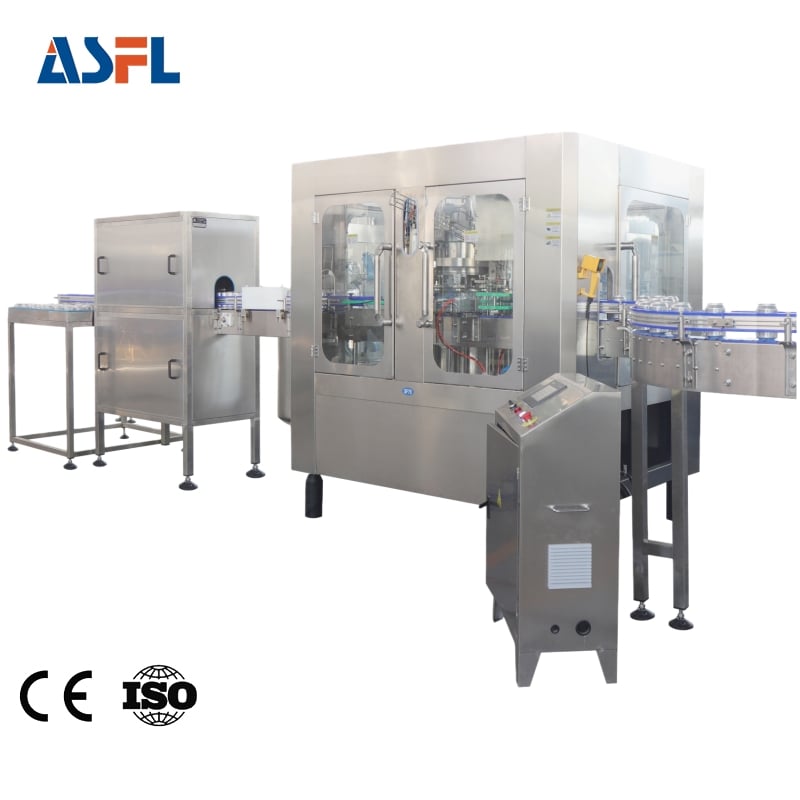
A water bottle filling machine may operate well on its own yet struggle when it must match a capper, labeler, or conveyor. Ask for a line layout showing product flow, bottle accumulation, transfer points, sensors, and reject handling. Review how the system responds to bottle jams, low caps, low product supply, container misalignment, and downstream stops. The most useful proposal describes both normal operation and recovery after a minor interruption.
On the controls side, request a clear list of operator screens, alarms, recipes, user access levels, and available production records. Determine which process values are recorded, how recipes are backed up, and whether remote service requires your approval. Clarify the handoff signals to upstream water treatment and downstream packaging before ordering. A simple signal list can expose missing responsibilities early.
Turn quality claims into an acceptance-test plan
Rather than accepting broad assurances, attach a factory acceptance test and site acceptance test to the purchase scope. The plan should name the bottle and closure samples, product conditions, test duration, output target, allowable rejects, fill-level method, leak-check method, changeover demonstration, and documentation to be delivered. Include who supplies samples, who witnesses the test, and what happens if an agreed condition is not met.
Use the same checklist for all suppliers. During a demonstration, observe more than the average speed: watch bottle transfer stability, cap application, rejects, operator access, alarms, cleanup steps, and restart behavior. If a supplier cannot test with your actual package, record that limitation and request a plan for validating it during commissioning.
Assess engineering depth and project execution
A quotation should separate the machine, optional modules, integration work, civil or utility needs, installation support, training, and commissioning. Compare what is included in electrical design, pipework, guarding, layout approval, manuals, spare parts, and operator training. Ask for the proposed project schedule with design review points, drawing approvals, factory testing, shipment, installation, and site acceptance.
It is also reasonable to ask how the supplier controls design changes. If the bottle changes after approval, who checks the consequences for guides, star wheels, caps, labels, and speed? Clear change-control responsibilities matter because a package revision can affect several parts of a filling line at once.
Check service capacity and lifecycle support
Compare service on evidence rather than promises. Ask for recommended commissioning spares, wear-part lists, part numbers, documentation language, remote-support process, training scope, and the path for escalation. Establish response expectations in the contract where appropriate, but also confirm what your own maintenance team will be expected to inspect and replace.
A practical question is: which components are likely to stop production first, and what is the recovery procedure? The answer reveals whether the supplier has considered routine maintenance, fault finding, and local capability. Request a preventive-maintenance schedule and identify consumables that should be held on site.
Use a weighted comparison matrix
Score each supplier against the same criteria, then keep the evidence beside the score. A typical matrix can weight package and process fit, hygienic design, sustained-capacity evidence, controls and integration, acceptance testing, project execution, service support, total scope, and commercial terms. Do not allow price to hide excluded engineering or untested assumptions.
| Evaluation area | Evidence to request | Decision question |
|---|---|---|
| Process and package fit | Operating assumptions, bottle drawings, filling principle | Does the proposal match the actual liquid and formats? |
| Hygiene and maintenance | Material list, cleaning procedure, access drawings | Can the line be cleaned and serviced in the intended plant? |
| Capacity | Test conditions, reject definition, trial records | Is the target sustained under agreed conditions? |
| Integration | Layout, signal list, responsibility matrix | Who owns each handoff and recovery scenario? |
| Lifecycle support | Spares list, manuals, training and escalation process | Can the plant maintain the equipment after handover? |
Ask for supplier evidence before comparing prices
For every bottle water filling machine proposal, request a response that maps each requirement in your operating brief to a drawing, component list, test method, or named responsibility. This makes comparison evidence-based and exposes scope gaps before site changes.
Ask the supplier to state the expected utilities at the machine boundary, the bottle-handling parts included for every specified format, and the conditions under which the bottle water filling machine will be tested. If a proposed water bottle filling machine depends on a particular bottle tolerance, compressed-air condition, or buffer length, put that condition in the bid comparison. A transparent supplier should be able to explain the assumption and its effect on output.
During technical review, have production, quality, maintenance, and engineering score the same evidence. Production can test whether the bottle water filling machine fits the required rhythm; quality can review cleanability and records; maintenance can assess access and spares; engineering can confirm utilities and handoffs. That cross-functional review is usually more informative than letting any one department select a water bottle filling machine from a catalog.
Make the final decision on verified fit
The right supplier is the one whose bottle water filling machine proposal is supported by clear assumptions, accessible engineering information, a credible validation plan, and support that fits your operating team. A lower initial quotation can be difficult to compare if it omits integration, format parts, testing, or commissioning work. Conversely, a more detailed offer should still be checked against your actual throughput and maintenance needs.
Use the comparison matrix before commercial negotiations, keep unresolved questions visible, and convert critical promises into testable acceptance criteria. That is a more durable way to select a water bottle filling machine supplier than relying on brochure specifications alone.
 Hot News








