 EN

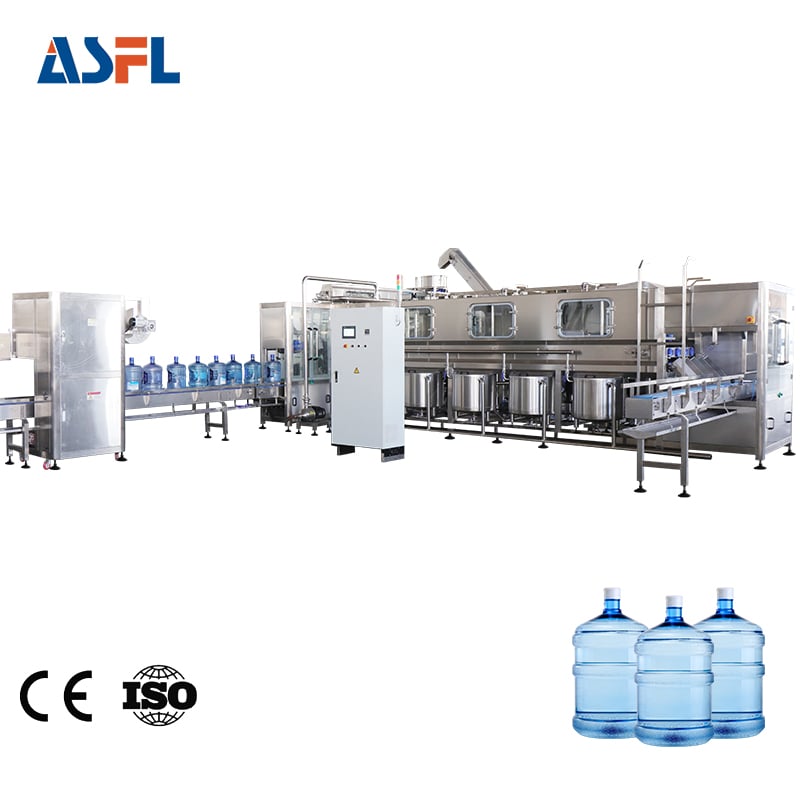
Selecting the right commercial 20 litre water can filling machine is a decisive step for water treatment plants and large-format bottling facilities aiming to optimize operational throughput and maintain strict hygienic standards. Large-volume containers, such as 20-liter cans and 5-gallon PC/PET barrels, demand specialized handling mechanics distinct from small PET bottle packaging lines. From multi-stage internal rinsing to automated decapping and robotic palletizing, an effective 20 litre water can filling machine must deliver precision, structural durability, and low utility consumption. This technical guide outlines the core engineering features, sanitary protocols, and performance metrics required when specifying a high-efficiency 20 litre water can filling machine for your packaging facility.
Multi-Stage Internal and External Washing Systems
Because 20-liter water cans and returnable 5-gallon barrels are reused over hundreds of delivery cycles, thorough container sanitization is the first critical phase in any 20 litre water can filling machine. Standard single-rinse mechanisms are insufficient for removing stubborn residues, bio-films, or mineral deposits. Modern automatic systems integrate an extensive 8 to 12-stage washing process prior to liquid filling.
Essential sanitation stages built into a high-grade 20 litre water can filling machine include:
-
De-capping and Inspection: Automated removal of old caps with damage detection sensors to prevent cracked containers from entering the wash tunnel.
-
Pre-Rinsing and Heating: Recirculated warm water spray to loosen surface debris and organic matter.
-
Alkali and Detergent Scrubbing: High-pressure internal rotating nozzles spraying food-grade alkali solution at controlled temperatures (40°C–50°C) to break down grease and organic films.
-
Disinfectant Jetting: Ozone-infused water or chlorine dioxide solution injected into every internal corner of the upside-down inverted barrel.
-
Final Pure Water Flush: High-purity product water rinse to clear all chemical traces before the container indexes to the filling station.
Choosing a 20 litre water can filling machine equipped with recirculating fluid filtration tanks drastically reduces water and detergent waste, significantly lowering plant operating expenditure.
Precision Dosing and Leak-Free Filling Valve Technologies
In large-capacity bottling, volume accuracy directly impacts profit margins and brand compliance. A heavy-duty 20 litre water can filling machine utilizes specialized filling valves designed to accommodate high flow rates while preventing liquid turbulence, aeration, and dripping.
When evaluating filling technologies for a 20 litre water can filling machine, facility engineers typically choose between two main valve architectures:
| Feature Criteria | Gravity / Pressure Mechanical Valve | Electromagnetic Flow Meter Valve |
|
Filling Accuracy |
+/- 0.5% by liquid level |
+/- 0.2% by exact volume measurement |
|
Dripping & Splashing |
Moderate risk during fast indexing |
Zero drip with high-speed pneumatic cut-off |
|
Maintenance Needs |
Periodic mechanical seal replacements |
Contactless flow channel; minimal mechanical wear |
|
CIP Cleaning Compatibility |
Manual or semi-automated CIP loop |
Fully automated inline CIP / SIP sterilizable |
|
Best Suited For |
Standard budget 300–600 BPH lines |
High-speed 600–1200 BPH automated facilities |
Integrating flow meter valves within your 20 litre water can filling machine ensures exact dosing regardless of minor barrel height variances or temperature-induced liquid density changes.
Structural Frame Integrity and Stainless Steel Construction
The operational environment of a high-output water packaging plant involves constant moisture, cleaning chemicals, and mechanical stress from handling heavy 20-kilogram containers. A durable 20 litre water can filling machine must be constructed entirely from premium food-grade stainless steel.
Look for a 20 litre water can filling machine engineered with SUS304 or SUS316L stainless steel for all liquid contact surfaces, structural frames, and pneumatic actuators. Furthermore, an enclosed air-filtered housing equipped with HEPA filtration creates a positive-pressure clean room atmosphere over the rinsing, filling, and capping zones. This design prevents airborne microbes from entering open container necks during high-speed production runs.
Engineering directors seeking robust turnkey production solutions can review complete technical configurations on the ACE-FILLING 5 Gallon Water Filling Machine product showcase.
Automated Capping and Heat Shrink Neck Labeling
The capping assembly on a 20 litre water can filling machine must apply uniform force to press-on or screw-on caps without distorting the structural neck of the bottle. Incomplete cap seals lead to slow oxygen leakage, biological contamination, and transport spills.
An advanced 20 litre water can filling machine integrates automated cap sorting, inline cap sterilization via UV tunnels or ozone spray, and pneumatic press-capping heads. Integrated sensors verify cap presence and alignment; improperly sealed barrels are automatically diverted to a rejection line before reaching the shrink-labeling and palletizing stations.
Combining synchronized cap sterilization with a sealed 20 litre water can filling machine ensures full compliance with international food safety frameworks, including FDA and ISO 22000 hygiene standards.
Real-World Case Study: Production Upgrade in a Bottled Water Plant
A regional water supplier in the Middle East operated an older manual-loading line that suffered from 4.5% liquid waste, frequent cap misalignment, and high labor costs. To scale production from 400 to 1,200 barrels per hour, the facility replaced their legacy hardware with a fully automated 20 litre water can filling machine architecture provided by ACE-FILLING.
Implementation Highlights:
-
Installed a 12-stage automatic washer, filler, and capper monoblock unit featuring electromagnetic flow meter filling valves.
-
Implemented an online cap UV sterilization tunnel linked directly into the 20 litre water can filling machine PLC controller.
-
Integrated automated line inspection with automatic weight sorting to reject underfilled containers.
Quantifiable Operational Improvements:
-
Yield Increase: Production capacity rose by 200% while reducing manual labor requirement on the line by 60%.
-
Material Savings: Volumetric overflow and liquid splashing losses dropped from 4.5% to under 0.1%.
-
Rejection Reduction: Unsealed container rejects fell to zero, protecting final product quality during long-distance distribution.
Essential Procurement Considerations for Plant Engineers
When investing in a commercial 20 litre water can filling machine, decision-makers must evaluate more than just peak nominal speed. Long-term equipment viability depends on energy efficiency, spare parts availability, and seamless integration with auxiliary equipment like blow molders, water treatment skids, and automated stackers.
Before finalizing machine specifications for a 20 litre water can filling machine, verify that the control cabinet uses standardized PLC components (such as Siemens or Mitsubishi) and intuitive touch-screen HMIs. This ensures ease of operator training, real-time diagnostic visibility, and straightforward preventative maintenance scheduling.
To explore customizable line layouts, capacity options, and technical support for your facility, consult the ACE-FILLING Large Bottle Filling Machine technical hub.
 Hot News








