EN

When packaging carbonated soft drinks, sparkling water, or beer, maintaining exact thermodynamic equilibrium during liquid transfer is the single most important factor determining product quality. Unlike still water or non-carbonated juices, carbonated beverages contain dissolved carbon dioxide gas held under pressure. If pressure drops prematurely during the filling cycle, carbon dioxide escapes violently out of solution, causing severe foaming, under-filled bottles, and inconsistent carbonation levels.
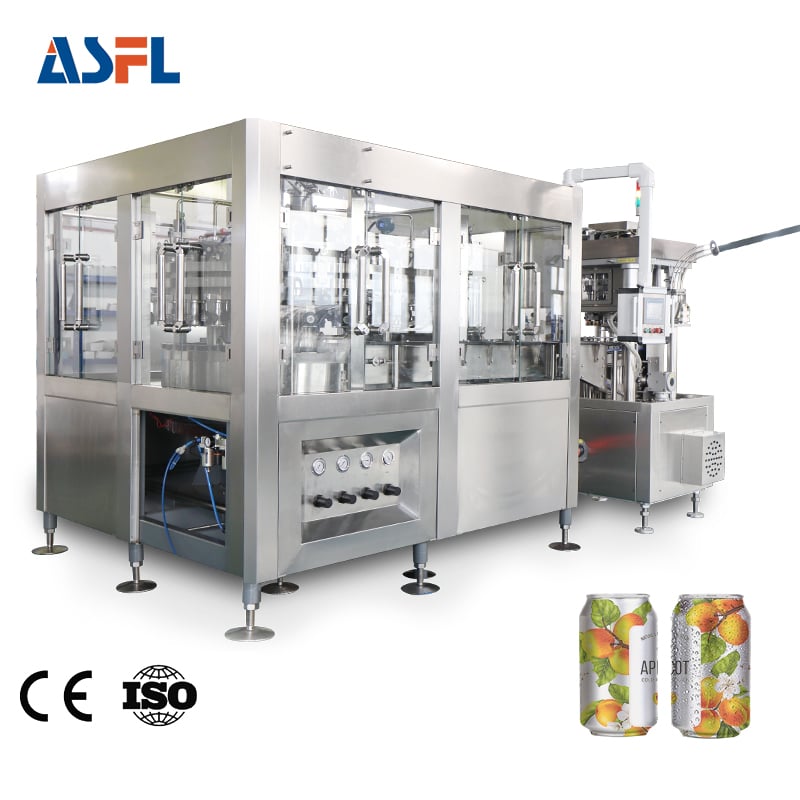
To prevent these production failures, high-speed bottling lines rely on an advanced carbonated bottling machine equipped with precise isobaric counter-pressure technology. Understanding the thermodynamic principles, valve mechanics, and sealing dynamics of pressure maintenance in bottling enables plant engineers and quality control managers to optimize throughput and eliminate product waste.
Examining why strict pressure regulation is non-negotiable reveals the engineering sophistication behind modern isobaric filling system architecture.
The Thermodynamic Science of Dissolved Carbon Dioxide
Carbonation is governed by Henry’s Law, which states that the amount of gas dissolved in a liquid is proportional to the partial pressure of the gas above the liquid in a closed system. In a finished carbonated beverage, carbon dioxide is forced into liquid under high pressure and low temperature during the carbonation mixing stage.
When the liquid enters a carbonated bottling machine for packaging, it confronts atmospheric pressure. If the bottle interior is not pressurized prior to liquid entry:
-
Instant Outgassing (Fobbing): The sudden pressure drop triggers rapid nucleation of dissolved carbon dioxide gas, causing massive foam formation (fobbing) that spills over container brims.
-
Loss of Carbonation VOlumes: The escaped gas cannot be recovered, resulting in flat-tasting beverages that fail retail quality assurance specifications.
-
Inconsistent Fill Heights: Excessive foam occupies volume inside the bottle neck, tricking electronic level sensors into shutting off liquid valves prematurely, leaving under-filled containers on the production line.
Isobaric Counter-Pressure Filling Mechanics
To counteract Henry's Law disruption, a modern isobaric filling system utilizes a multi-stage pressure maintenance in bottling cycle. Instead of pouring liquid into an open, atmospheric container, the bottling machine equalizes pressure between the liquid reservoir bowl and the interior of the recipient bottle before opening the filling valve.
-
Purging and Evacuation: The container is pressed tightly against the filling valve assembly, and an initial gas purge (often using carbon dioxide or sterile air) removes ambient oxygen to extend product shelf life.
-
Pressure Equalization: Counter-pressure gas fills the bottle until its internal pressure exactly matches the pressure of the liquid supply bowl.
-
Gravity or Flowmeter Liquid Transfer: With pressures balanced ($P_{bottle} = P_{bowl}$), the liquid flows smoothly down the interior walls of the container by gentle gravity or electromagnetic flow metering without agitation or gas breakout.
-
Snift and Pressure Release: After sealing, a controlled pressure release valve (snift valve) gradually reduces container pressure back to atmospheric levels before crowning or capping.
Parameter Comparison: Non-Pressurized vs. Isobaric Bottling Systems
To assist technical procurement teams and plant managers in evaluating equipment architecture, the following comparison table contrasts traditional gravity filling against advanced carbonated beverage packaging systems.
| Technical & Operational Metric | Non-Pressurized Gravity Filler | Isobaric Filling System |
| Beverage Compatibility | Still water, juice, milk, wine | Carbonated soft drinks, beer, sparkling water |
| Control of Carbon Dioxide Escape | Poor (Causes severe foaming and flat product) | Perfect (Maintains equalized gas equilibrium) |
| Fill Height Consistency | Low in carbonated liquids (Foam interference) | High accuracy (+/- 1-2 mm level precision) |
| Oxygen Pickup & Oxidation | High risk due to open-air splashing | Minimized via pre-evacuation and gas flushing |
| Typical Line Speed Efficiency | Low for carbonated runs (Frequent stoppages) | High speed, continuous 12,000 - 36,000+ bph |
The Critical Role of Pressure Maintenance in Sealing and Capping
Maintaining precise pressure control does not end when the liquid valve closes. The transition phase between liquid filling and crown capping or ROPP screw capping is another vulnerable window where pressure fluctuations ruin product integrity.
If the snift phase of the carbonated bottling machine is too abrupt, the sudden pressure drop causes micro-bubbles to form directly beneath the sealing neck. These bubbles become trapped under the cap or crown, leading to flat carbonation upon opening by the consumer.
Advanced carbonated beverage packaging lines incorporate programmable servo-driven snift cams that regulate the decompression curve based on beverage temperature, sugar content, and carbonation volumes (typically measured in volumes of $\text{CO}_2$). This gradual pressure step-down ensures that dissolved gas remains securely in solution until the final hermetic seal is locked into place.
Quality Assurance, Sensor Calibration, and Leak Detection
Because minor pressure leaks in pneumatic valves or bowl regulators cause massive batch rejections, top-tier packaging lines enforce rigorous quality control protocols.
-
Pneumatic Seal Inspections: Automated sensors monitor bowl pressure stability continuously during production runs, triggering immediate line interlocks if pressure drops below critical thresholds.
-
Torque and Sealing Verification: After capping, automated inline pressure testers or gamma-ray fill-level inspection units verify that hermetic seals hold against internal carbonation pressure.
-
Collaborative Engineering: When sourcing high-performance bottling lines from industry leaders like
ACE-FILLING
Summary and Strategic Operational Value
Executing strict pressure maintenance in bottling is the definitive engineering cornerstone of successful carbonated beverage production. By implementing an advanced isobaric filling system within a robust carbonated bottling machine, beverage manufacturers eliminate product fobbing, guarantee exact fill heights, and lock in optimal carbonation. Investing in precision pressure regulation ensures consistent product quality, protects brand reputation, and maximizes long-term line profitability.
 Hot News