 EN

The commercial processing of dairy products presents unique biological and engineering hurdles compared to standard purified water or carbonated soft drink packaging. When specifying a monoblock filling and capping machine for high-throughput flavoured milk production equipment, facility managers must address dynamic protein behaviors, residual milk fats, temperature-sensitive natural flavorings, and strict pathogen controls. Unlike modular inline systems, a rotary monoblock architecture integrates container rinsing, precision volumetric filling, and hermetic capping into a single sanitized housing. Selecting inadequate machinery can compromise shelf life, increase CIP sanitization overhead, and cause severe regulatory audit failures. Industry experts at
Fluid Dynamic Requirements for Flavoured Milk Formulations
Flavoured milk beverages—ranging from chocolate and strawberry formulations to heavy malt or coffee infusions—exhibit non-Newtonian fluid characteristics. Suspending cocoa solids, stabilizer gums, and natural flavor oils requires continuous agitation and precise temperature maintenance during container filling.
Dairy proteins burn and denature when exposed to localized hot spots, while cocoa particulates settle rapidly if fluid velocity drops below critical thresholds inside the filling manifold.
When configuring a monoblock filling and capping machine, engineering teams must prioritize fluid pathways designed for variable viscosities. Essential fluid handling features include:
-
Recirculating Product Manifolds: Prevent thermal drops and particulate settling during brief production pauses across the flavoured milk production equipment.
-
Positive Displacement Piston or Flow Meter Dosing: Delivers exact volumetric filling without causing shear stress that could separate delicate milk fat emulsions.
-
Non-Contact Electromagnetic Valves: Eliminate physical valve stem contact with the liquid stream, preventing protein accumulation and simplifying daily sanitation on the dairy bottling line.
Ensuring that your monoblock filling and capping machine accommodates these specific fluid properties guarantees product uniformity across multi-shift operational runs.
Sanitary Design Principles and International Hygienic Standards
Dairy products are highly vulnerable to microbial contamination from lactic acid bacteria, yeast, and spores. Therefore, a monoblock filling and capping machine dedicated to flavoured milk production equipment must conform to international sanitary standards, including 3-A Sanitary Standards, EHEDG (European Hygienic Engineering & Design Group), and FDA food safety regulations.
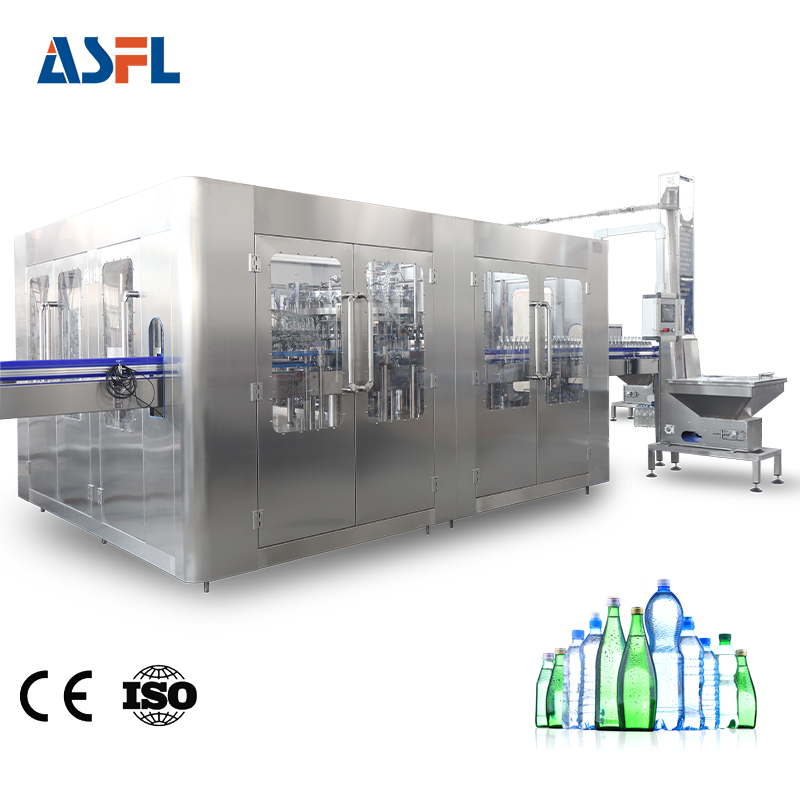
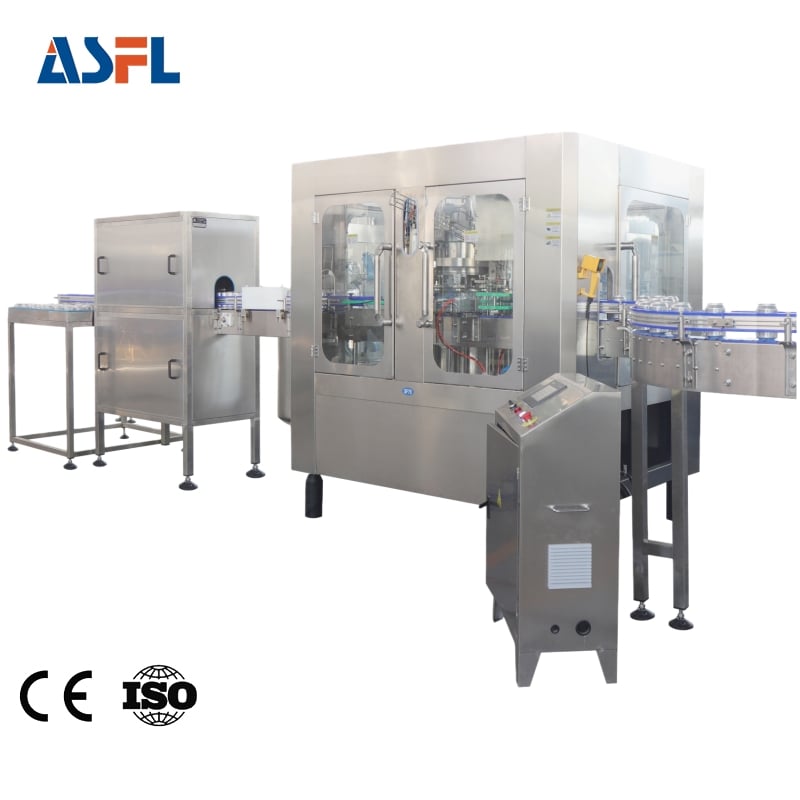
As illustrated in the isolation architecture above, every product contact component inside the monoblock filling and capping machine must be constructed from electropolished SUS316L stainless steel. High-fat dairy formulations react aggressively with inferior metals, accelerating surface pitting where bacteria can hide. Furthermore, the filling area should be enclosed within a positive-pressure HEPA laminar flow enclosure, creating a class 100 cleanroom environment around the open bottle necks. This hygienic barrier prevents airborne mold spores and environmental dust from entering containers as they transit through the dairy bottling line.
Technical Comparison of Dairy Filling Technologies
Selecting the correct dosing mechanism determines both initial capital investment and ongoing yield efficiency. Plant directors evaluating a monoblock filling and capping machine for flavoured milk production equipment must compare technical parameters across core metering technologies.
| Engineering Parameter | Magnetic Mass Flow Meter | Servo Piston Metering | Gravimetric Weight Dosing |
| Volumetric Dosing Accuracy | Plus/minus 0.2 percent | Plus/minus 0.3 percent | Plus/minus 0.1 percent |
| Particle Size Handling | Up to 5 mm (Cocoa, Fruit) | Up to 10 mm (Pulp, Bits) | Liquid only (No particles) |
| Cleaning Complexity | Ultra-Low (Straight Pipe CIP) | Moderate (Piston Seals) | Low (Non-contact Load Cell) |
| Changeover Flexibility | Digital Recipe Selection | Mechanical/Digital Adjustment | Digital Recipe Selection |
| Maintenance Overhead | Low (No Moving Parts) | Medium (Wear Ring Checks) | Low (Load Cell Calibration) |
As shown in the parameter comparison, magnetic mass flow meters provide exceptional operational versatility for a monoblock filling and capping machine, allowing rapid flavor changeovers without disassembling mechanical components on the dairy bottling line.
Capping Head Precision and Hermetic Seal Integrity
The capping module within a monoblock filling and capping machine serves as the final defense against external contamination. Flavoured milk containers—whether PET bottles, HDPE jugs, or glass containers—require precise torque management to guarantee an airtight seal.
-
Hysteresis Magnetic Capping Heads: Provide consistent non-friction magnetic torque application, eliminating thread stripping and cap distortion during high-speed closure.
-
Sterile Cap Rinsing & UV Tunnel: Caps pass through an automated hydrogen peroxide (H2O2) or UV sanitization tunnel before placement, ensuring zero pathogens enter the container headspace.
-
Neck Handling Starwheels: Synchronized transfer starwheels support bottle necks gently, preventing liquid splashing onto the thread area before cap application on the flavoured milk production equipment.
Ensuring precise alignment between the filling turret and capping turret inside the monoblock filling and capping machine minimizes mechanical shock, ensuring high container throughput across your dairy bottling line.
Conclusion and Engineering Recommendation
Selecting a high-performance monoblock filling and capping machine for flavoured milk production equipment requires evaluating fluid viscosities, hygienic compliance, dosing technologies, and capping precision. By investing in an integrated rotary monoblock architecture built with electropolished stainless steel and automated CIP capabilities, dairy processors can guarantee long shelf life, eliminate batch contamination, and optimize overall plant productivity. For customized engineering consultations and advanced liquid packaging solutions tailored to your dairy bottling line, contact the industry specialists at
 Hot News








