 EN

Engineering a Robust Multi-Stage Filtration Architecture for Bottling Lines
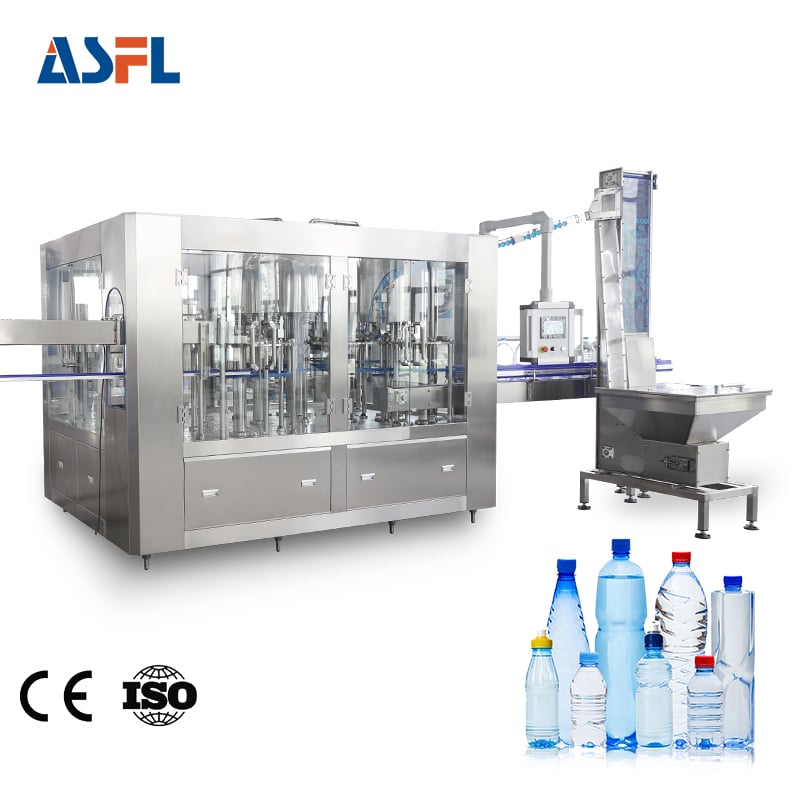
Designing an advanced water treatment and delivery loop for commercial packaging operations requires a meticulously engineered filter configuration to safeguard every stage of the production process. When integrating purification components upstream of a drinking water bottle filling machine, plant engineers must look far beyond basic sediment removal and establish a comprehensive, multi-stage barrier sequence. Raw water sources—whether drawn from municipal water distribution networks or deep underground artesian wells—frequently carry suspended solids, fine colloidal matter, mineral precipitates, and potential biological loads that can compromise product integrity. Implementing a robust water bottling filtration system prevents the premature fouling of fine membrane barriers and protects precision filling valves from abrasive particulate wear or mechanical jamming.
A well-designed multi-stage configuration typically commences with coarse depth filters rated between twenty and fifty microns to capture heavy sand, pipe scale, and large suspended debris. This primary defense is followed by intermediate pleated polypropylene cartridge filters rated at five to ten microns, which condition the fluid stream for finer polishing stages. Finally, terminal absolute-rated filtration barriers are positioned immediately before the liquid enters the rotary or linear filler bowl of the drinking water bottle filling machine. Choosing the correct filter configuration minimizes pressure drops across the fluid transfer circuit while ensuring that every packaged bottle complies with strict commercial safety standards established by global regulatory bodies such as the US FDA and NSF International.
Differentiating Absolute Versus Nominal Micron Ratings for Safety Compliance
Selecting the appropriate filter element for a drinking water bottle filling machine depends heavily on understanding the critical engineering distinction between nominal and absolute filtration ratings. Nominal filter elements capture a specified percentage of particles at a designated micron size under laboratory conditions, whereas absolute-rated filters guarantee the retention of nearly one hundred percent of particles at or above the rated pore dimension. For terminal protection within a high-speed water bottling filtration system, plant operators must deploy absolute-rated cartridges to eliminate pathogenic cysts, bacteria, and sub-micron particulate contaminants effectively.
When processing purified, mineral, or spring water packaging lines, the final polishing stage typically utilizes a high-performance bottle filler membrane filter with a zero-point-four-five or zero-point-two-micron absolute rating. A zero-point-two-micron polyethersulfone membrane serves as a validated sterilizing-grade barrier capable of trapping dangerous microorganisms such as Pseudomonas aeruginosa, coliform bacteria, and stray spores. Maintaining strict integrity testing protocols—such as forward-flow testing, bubble point evaluation, and pressure hold diagnostics—ensures that the selected filter configuration continues to deliver sterile water without structural degradation during aggressive Clean-in-Place and sterilization cycles.
Technical Parameter Matrix for Bottling Line Filtration Stages
| Filtration Stage | Filter Media Material | Micron Rating | Primary Operational Function | Typical Replacement Interval |
| Pre-Filtration | Wound Polypropylene | 20 to 50 Micron | Remove coarse sand, rust, and heavy pipe sediments | 3 to 6 Months |
| Intermediate Stage | Pleated Polypropylene | 5 to 10 Micron | Capture fine suspended solids and protect carbon beds | 6 to 12 Months |
| Fine Polishing | Melt-Blown Depth | 1 to 3 Micron | Trap sub-micron colloids, silt, and organic matter | 3 to 6 Months |
| Terminal Sterilization | Polyethersulfone (PES) | 0.2 to 0.45 Absolute | Bacterial barrier and final microbial removal | As per integrity test / Monthly |
Sanitary Housing Construction and Differential Pressure Monitoring
The physical hardware enclosing the filtration elements is just as critical to product safety as the filter media itself. A proper filter configuration for a drinking water bottle filling machine demands sanitary filter housings constructed exclusively from electro-polished AISI 316L stainless steel. This premium-grade alloy resists corrosive sanitizing chemicals, aggressive ozone treatments, and high-temperature water flushes commonly deployed in beverage processing facilities. Furthermore, housing designs must feature smooth internal surfaces, sanitary tri-clamp connections, and bottom drain valves to eliminate stagnant water pockets where biofilm can rapidly proliferate.
Integrating pressure gauges and differential pressure transmitters across each filtration stage allows operators to monitor fouling levels in real time during production shifts. As captured particulates accumulate within the matrix, differential pressure increases steadily, signaling the exact moment when filter cartridges require replacement. Operating with automated differential pressure monitoring prevents sudden pressure spikes that could potentially rupture filter media and compromise the sterility of the water bottling filtration system located directly upstream of the bottle filler.
Optimizing Filter Placement within Advanced ACE-FILLING Systems
Strategic physical placement of the final filtration assembly relative to the liquid distribution manifold determines the overall efficiency, hygiene, and reliability of the entire packaging line. When configuring equipment supplied by industry leaders like ACE-FILLING, the terminal bottle filler membrane filter must be positioned as close as possible to the final filling nozzles to minimize secondary piping contamination risks. Extended piping runs situated between the final filter element and the filling bowl can introduce stagnant micro-zones where microbial growth may occur during routine production downtime or overnight sanitation holds.
By meticulously coordinating the filter configuration with the advanced sanitary design of the drinking water bottle filling machine, plant managers achieve a seamless, closed-loop fluid delivery network. This precise engineering synergy ensures minimal pressure loss, perfectly balanced flow rates across all individual filling heads, and uncompromised product safety, ultimately protecting brand reputation, reducing operational downtime, and satisfying rigorous regulatory audits with absolute confidence.
 Hot News








