 EN

A shutdown is the only window in which the hygiene of a fully automatic bottle filling machine can be observed instead of inferred. While the line runs, the machine is wet, foaming and moving; at standstill it can be opened, lit and swabbed. What follows is a shutdown hygiene verification model rather than a cleaning procedure: three tiers of evidence, a decision rule for each outcome, and a record that still makes sense a year later.
Hygiene Is Proved in Tiers, Not in One Swab
No single test answers every question in a shutdown hygiene verification. A visual check proves that soil is absent from surfaces you can see. A surface swab proves that residue sits below a limit at the point you touched. A microbiological sample proves that viable organisms were below a threshold at that point and time. Each tier has a blind spot, and a shutdown hygiene verification built on the first tier alone is a cleaning claim without proof.
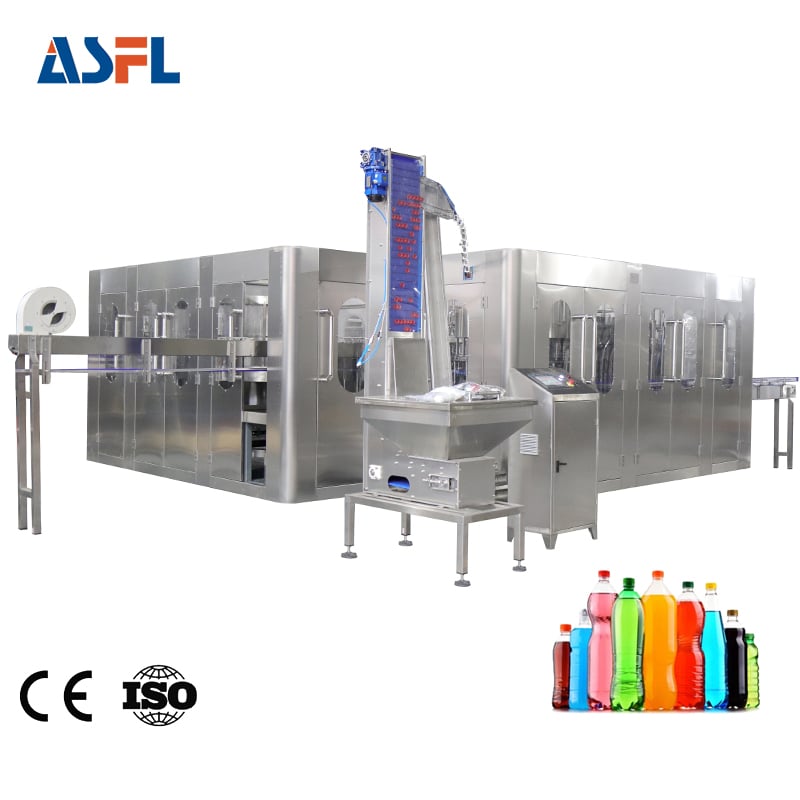
On a fully automatic bottle filling machine, design decides which tiers are available at all. EN 1672-2 and ISO 14159 exist because a machine that cannot be opened cannot be verified at any tier, and a food contact surface welded behind a cover is outside the reach of every method described here. ACE-FILLING builds the CGF and DCGF monoblock carousels with tool-free access to filling valves and bowl clamps, which is what makes tier-one inspection meaningful rather than decorative.
Tier One: What Light and a Boroscope Can Prove
Visual inspection is cheap, fast and routinely overrated. Under white light the eye detects film, scale and colour change, but it cannot see a thin residue on a machined seat or a biofilm inside a gasket groove. Two aids change the value of this tier: a UV torch, which fluoresces protein and product film that white light hides, and a boroscope, which brings the valve seat into view without a full teardown.
On a fully automatic bottle filling machine, tier-one work should follow the product path rather than a list of convenient surfaces: bowl wall, valve stem and seat, cap chute, then the food contact surface of the nozzle. Photograph each food contact surface before touching it, because the photograph is the evidence and the observation is only the opinion.
Tier Two: Surface Verification with ATP and Protein Swabs
ATP bioluminescence returns a number in seconds and is the workhorse of shutdown hygiene verification. It detects organic soil, not specific hazards, and it will not react on a stainless food contact surface that was never contaminated. That makes it a change detector: the useful signal is the difference between a point that normally passes and the same point today.
Protein swabs form the second layer, and they matter on juice, tea and dairy-adjacent lines where protein soil denatures onto a stainless food contact surface and survives a caustic cycle. Neither test identifies an organism, and neither substitutes for a micro sample on a food contact surface that has been wet for days.
| Evidence tier | Question it answers | Method | Blind spot | Time per point |
|---|---|---|---|---|
| One | Is visible soil present here? | White light, UV torch, boroscope | Residue below visual threshold, biofilm in grooves | 2 to 5 minutes |
| Two | Is residue below my limit here? | ATP swab, protein swab | No organism identification, point not area | 1 to 3 minutes |
| Three | Are viable organisms below limit? | Contact plate or sponge sample, lab culture | 24 to 72 hours delay, sampling error | 1 minute plus lab time |
Tier Three: When Microbiological Sampling Earns Its Cost
Micro sampling is slow and expensive, so it belongs where the consequence justifies it: after a long stop, after a rebuild or gasket change, after a contamination event, and on the first run of a new product. Routine weekly micro swabs on a visibly clean food contact surface mostly generate paperwork.
The tier-three question differs from the other two tiers of a shutdown hygiene verification. It asks whether the shutdown hygiene verification actually reduced viable load, which is the only claim a customer or a regulator ultimately cares about.
The Decision Rule: Pass, Re-clean, or Open the Machine
Evidence without a decision rule becomes an argument at two in the morning, which is why a shutdown hygiene verification plan is written before the stop. Agree the rule in writing before the shutdown, so nobody negotiates while the line is down.
| Visual result | ATP result | Required action |
|---|---|---|
| Clean | Below limit | Release the zone, record the result, move on |
| Clean | Above limit | Re-clean, re-swab, then investigate the cleaning parameter |
| Soil visible | Any | Open the component, clean manually, re-verify at tier two |
| Fails twice after correct cleaning | Above limit | Hold release and inspect the design for a dead leg |
The last row changes outcomes. A zone that fails twice after correct cleaning has a design or chemistry problem, and repeating the same shutdown hygiene verification will not solve it.
Recording It So the File Survives an Audit
The record of a shutdown hygiene verification must identify the zone, method, limit, result, action and person. Zone IDs should match the machine drawing so an auditor can locate a food contact surface swab point two years later. ISO 2859-1 gives defensible language for sample size when a customer asks how five swabs can represent a forty-valve carousel.
Photographs of each food contact surface belong in the record with a timestamp, not in someone's phone. A shutdown hygiene verification file that cannot be reconstructed by a person who was not on shift is not a file; it is a memory.
Who Signs, and Why the Signature Matters
On a fully automatic bottle filling machine, production signs that the line is released. Quality signs that the evidence from every food contact surface meets the limit. Maintenance signs that the machine went back together to specification. When one person signs all three, the shutdown hygiene verification loses its independence, and an auditor will find that gap faster than you expect.
Design Limits No Inspection Can Fix
Some failures are purchased rather than performed. On a fully automatic bottle filling machine, a food contact surface rougher than Ra 0.8 micron, a horizontal ledge that cannot drain, a valve that needs tools and forty minutes to open: no shutdown hygiene verification routine compensates for any of them. ACE-FILLING walks the inspection route with the buyer at factory acceptance on a fully automatic bottle filling machine, so the limits are known before installation rather than discovered during the first audit.
A buyer who cannot name where the boroscope will go, which food contact surface will be swabbed and who signs the release has not finished specifying the machine. The wider fully automatic bottle filling machine range and its design options sit on the bottle water filling machine pillar page, and the 200-2000ML water filling machine page shows the carousel and valve arrangement most bottlers start from.




 Hot News








