 EN

In the commercial beverage manufacturing sector, delivering orchard-fresh flavor, vibrant natural color, and full nutritional value to consumers is an ongoing technical challenge. Fruit juices are inherently delicate liquid products. When raw or processed juices interact with atmospheric oxygen, thermal fluctuations, or airborne micro-organisms, rapid degradation occurs. Vitamin C breaks down, natural pigments oxidize into dull brown hues, and unwanted microbial growth shortens product shelf stability. For juice brands aiming to scale their distribution across national or international retail networks, relying on standard liquid filling equipment often leads to premature spoilage, customer complaints, and costly inventory loss.
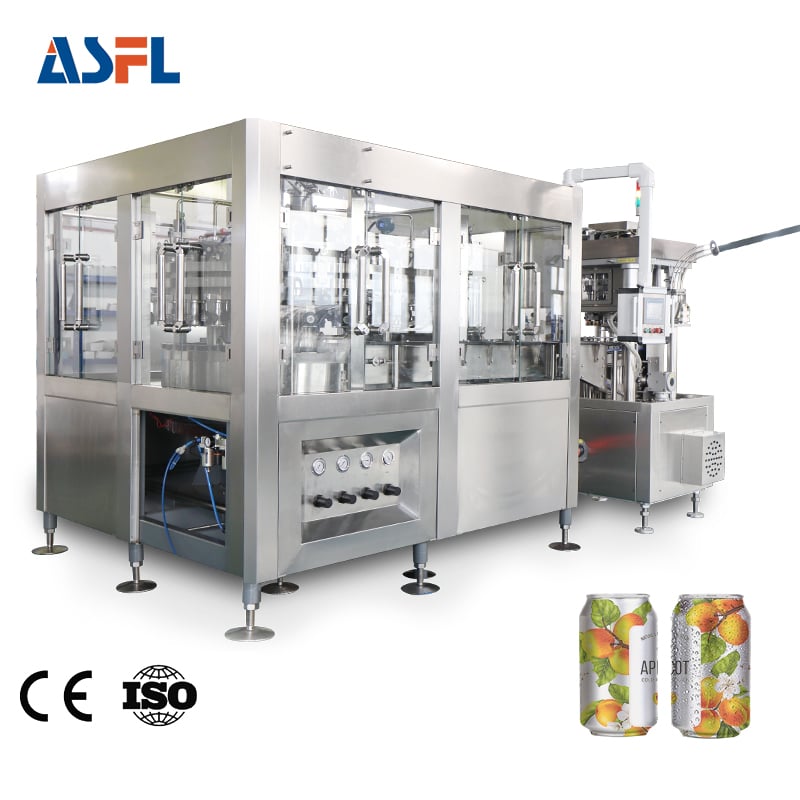
Deploying an advanced, industrial-grade juice filling machine engineered with specialized aseptic technology, continuous thermal regulation, active headspace gas management, and integrated sanitary cleaning systems provides a reliable engineering solution. Modern packaging machinery manufacturers, such as ACE-FILLING, design dedicated liquid packaging machinery built to protect product integrity from the moment liquid enters the filling bowl until the final cap seal is crimped. By aligning every step of the filling operation with rigorous international food safety standards—including FDA food contact compliance and HACCP hygienic frameworks—beverage producers can significantly extend shelf life while offering consumers consistent taste without relying on heavy synthetic chemical preservatives.
Thermal Processing Precision and Heat-Sensitive Nutrient Retention
Thermal processing is the core barrier against microbial contamination in commercial juice bottling. However, excessive or uncalibrated heat exposure degrades heat-sensitive vitamins, essential oils, and aromatic flavor compounds. A high-efficiency juice filling machine integrates precise temperature feedback loops and dynamic flow control to balance pasteurization efficacy with nutrient preservation.
Hot Filling Thermal Control (85°C – 92°C)
For high-acid juices with a pH lower than 4.6 (such as apple, orange, cranberry, and pineapple juices), hot fill technology remains an effective methodology to secure long-term ambient shelf stability.
-
Constant Temperature Maintenance: The juice filling machine receives pre-pasteurized juice from a plate heat exchanger and maintains continuous circulation inside the filling bowl at a precise temperature band between 85°C and 92°C.
-
Thermal Sterilization of Container: As hot liquid is dispensed into rigid PET or glass bottles, the heat of the liquid itself sterilizes the inner walls of the container and the lower surface of the closure after bottle inversion.
-
Controlled Rapid Cooling: Immediately after capping, the filled containers pass through a multi-stage spray cooling tunnel. Rapidly dropping the internal product temperature down to 20°C–25°C halts continuous thermal degradation, preventing caramelized off-flavors and locking in fresh fruit notes.
Aseptic Cold Fill Technology for Heat-Sensitive Nectars
For premium, low-acid, or pulpy fruit beverages where prolonged heat treatment compromises taste and nutritional profiles, high-speed aseptic technology serves as the optimal production standard. In an aseptic cold fill system, the juice undergoes Ultra-High Temperature (UHT) flash pasteurization (typically 135°C to 140°C for a few seconds) followed by immediate flash cooling to ambient temperatures (20°C). The cold product is then transferred to an ultra-sterile filling room inside the juice filling machine. Because the container, cap, and liquid are sterilized independently before assembly, delicate Vitamin C molecules and original aromatic profiles remain intact, allowing brands to extend shelf life naturally under ambient storage conditions.
Active Oxygen Displacement and Headspace Deoxygenation
Atmospheric oxygen (O2) is the primary driver of non-enzymatic browning and lipid oxidation in bottled beverages. When oxygen remains trapped inside a bottle neck prior to capping, it continuously reacts with ascorbic acid and juice lipids throughout storage. Advanced beverage packaging machinery mitigates dissolved oxygen (DO) through multi-stage gas purging mechanisms.
-
Pre-Fill Container Evacuation: Before liquid injection, empty containers are flushed with sterile filtered nitrogen or carbon dioxide to displace ambient atmospheric air within the bottle cavity.
-
Smooth Non-Turbulent Filling Valves: Specially configured fill nozzles utilize bottom-up or anti-foaming flow patterns. Reducing liquid turbulence prevents ambient air from entraining into the juice stream during high-speed dispensing.
-
Liquid Nitrogen Dosing (Headspace Purging): Immediately after liquid dispensing and prior to closure application, an automated micro-dosing unit injects a minute droplet of pure liquid nitrogen into the bottle neck. As the liquid nitrogen vaporizes, it expands rapidly by roughly 700 times its liquid volume, sweeping remaining oxygen out of the neck space.
-
Hermetic Sealing: The magnetic capping head immediately torques the closure into place, locking in an inert gas blanket. This process drops residual headspace oxygen concentration below 0.5 ppm, effectively blocking oxidative degradation and enabling manufacturers to extend shelf life by up to 12 months.
Technical Comparison of Juice Preservation Methods
| Engineering & Quality Parameter | Hot Fill Bottling Line | Aseptic Cold Fill System | Standard Ambient Filling |
| Applicable Juice Types | High-acid juices (pH < 4.6), nectars | Low-acid blends, pulpy premium juices | Short-shelf-life fresh fruit juices |
| Filling Temperature | 85°C to 92°C | 20°C to 25°C (Ambient) | 4°C to 15°C (Cold chain dependent) |
| Integrated Preservation Mechanism | In-bottle thermal pasteurization | UHT flash heating + sterile chamber | Minimal; relies on post-chilling |
| Nutrient & Vitamin Retention | 75% to 85% ascorbic acid retention | 92% to 98% ascorbic acid retention | Varies; degrades rapidly within days |
| Headspace Gas Purging | Thermal vacuum formation | Active liquid nitrogen / inert gas dose | Standard mechanical capping |
| Sanitation & Sterilization Standard | Automated CIP hot wash | Integrated CIP / SIP + HEPA laminar flow | Basic washdown procedures |
| Refrigeration Requirement | Ambient storage and transport | Ambient storage and transport | Continuous cold chain required |
| Achievable Commercial Shelf Life | 6 to 12 Months | 9 to 12 Months | 7 to 21 Days |
Hygienic Chamber Architecture and Automated CIP/SIP Systems
Achieving long commercial shelf stability requires absolute environmental hygiene across the filling zone. Airborne bacteria, mold spores, and yeasts present in factory environments can recontaminate pasteurized juice if the filling zone is exposed to ambient air.
Modern beverage packaging lines built by specialized manufacturers feature fully enclosed cleanroom chambers equipped with positive-pressure HEPA filtration modules. This continuous flow of sterile air creates an invisible protective barrier over the container conveying, filling, and capping stations, preventing ambient contaminants from settling into open containers.
Furthermore, preventing cross-contamination between batch runs or shift changes requires systematic internal sanitation. Advanced juice filling machine configurations incorporate automated Clean-In-Place (CIP) and Sterilization-In-Place (SIP) systems. Without requiring manual machine teardown, these automated cycles route heated alkaline detergents, acid rinses, peracetic acid sanitizers, and superheated steam directly through all internal liquid supply pipes, storage tanks, manifold blocks, and fill nozzles. Automated sensors measure pressure, fluid velocity, and chemical concentrations throughout the loop, guaranteeing that every internal fluid line meets international food safety standards before a new production cycle begins.
Operational Advantages of Modern Juice Packaging Equipment
Upgrading production facilities with a modern juice filling machine delivers clear commercial and technical benefits for beverage enterprises:
-
Extended Geographic Distribution: Producing shelf-stable juices without requiring cold-chain distribution allows manufacturers to ship products across broader regional and international markets.
-
Preservation of Brand Identity: Consistent automated thermal control and headspace nitrogen purging ensure every bottle delivered to retail shelves maintains uniform taste, aroma, and natural color.
-
Minimized Preservative Dependency: Implementing clean aseptic technology reduces or eliminates the need for synthetic chemical preservatives (such as sodium benzoate or potassium sorbate), meeting clean-label consumer preferences.
-
Reduced Production Scrap Rates: Precise magnetic capping and drip-free valve designs minimize liquid waste, seal failure rates, and batch rejections.
To explore technical configurations, automated line integration, and customized filling solutions designed for your operational needs, review our complete overview of
 Hot News








