EN
EN

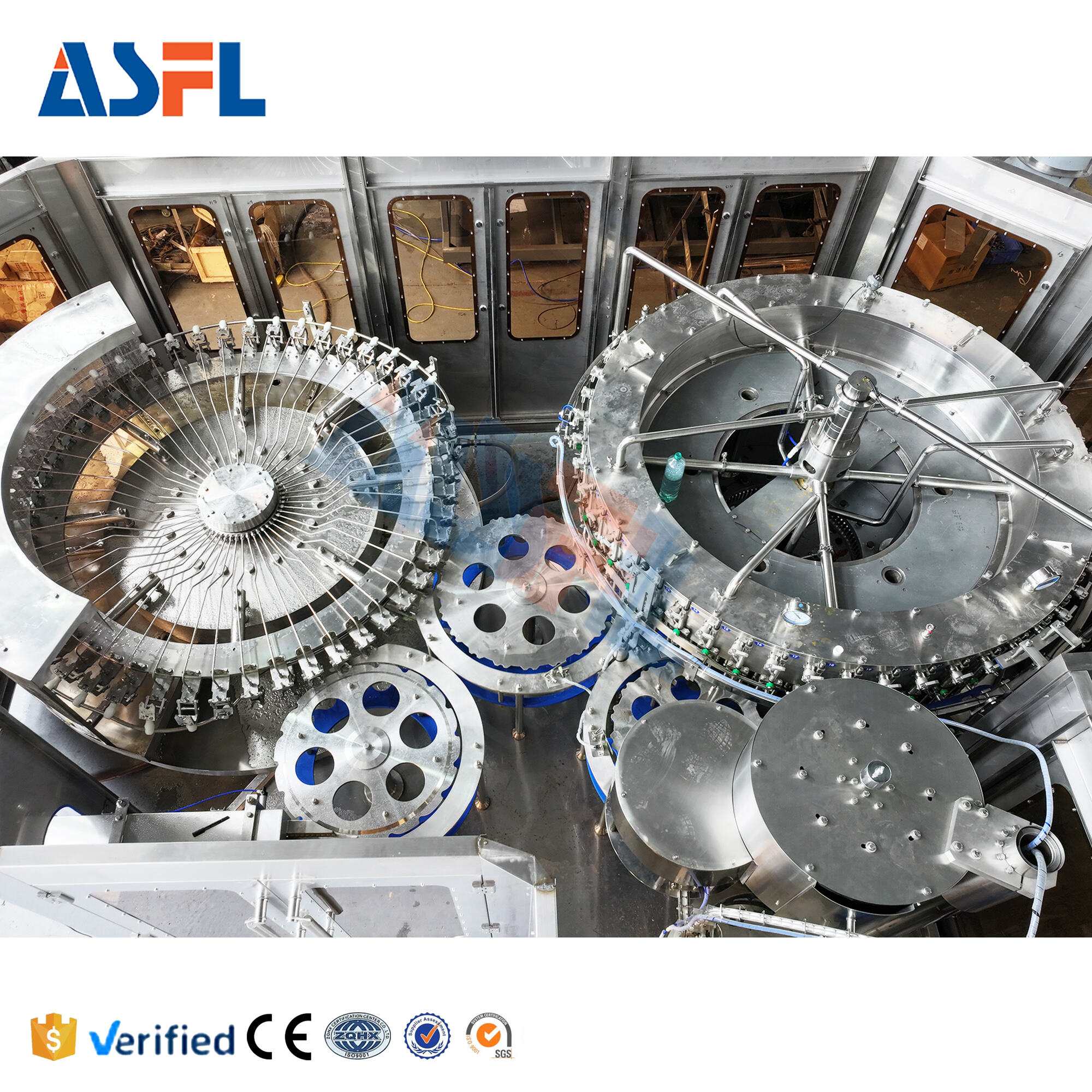
Optimal Filling Pressure Range for CO2 Retention and Foam Control
The 2.0–2.5 bar sweet spot: thermodynamic basis for CO2 solubility and headspace stability
Most carbonated drink filling machines work best when they're operating around 2 to 2.5 bars of pressure. This sweet spot comes from something called Henry's Law, where carbon dioxide dissolves better under higher pressure but escapes faster as temperatures rise. When manufacturers typically run these systems at about 2 to 4 degrees Celsius, they get good results because the gas stays dissolved without bouncing out too much. If the pressure drops below 2 bars though, problems start happening. Studies show CO2 starts escaping at rates 15 to 22% higher than normal according to Beverage Engineering Review last year, leading to those little bubbles forming too early, unstable air pockets above the liquid, and ultimately less fizz in the final product. Push things past 2.5 bars and all sorts of issues pop up too. Valve seals wear down quicker and the liquid gets all stirred up inside the machine, which messes with how accurately it fills bottles and shortens the life of the equipment overall. Manufacturers have learned through experience that staying within this tight pressure range creates what scientists call thermodynamic balance, keeping the carbonation stable even when thousands of bottles are being filled every minute on production lines.
Foam threshold limits: how ±0.15 bar deviation causes underfilling, overflow, or bottle ejection
Getting pressure control right isn't just important—it's absolutely critical. Even tiny variations around ±0.15 bar can mess up the whole system, messing with both volume measurements and line stability across production runs. When pressures hit around 1.85 bar, carbon dioxide starts forming bubbles at an alarming rate. These bubbles take up space in containers, typically displacing between 5% to 8% of what should be liquid product. That leads to consistent underfill problems throughout the facility. On the flip side, pushing things to about 2.65 bar creates turbulence that speeds up filling processes by roughly 25%. But this comes at a cost: overflows happen frequently, there's lots of splashing around, and contamination becomes a real concern for quality control teams. All these issues trigger automatic rejection mechanisms that throw away somewhere around 120 bottles every single minute. And let's not forget about maintenance headaches either. Foam buildup clogs valves unexpectedly, increasing unplanned downtime by nearly 30%. Plus, each overflow incident wastes about 3.2 liters of product per hour from every filler head. To keep everything running smoothly, manufacturers need to maintain extremely tight pressure ranges within ±0.01 bar. This level of precision requires specialized equipment like PID controlled regulators, which makes all the difference when it comes to protecting output volumes, product quality standards, and overall production efficiency.
Isobaric Pressure Synchronization Across the Carbonated Drink Filling Machine
Three-zone balancing: reservoir, filler bowl, and bottle chamber pressure alignment
Getting consistent carbonation right depends on keeping pressures balanced throughout the whole system from the reservoir to the filler bowl and into the bottle chamber itself. When there's even a small difference in pressure between these areas, like more than 0.1 bar either way, we start losing around 15% of our precious CO₂ during the transfer process. Most of this loss happens because tiny bubbles form where the pressure changes suddenly. That's why modern equipment comes equipped with special dual path pressure sensors paired with smart PID controllers that adjust food grade CO₂ levels automatically. Take a drop below 2.3 bar in the main tank? The system kicks in immediately with those micro adjustments to keep things running smoothly. These kinds of adjustments stop those bubble chain reactions that can actually reduce fill accuracy by about 9%. Some studies published in the Journal of Food Engineering back this up from 2022. At the end of the day, what we get is nice steady flow patterns and accurate volume measurements that meet all the requirements set out in ISO 9001 standards for beverages.
Isobaric valve precision: microsecond equalization to suppress CO2 loss during fill initiation
The latest generation of isobaric valves can balance pressure within 5 milliseconds thanks to piezoelectric actuators. These fast acting components eliminate what's called "fill shock," which accounts for around 80% of the CO2 loss we see in older systems. Tests in labs show these new valves with response times below 0.01 milliseconds cut down carbonation losses to about 0.3 volumes compared to the 1.2 volumes lost by traditional models. What makes these valves so reliable? They operate through three distinct stages that work together seamlessly.
- Pre-purge phase: Bottle headspace pressurized to 99.8% equivalence with the reservoir
- Dynamic sealing: Ceramic-tipped plungers establish gas-tight isolation before liquid contact
- Liquid transfer: Laminar-flow nozzles open only after pressure matching is verified
This sequence maintains gas-liquid equilibrium at the critical moment of fill initiation—preserving carbonation integrity without sacrificing speed.
Real-Time Pressure Monitoring and Closed-Loop Control in High-Speed Carbonated Drink Filling Machines
PID-Regulated Systems: Achieving ±0.01 MPa (±0.1 bar) Stability at >30,000 bph
Modern high speed carbonated beverage fillers depend on closed loop PID controls to keep pressure stable within about 0.1 bar (or 0.01 MPa) while running at over 30 thousand bottles each hour. These machines use piezoelectric pressure sensors sampling at 500 hertz, sending live data to controllers that tweak valve settings roughly every 40 milliseconds. This helps compensate when line speeds change, ambient conditions fluctuate, or temperatures drift during operation. What makes these systems so effective is their ability to handle temperature variations as much as 15 degrees Celsius without disturbing the delicate carbonic acid balance that affects both taste and how the drink feels in the mouth. Running at 30k bottles per hour, such precise control cuts down product waste by around 23% compared to older mechanical regulators according to Filling Technology Quarterly from last year. It also keeps volume measurements accurate within half a percent and stops those annoying overflows we've all seen on factory floors. For manufacturers dealing with the chaos of large scale production, maintaining that perfect gas liquid mix becomes absolutely essential.
Temperature–Pressure Interdependence for Maximizing CO2 Solubility
The 2–4°C / 2–2.5 bar operational envelope: aligning with Henry’s law for consistent carbonation
The solubility of CO₂ really depends on temperature changes. Research indicates around 15% of CO₂ escapes for every 10 degree Celsius increase during the filling process. Which explains why keeping things chilled between 2 and 4 degrees Celsius works best when combined with pressures ranging from 2 to 2.5 bars. This setup follows what Henry figured out long ago about gases dissolving in liquids based on pressure levels at steady temperatures. Get these parameters wrong though, and problems start happening fast. Either too much CO₂ escapes making drinks go flat or create unwanted foam, or else the machinery gets stressed out trying to compensate. On actual carbonated beverage production lines, this stuff matters day to day, not just theory books. Top brands now install sensors that constantly check both temperature and pressure readings. These systems automatically tweak the filling pressure whenever there's even a half degree shift in cooling conditions, ensuring consistent carbonation across batches and cutting down on wasted product due to rejects.
FAQ
What is the optimal pressure range for carbonated drink filling machines?
The optimal pressure range is around 2.0 to 2.5 bars. Operating within this range ensures CO2 retention and foam control under standard operating conditions.
Why is it critical to maintain pressure within ±0.15 bar?
Maintaining pressure deviation within ±0.15 bar is crucial to avoid issues such as underfilling, overflow, or bottle ejection due to turbulent filling processes and foam formation.
How do modern systems ensure consistent carbonation despite pressure changes?
Modern systems use special dual path pressure sensors and PID controllers to automatically adjust CO2 levels across the system, maintaining balance and ensuring consistent carbonation.
What impact does temperature have on CO2 solubility in carbonated drinks?
Temperature significantly affects CO2 solubility, with a 15% escape rate for CO2 for every 10°C increase. Thus, maintaining the temperature between 2 and 4°C is optimal for CO2 retention.
Table of Contents
- Optimal Filling Pressure Range for CO2 Retention and Foam Control
- Isobaric Pressure Synchronization Across the Carbonated Drink Filling Machine
- Real-Time Pressure Monitoring and Closed-Loop Control in High-Speed Carbonated Drink Filling Machines
- Temperature–Pressure Interdependence for Maximizing CO2 Solubility
- FAQ