 EN

What Features Are Driving Innovation in Modern Cans Filling Machines?
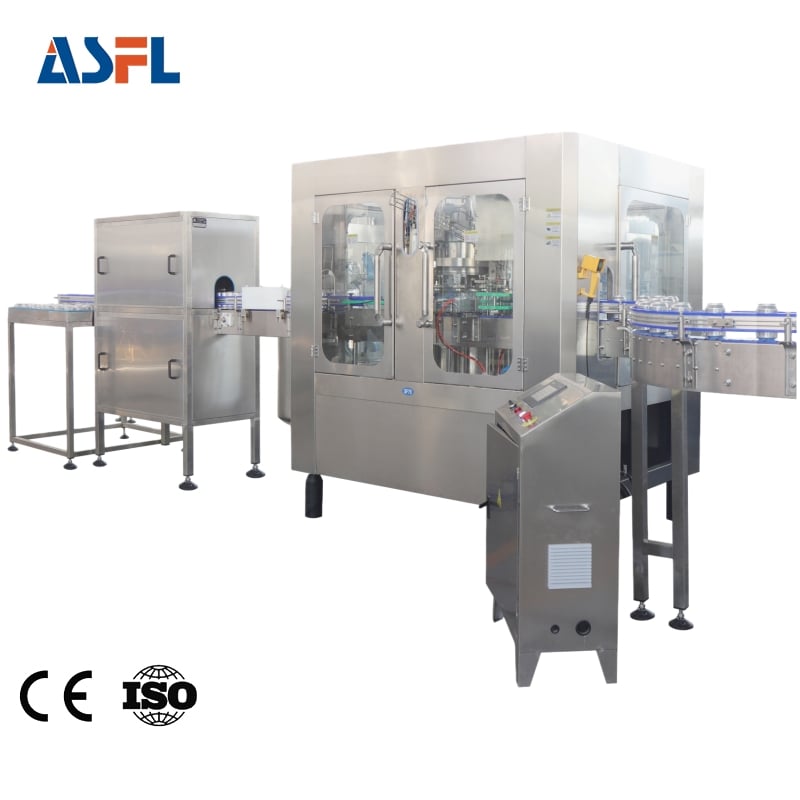
The global aluminum packaging sector is undergoing a massive transformation, driven by consumer demand for lightweight packaging, high sustainability standards, and fast line speeds. Traditional mechanical canning lines are being rapidly replaced by high-precision systems that minimize product giveaway, lower dissolved oxygen levels, and handle ultra-thin aluminum cans without structural buckling. A modern cans filling machine integrates cutting-edge automation to streamline every stage of the process, from gentle handling and precise dosing to hermetic seaming. Equipped with advanced servo-driven seaming mechanisms, dynamic mass flow meters, and automated CIP (Clean-In-Place) systems, modern canning equipment delivers uncompromised packaging integrity while maintaining full compliance with international safety protocols like FDA cGMP, ISO 22000, and BRC food standards.
Servo-Driven Seaming Mechanisms for Zero-Defect Enclosure
The integrity of an aluminum can depends entirely on the double seam formed between the lid (end) and the body wall. Legacy mechanical can seamers relied on rigid cam tracks and gear linkages, which frequently suffered from mechanical wear, high friction, and difficult calibration adjustments during can height changeovers.
In contrast, an advanced beverage can filler incorporates multi-axis direct-drive servo motors into the seaming station. The electronic synchronized seaming technology delivers distinct operational advantages:
-
Independent Profile Control: The first and second operation seaming rolls are driven by independent servo drives, allowing operators to fine-tune roll force and feed rate digitally via the HMI touchscreen without stopping the line.
-
Thin-Wall Can Protection: Modern lightweight aluminum cans (down to 0.08mm body wall thickness) buckle easily under heavy mechanical force. Servo control modulates axial load in real time, reducing rim damage by over 98 percent.
-
Toolless Changeovers: Height adjustments for sleek, slim, and standard 330ml/500ml formats are performed digitally in under 5 minutes, replacing the hours of manual mechanical shimming required on legacy equipment.
By integrating automated seaming technology into a high-speed cans filling machine, packaging facilities achieve double seam dimensional tolerances within +/- 0.01mm, effectively eliminating micro-leaks and structural failures during transport.
Dynamic Flowmeter Dosing and Electromagnetic Level Sensing
Dosing accuracy is essential for cost management and regulatory compliance. Mechanical fill valves using traditional dip tubes suffer from liquid turbulence, foaming, and fill height drift whenever liquid viscosity or supply tank pressure varies. Modern canning equipment solves this by implementing electro-pneumatic fill valves paired with electromagnetic flow meters or mass flow sensors.
When operating a modern cans filling machine, liquid passes through contactless sanitary flow meters that measure liquid volumes with millisecond precision. The central controller monitors flow rates continuously, executing two-stage valve closing (fast initial fill followed by slow precision topping) to control foaming.
According to engineering field tests from ACE-FILLING production installations, upgrading to flowmeter-based dosing achieves a volume precision of +/- 0.2 percent. This level of dosing accuracy prevents product overfilling, allowing high-speed lines running 18,000 cans per hour to recover tons of valuable beverage product annually while maintaining consistent fill levels across every batch.
Technological Evolution in Can Packaging Lines
| Operational Metric | Legacy Mechanical Can Fillers | Modern Cans Filling Machine Platform |
|
Seaming Drive System |
Mechanical cam & gear drives |
Synchronized multi-axis servo motors |
|
Dosing Technology |
Mechanical fill tube / Level probe |
Non-contact magnetic or mass flow meters |
|
Dissolved Oxygen Pickup |
High (> 50 ppb oxygen exposure) |
Ultralow (< 15 ppb with under-cover CO2 gassing) |
|
Format Changeover Time |
3 to 6 hours (manual mechanical adjustment) |
15 to 30 minutes (recipe-driven automated adjustment) |
|
Sanitation Protocol |
Semi-manual washdown / Dummy cans |
Fully automated closed-circuit CIP loops |
Ultralow Dissolved Oxygen (DO) Control via Under-Cover CO2 Gassing
Excess oxygen trapped inside a sealed aluminum can causes flavor deterioration, rapid oxidation, and shortened product shelf life. Managing dissolved oxygen pickup is a primary technical goal when designing a modern beverage can filler for craft beer, RTD cocktails, or premium teas.
Modern cans filling machine systems incorporate multi-stage gas management architectures:
-
Pre-Purging: High-purity CO2 or nitrogen gas flushes air out of empty aluminum cans before liquid entry.
-
Isobaric Laminar Filling: Gentle wall-guided liquid dispersion minimizes splashing, preventing ambient air entrainment during high-speed filling.
-
Under-Cover Gassing (UCG): As the filled can transfers to the seaming turret, high-velocity sterile CO2 creates a protective gas blanket over the top opening, sweeping away room air milliseconds before the end cover drops into place.
This combined multi-stage gas management loop keeps total dissolved oxygen pickup well under 15 parts per billion (ppb). This preservation of beverage freshness enables producers to achieve 12 to 18-month retail shelf-life stability while meeting strict BRC and FDA guidelines.
Automated CIP/SIP Systems and ISO Quality Standards
Sanitary design is critical in modern beverage packaging facilities to prevent bacterial contamination and cross-flavor carrying between production runs. An advanced cans filling machine features automated Clean-In-Place (CIP) and Sterilization-In-Place (SIP) capabilities integrated directly into the liquid manifold.
During a sanitation cycle, automated CIP cups lower onto the filling nozzles to form a sealed fluid loop. Caustic detergent and hot water solutions at 85 degrees Celsius circulate through supply lines, fill valves, and flow meters at optimized turbulent velocities (greater than 1.5 m/s) to strip away organic deposits and biofilms. Combined with 316L stainless steel contact surface construction, mirror-polished internal finishes (Ra < 0.4 µm), and real-time temperature and conductivity monitoring, modern canning equipment guarantees total hygiene compliance to ISO 22000 standards.
Before factory acceptance, manufacturers like ACE-FILLING subject every beverage can filler to rigorous 24-hour continuous water trials, pressure vessel hydrostatic checks, and double-seam tear-down inspections. These factory verification steps ensure seamless on-site commissioning and long-term operational uptime.
Conclusion
The innovation driving modern cans filling machine technology centers on precision digital control, reduced product loss, and stringent hygiene safeguards. By combining servo-driven seaming mechanisms, dynamic flowmeter dosing, and ultralow dissolved oxygen management, today's modern canning equipment delivers superior production OEE and outstanding package quality. Investing in advanced beverage can filler technology engineered by industry leaders like ACE-FILLING ensures long-term operational reliability, complete regulatory compliance, and maximum profitability for high-speed beverage production operations.
 Hot News








