EN

In high-volume energy drink packaging, handling high carbonation pressure (typically ranging between 3.8 to 4.5 volumes of dissolved CO2) presents complex mechanical and thermodynamic challenges. Unlike standard carbonated soft drinks (CSDs), energy drinks often combine elevated carbonation levels with functional additives, natural acids, and sensitive vitamins. Operating under high carbonation pressure without proper counter-pressure regulation leads to excessive foaming (gushing), fill volume inconsistencies, loss of dissolved gas, and container deformation.
For beverage manufacturers seeking maximum efficiency, packaging integrity, and yield, low-maintenance isobaric filling systems must be engineered specifically to balance pressure dynamics during liquid transfer. ACE-FILLING incorporates targeted fluid dynamics and heavy-duty mechanical engineering into its filling systems to address high-volume carbonation demands cleanly and consistently.
Key Technical Challenges of High-Pressure Carbonation
Filling high-carbonation energy drinks requires precise control over temperature, mechanical turbulence, and atmospheric differentials:
-
Dissolved Gas Stability: High CO2 levels remain dissolved in liquid under hydrostatic pressure and cold temperatures (typically 2°C to 4°C). Any sudden pressure drop causes immediate gas evolution and severe foaming.
-
Structural Fatigue on Valve Components: Continuous cycling under 0.4 to 0.6 MPa (4 to 6 bar) places extreme strain on valve seals, lift cylinders, and pressure manifold gaskets.
-
Product Oxygen Sensitivity: Energy drinks enriched with B-complex vitamins and botanical extracts oxidize rapidly when exposed to ambient air during high-pressure filling cycles.
Core Engineering Considerations for High-Pressure Filling Machines
Isobaric Valve Design and Precise Pressure Balancing
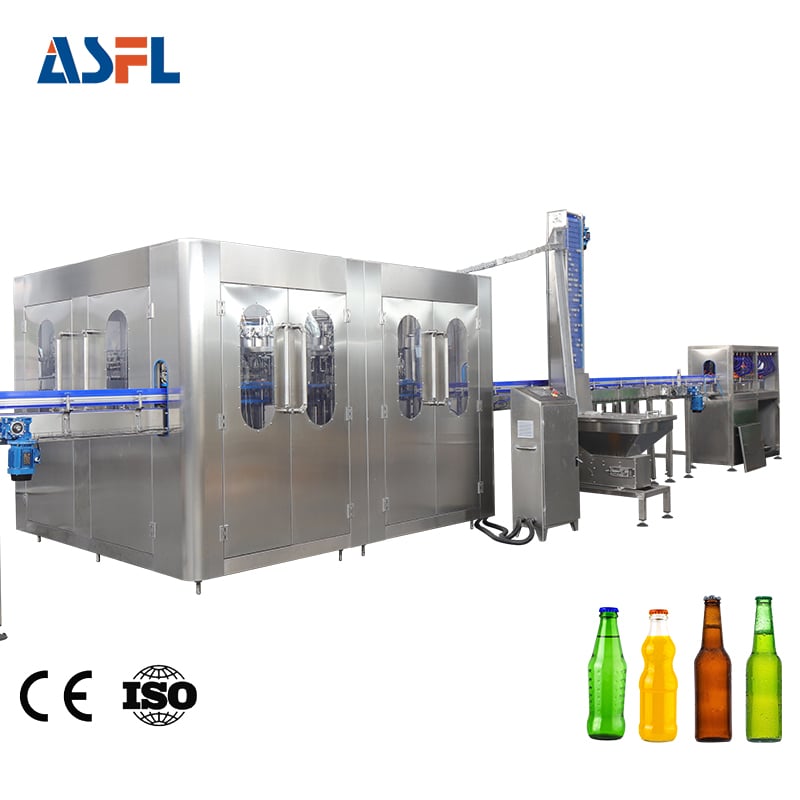
The core mechanism of an energy drink filling machine operating under elevated pressure is the isobaric filling valve. Before liquid transfer begins, the filler bowl and the target container (aluminum can or glass bottle) must reach absolute pressure equilibrium.
-
Dual-Stage Venting & Purging: The filling valve initiates a pre-evacuation stage (for bottles) or CO2 flushing cycle (for cans). CO2 is injected into the container until internal pressure matches the storage bowl pressure (typically set between 0.35 MPa and 0.50 MPa).
-
Laminar Flow Liquid Channels: Liquid channels inside the valve assembly feature ultra-smooth internal surface finishing (Ra ≤ 0.4 µm) and smooth curvature angles. This design minimizes internal friction, eliminates micro-vortices, and prevents dissolved CO2 from forming bubbles during injection.
-
Controlled Snifting (Pressure Relief): After filling, residual gas above the liquid surface must be vented slowly to atmospheric pressure. Multi-stage mechanical snifting valves discharge top pressure incrementally, allowing the liquid surface to settle without inducing foam overflow before container sealing.
Thermal and Differential Pressure Synchronization
High carbonation pressure requires absolute temperature control across the entire product feeding loop.
-
Proportional Flow Control Valves: Electro-pneumatic modulating valves dynamically adjust product inlet flow according to real-time pressure transducers mounted on the filling bowl.
-
Chilled Circuit Integration: Energy drink liquid temperatures must be maintained precisely between 2°C and 4°C. ACE-FILLING integrates jacketed filling bowls and thermal monitoring loops to prevent ambient heat absorption, ensuring gas retention throughout production runs.
Technical Specification Matrix: Standard vs. High Carbonation Pressure Filling
The table below outlines the mechanical and operational parameters required for high-carbonation energy drink processing compared to standard beverage lines:
| Design Parameter | Standard CSD Filling Machine | High-Pressure Energy Drink Filling Machine |
| Operating Pressure Range | 0.20 – 0.35 MPa (2.0 – 3.5 bar) | 0.40 – 0.60 MPa (4.0 – 6.0 bar) |
| Target CO2 Volume | 2.5 – 3.2 Vol / Vol | 3.8 – 4.5 Vol / Vol |
| Filling Temperature | 4°C – 8°C | 2°C – 4°C (Stricter Thermal Control) |
| Valve Contact Seals | EPDM / Standard Food Grade Silicone | Reinforced PTFE / Viton (High Chemical & Fatigue Resistance) |
| Snifting Valve Control | Single-stage mechanical release | Multi-stage proportional pneumatic control |
| O2 Pick-up Protection | Single pre-evacuation / purge | Double pre-evacuation + High-purity CO2 top-jetting |
| Sanitation Standard | Standard CIP (80°C) | Automated Closed-Loop CIP/SIP (Up to 121°C Steam Resistance) |
Material Selection, Valve Sealing, and Hygienic Standards
Maintaining sanitary compliance under high operating pressures requires specialized metallurgy and seal technology:
-
AISI 316L Stainless Steel: All product-contact parts, including filling valves, product distributors, and pressure manifolds, are constructed from AISI 316L stainless steel to resist localized pitting from organic acids and sanitizing agents.
-
High-Durometer Elastomers: Standard seals can degrade or extrude when subjected to constant 0.5 MPa pressure differentials. Industrial fillers utilize high-durometer Viton or modified PTFE seals certified under international food contact standards (FDA 21 CFR 177.2600 and EU Regulation 1935/2004).
-
Automated CIP/SIP Dummy Cups: High-pressure isobaric filling machines feature automated CIP (Clean-in-Place) dummy cups that lock mechanically onto filling nozzles, allowing high-velocity acid, alkali, and hot-water sanitization up to 95°C without leaking under pump pressure.
Real-World Field Case: Eliminating Gushing in High-Brix Energy Drink Lines
Client Operational Challenge:
A regional functional beverage manufacturer experienced up to 4.2% product loss due to foaming and fill-level variability on a 18,000 CPH (cans per hour) line running a highly carbonated (4.2 Vol CO2) taurine energy drink formulation.
Engineering Solution Implemented by ACE-FILLING:
-
Retrofitted the existing filler manifold with a dynamic electronic counter-pressure regulator capable of maintaining line pressure within ±0.01 MPa tolerance.
-
Replaced standard single-stage release valves with a two-stage controlled snifting system featuring customized mechanical restrictors.
-
Lowered liquid supply temperature to a constant 2.5°C using an inline plate heat exchanger with automated bypass control.
Measured Results:
-
Product loss reduced from 4.2% to less than 0.3%.
-
Dissolved oxygen (DO) pick-up reduced by 18 ppb, significantly extending shelf life.
-
Overall line throughput increased by 12% without increasing fill-level standard deviation.
Integration with the Broader Packaging Line
An energy drink filling machine operating under high pressure must sync seamlessly with upstream and downstream equipment within the production ecosystem:
-
High-Precision Carbonators: The upstream beverage mixer/carbonator must maintain constant gas injection rates under varying flow demands.
-
Immediate Seaming / Capping: The transit path between the filling valve outlet and the seamer/capper must be minimized. High-speed transfer reduces ambient pressure exposure and prevents gas disassociation prior to final hermetic sealing.
By evaluating structural pressure resistance, valve geometry, temperature control, and automated venting phases, beverage producers can run high-carbonation energy drinks at maximum speed with minimal downtime and yield loss.
 Hot News