 EN

Establishing a commercially viable beverage enterprise requires a disciplined, step-by-step engineering roadmap. When entrepreneurs embark on setting up a water bottling facility, the primary foundation of long-term success begins deep underground with hydrogeological source evaluation. Natural mineral water and purified spring water must undergo rigorous chemical, physical, and microbiological laboratory testing before any industrial equipment is procured. Understanding the exact mineral profile, total dissolved solids, and trace contaminants of the water source dictates the exact filtration hierarchy required for the production line.
Once the water source is verified and legally secured, project directors must draft a comprehensive business and engineering blueprint. Building a fully automatic mineral water bottling plant demands precise coordination between civil architecture, electrical power supplies, wastewater drainage, and cleanroom zoning. Engaging with experienced equipment builders early in the planning phase ensures that factory layouts comply with international food safety mandates and optimize material flow from raw water intake to final palletized distribution.
To explore comprehensive engineering specs, custom facility layouts, and fully integrated production lines, you can review our core industrial portfolio at ACE-FILLING turnkey packaging solutions. Partnering with seasoned manufacturing experts provides the technical clarity and operational security necessary to transform a raw water source into a profitable commercial enterprise.
Water Treatment and Purification Engineering
Before any liquid enters the packaging machinery, it must pass through a multi-stage purification and sterilization system designed to eliminate pathogens while preserving essential mineral characteristics. The core of any successful turnkey mineral water plant engineering project lies in tailoring the water treatment architecture to the raw water's specific chemical composition.
Key stages in the water treatment and packaging line setup include:
-
Multi-Media Sand Filtration: Removes suspended solids, turbidity, and coarse particulate matter from the raw incoming well water.
-
Activated Carbon Filtration: Eliminates residual chlorine, organic compounds, unpleasant odors, and aesthetic taste anomalies.
-
Reverse Osmosis or Hollow-Fiber Ultrafiltration: Precision membranes that filter out dissolved minerals, heavy metals, and microscopic pathogens depending on whether the product is purified water or natural mineral water.
-
Ozone and UV Sterilization: Final disinfection stages that ensure absolute microbiological security without leaving chemical residues or altering the water's neutral pH.
Integrating these high-precision filtration modules guarantees that the treated water meets all regional and international drinking water quality standards prior to entering the filling bowls.
Facility Layout, Zoning, and Hygienic Infrastructure
Designing a commercial beverage plant requires strict adherence to sanitary zoning principles to prevent cross-contamination between raw water intake, treatment rooms, and clean packaging areas. Facility planners must divide the building into distinct operational zones, implementing positive air pressure in the filling room and controlled HVAC filtration.
The table below outlines the core functional areas, environmental requirements, and sanitary specifications for a commercial bottling plant.
| Facility Zone | Environmental Requirement | Key Infrastructure Component | Sanitary and Operational Purpose |
| Water Treatment Room | Standard industrial finish with floor drainage | Stainless steel storage tanks, RO skids, and dosing pumps | Houses heavy filtration equipment and chemical dosing systems |
| Blow Molding & Bottle Storage | Clean, dry environment with low humidity | Automatic blow molders, preform hoppers, and air conveyors | Produces or stores empty PET bottles prior to rinsing |
| Clean Filling & Capping Cleanroom | HEPA filtered, positive air pressure, sealed ceiling | 3-in-1 monoblock rinser-filler-capper and air showers | Protects exposed water and open bottles from airborne pathogens |
| Warehouse & Packaging | Temperature-controlled storage and staging area | Automatic shrink wrappers, palletizers, and case coders | Manages secondary packaging, labeling, and pallet dispatch |
Structuring the factory layout according to these hygienic zones ensures seamless regulatory compliance and protects the final product from environmental contamination.
Machinery Procurement and Monoblock Integration
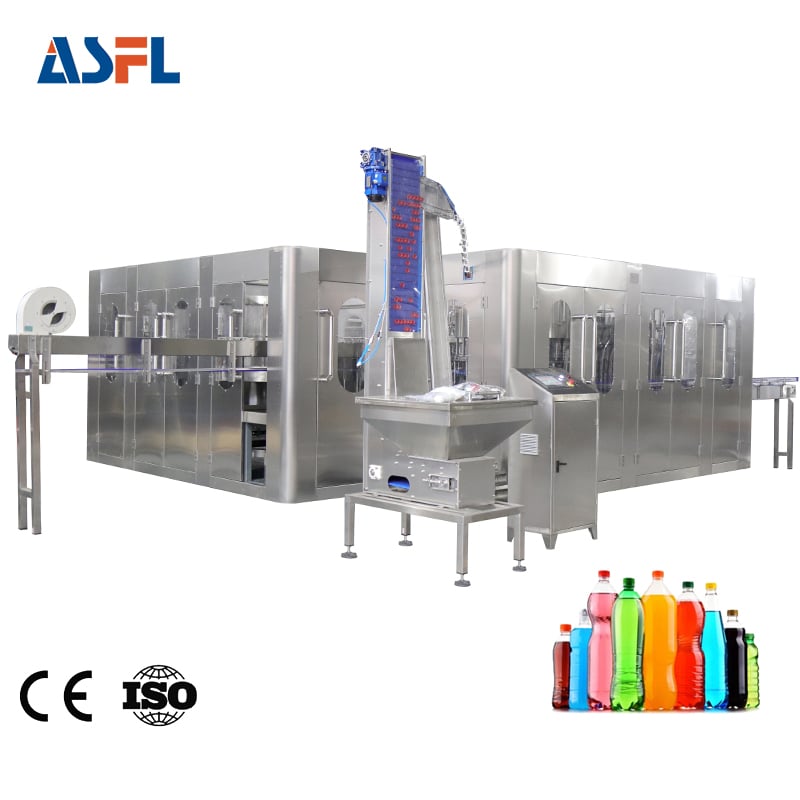
Selecting the primary packaging machinery is a critical milestone in establishing a fully automatic mineral water bottling plant. Rather than purchasing fragmented, standalone machines that require manual handling between stages, modern plants utilize fully synchronized 3-in-1 monoblock systems that combine bottle rinsing, volumetric filling, and screw capping into a single continuous enclosure.
Essential machinery stages required for a complete production line include:
-
Automatic Rotary Blow Molding Machines: Converts PET preforms into lightweight, durable bottles at high speeds.
-
Air Conveyor and Unscrambling Systems: Transports empty bottles securely via neck-handling guides directly into the monoblock rinser.
-
3-in-1 Monoblock Filling Unit: Executes gravitational or isobaric filling with high precision, followed immediately by clean torque-controlled capping.
-
Automated Labeling and Coding Equipment: Applies BOPP wrap-around labels or self-adhesive stickers while laser-coding production lot numbers.
Procuring matched, high-quality equipment from a single specialized manufacturer eliminates mechanical timing conflicts and guarantees high overall equipment effectiveness (OEE).
Commissioning, Regulatory Compliance, and Quality Assurance
The final phase of establishing a bottling facility involves rigorous mechanical commissioning, water quality validation, and regulatory audit preparation. Before commercial distribution begins, plant engineers must conduct comprehensive Factory Acceptance Testing (FAT) and trial production runs to verify system reliability.
Crucial steps in final plant commissioning include:
-
Executing complete Clean-In-Place (CIP) and Sterilization-In-Place (SIP) cycles across all stainless steel fluid pathways.
-
Conducting microbiological swab tests and chemical laboratory analyses on finished water samples to confirm zero contamination.
-
Securing mandatory operating licenses, food safety certifications, and environmental compliance permits from local and national authorities.
-
Training local operators and maintenance crews on routine calibration, troubleshooting, and preventative maintenance protocols.
Completing these rigorous validation steps ensures that your facility opens with zero operational friction, delivering pristine mineral water to retail markets from day one.





 Hot News








