 EN

In the beverage manufacturing industry, capital expenditure errors often stem from a fundamental mismatch between plant scale and machinery throughput. Choosing a packaging line that is too small creates severe operational bottlenecks and lost revenue opportunities, while over-specifying equipment leads to inflated operational costs and extended Return on Investment (ROI) cycles. Understanding how to select the right water bottle filling system for your production capacity requires an engineering analysis that balances hourly bottle output, bottle material characteristics, and labor requirements.
Whether establishing a boutique regional bottled water facility or expanding a high-volume industrial plant, selecting the correct water bottle filling system forms the backbone of operational success. Engineered by global packaging specialists like ACE-FILLING, modern automated lines match specific water bottling production capacity targets while upholding strict international food safety standards such as FDA, BRC, and ISO 22000 mandates. This technical guide breaks down exact capacity tiers, mechanical valve selection criteria, and automation levels to help plant managers choose the ideal bottle filling machine capacity for their business goals.
Capacity Tier 1: Small-Scale Production (1,000 to 3,000 Bottles Per Hour)
For start-up water plants, regional specialty brands, or pilot testing facilities, operational flexibility and low initial investment take priority. When evaluating how to select the right water bottle filling system for your production capacity within this initial tier, compact linear filling configurations provide the optimal operational balance.
-
Linear vs. Rotary Architecture: At throughputs below 3,000 bottles per hour (BPH), linear filling machines offer significant cost advantages and easier manual changeovers between different bottle sizes (such as 330ml, 500ml, and 1.5L).
-
Semi-Automated Operation: While washing, filling, and capping are executed sequentially within an enclosed chamber, bottle feeding and cap loading can utilize semi-automated chutes. This layout maintains a high-purity water bottle filling system environment without requiring expensive high-speed rotary starwheels.
Capacity Tier 2: Medium-Scale Commercial Production (3,000 to 10,000 Bottles Per Hour)
As market demand expands, growing bottling facilities require higher efficiency, reduced manual intervention, and continuous inline operation. Transitioning to a fully automated rotary monoblock system becomes essential at this throughput level.
-
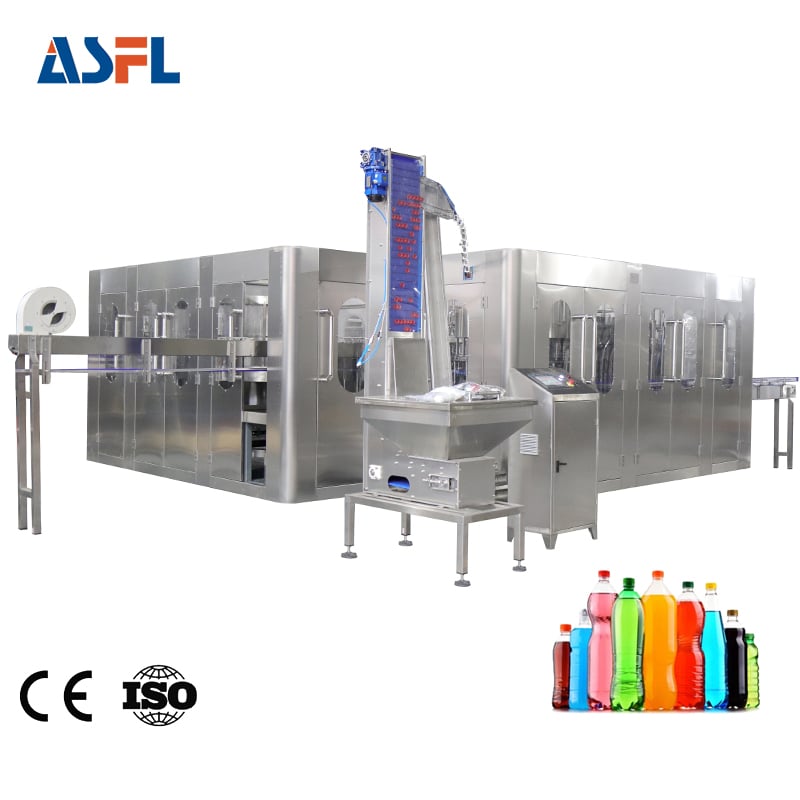
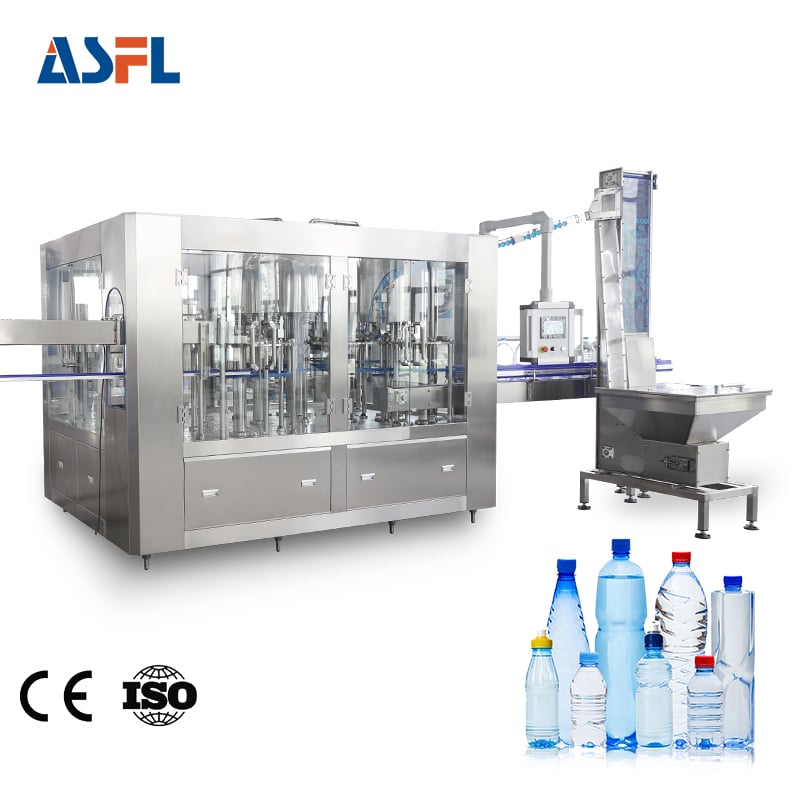
Integrated Monoblock (3-in-1) Systems: A rotary 3-in-1 monoblock integrates bottle rinsing, liquid filling, and capping into a single compact chassis driven by a synchronized main motor. This design drastically reduces floor space requirements while improving line efficiency.
-
Neck-Handling Technology: Utilizing continuous neck-clamping starwheels allows a medium-scale water bottle filling system to handle ultra-lightweight PET bottles without risking sidewall crushing or tipping during high-speed transfer, maximizing overall water bottling production capacity.
Capacity Tier 3: High-Capacity Industrial Lines (10,000 to 36,000+ Bottles Per Hour)
High-capacity beverage plants operating 24/7 schedules demand maximum Overall Equipment Effectiveness (OEE), zero unscheduled downtime, and precise volumetric accuracy. Meeting these demands requires state-of-the-art automation and advanced fluid management.
-
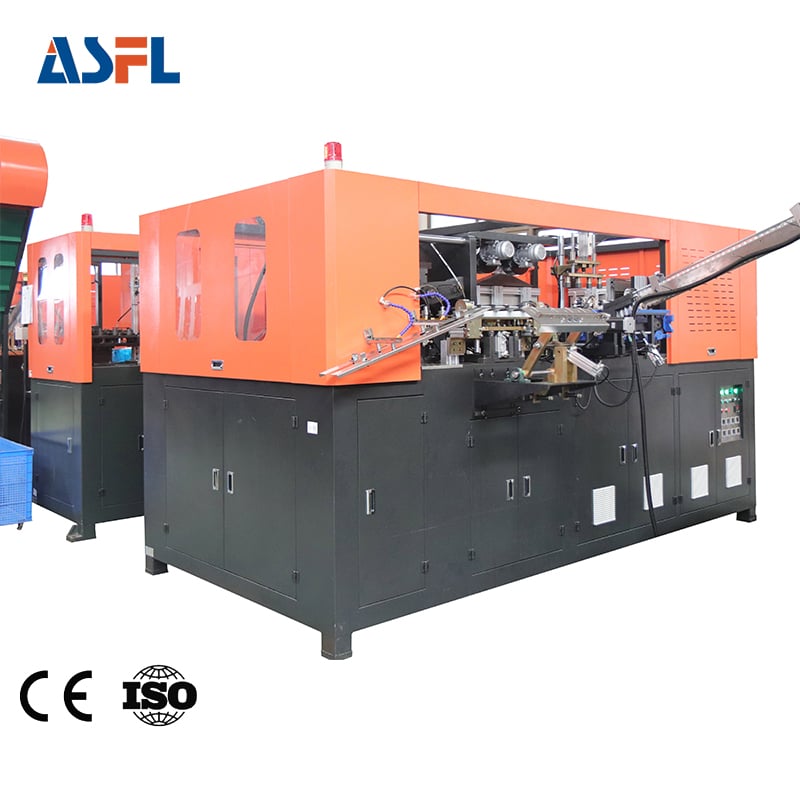
Electronic Flowmeter and Combiblock Integration: High-speed lines combine blow molding, gravity/flowmeter filling, and capping into an integrated Combiblock system, eliminating air conveyors entirely. Electronic magnetic or mass flowmeters ensure volumetric accuracy within plus or minus 0.5 milliliters per bottle.
-
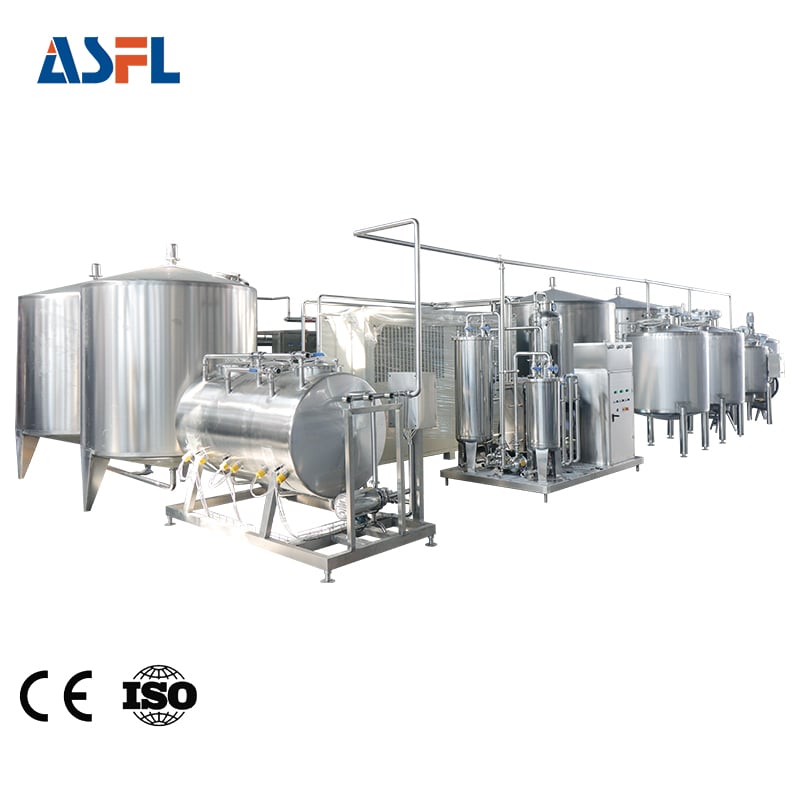
Automated CIP/SIP Loops: Continuous industrial production requires automated Clean-in-Place (CIP) loops to execute multi-stage chemical sanitization without disassembling filling valves, maintaining high sterility standards for your bottle filling machine capacity.
-
Smart Line Balancing: Automated sensor arrays continuously monitor line load and dynamically adjust conveyor speeds, ensuring that every high-yield water bottle filling system operates smoothly without bottle jams or line stoppages.
Operational Comparison Matrix Across Capacity Tiers
To help plant managers choose the appropriate system, the comparison table below outlines technical parameters across different water bottling production capacity levels engineered by ACE-FILLING.
| Operational Parameter | Tier 1: Small-Scale | Tier 2: Medium Commercial | Tier 3: High Industrial |
| Target Output Range | 1,000 - 3,000 BPH | 3,000 - 10,000 BPH | 10,000 - 36,000+ BPH |
| System Architecture | Compact Linear / Semi-Auto | Rotary 3-in-1 Monoblock | High-Speed Combiblock Line |
| Filling Technology | Mechanical Gravity / Piston | Gravity / Mechanical Valve | Electronic Flowmeter / Mass Meter |
| Volumetric Accuracy | +/- 2.0 ml | +/- 1.0 ml | +/- 0.5 ml |
| Labor Requirement | 2 - 3 Operators | 1 - 2 Operators | Fully Automated PLC Supervision |
Key Technical Factors to Evaluate Before Final Purchase
Knowing how to select the right water bottle filling system for your production capacity involves more than matching speed numbers. Plant engineers must evaluate these crucial operational factors:
-
Bottle Container Geometry and Material: Glass bottles require heavy-duty bottom-support transfer setups, whereas lightweight PET containers rely exclusively on continuous neck-suspension starwheels within the water bottle filling system.
-
Facility Floor Plan and Air Supply: Ensure your plant floor plan allows proper clearance for maintenance access, CIP washing stations, and centralized high-pressure air compressors necessary to support the target bottle filling machine capacity.
-
Future Expansion Capabilities: Selecting a modular system allows beverage brands to scale up water bottling production capacity by adding extra filling heads or upgrading upstream blowing units without replacing the entire filling line.
Determining how to select the right water bottle filling system for your production capacity is a strategic decision that directly influences plant profitability, product purity, and long-term business growth. By aligning your hourly throughput requirements with the right machinery architecture—whether a linear setup, rotary monoblock, or high-speed Combiblock—beverage producers can minimize operational waste and achieve high production yields. Partnering with technology leaders like ACE-FILLING guarantees access to reliable, high-precision equipment where every water bottle filling system is customized to your exact water bottling production capacity. Explore complete turnkey beverage packaging solutions at
 Hot News








