 EN

Why liquid filling machine supplier after sales team matters for overseas buyers
When an overseas plant compares a liquid filling machine supplier, the equipment quote is only part of the decision. The more revealing question is what happens after shipment: who commissions the line, how faults are diagnosed across time zones, and how a worn part is identified and delivered. From a B2B equipment-evaluation perspective, a liquid filling machine supplier should be assessed as a long-term technical partner, not simply as a source of a machine.
A filling line can be mechanically sound yet still lose productive time if the local team cannot interpret an alarm, obtain the right drawing, or coordinate a changeover. For an overseas buyer, evaluating the after-sales team before signing helps turn vague service promises into a workable support plan.
Why the after-sales team changes the real cost of a filling project
A liquid filling machine supplier is often chosen for pump type, filling principle, output target, or price. Those factors matter, but overseas commissioning adds distance, language, freight and site-interface variables. The right liquid filling machine supplier can explain who owns each handoff between installation, electrical connection, product trials and operator training.
Support also affects the cost of uncertainty. A buyer may need help when a bottle changes, viscosity varies, a capper is added, or an upstream conveyor changes its rhythm. Rather than assuming a remote team can solve every event instantly, ask how the liquid filling machine supplier separates an operating question from a mechanical, electrical or process issue. That workflow is more useful than a generic statement that support is available.
What overseas buyers should verify before placing an order
1. A named commissioning and escalation path
Ask the liquid filling machine supplier for a simple service map: the project contact, commissioning lead, electrical contact, spare-parts contact and escalation owner. It should state the channels used for urgent issues, the information the buyer must provide, and how handover works if the original engineer is unavailable. This is particularly valuable for a liquid bottle filling machine that will run alongside rinsing, capping, labeling or packing equipment.
2. Remote diagnosis that starts with usable evidence
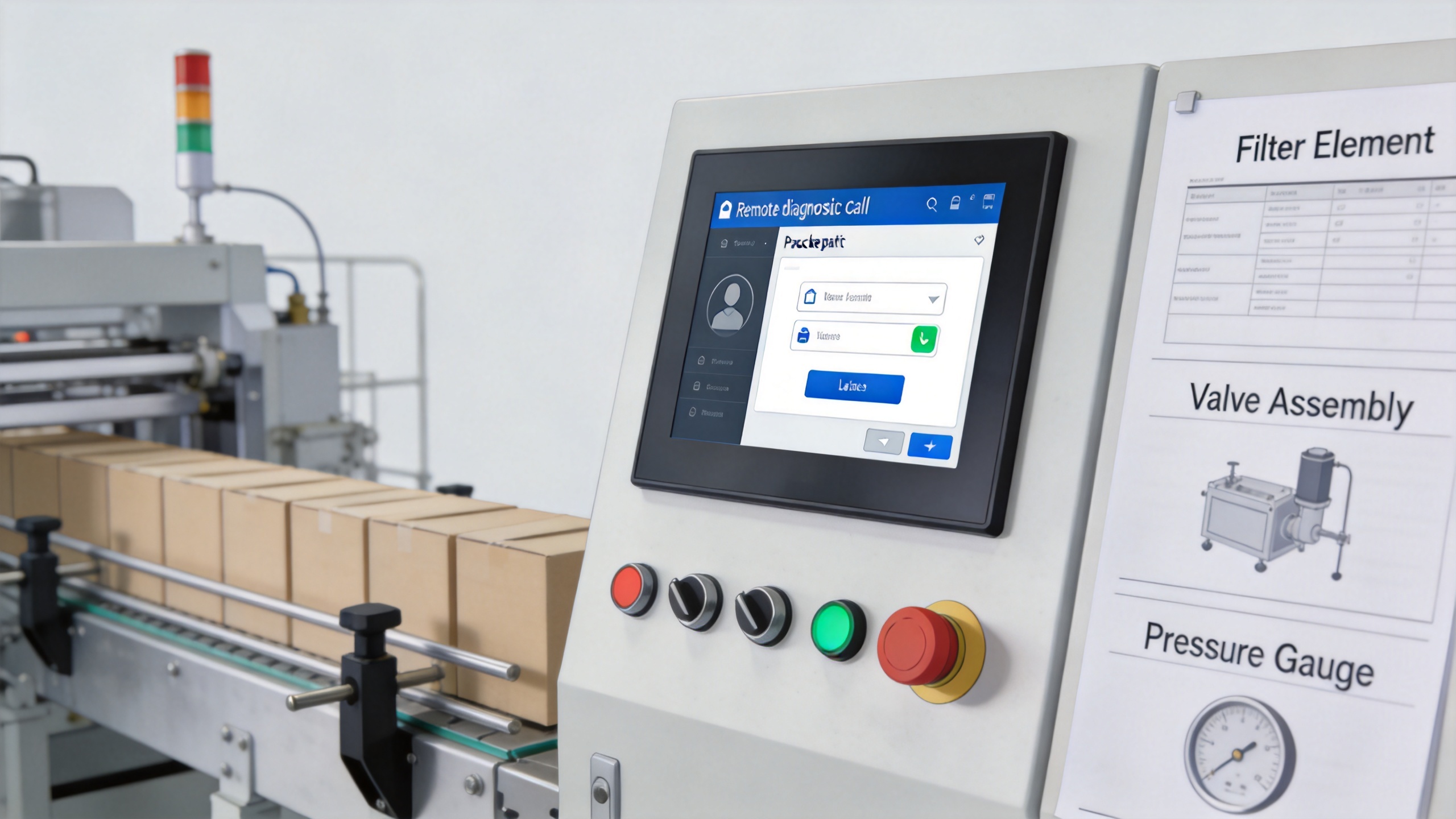
A capable liquid filling machine supplier should tell the buyer what evidence accelerates diagnosis: an alarm-screen photo, a short video of the motion, batch details, container samples, electrical drawings or a current parameter backup. Buyers should also ask whether the controls documentation is supplied in a form their technicians can use. IEC 60204-1:2016 addresses electrical, electronic and programmable electronic equipment and systems of machinery; it is a useful prompt to ask how electrical documentation and revision control will be handled for the delivered machine.
3. A practical spare-parts plan
Do not accept “parts available” as the entire answer. Ask the liquid filling machine supplier to distinguish recommended commissioning spares, wear items, critical components and made-to-order parts. Request part numbers, photos or drawings, lead-time assumptions and the ordering contact. A liquid filling machine supplier that can make parts traceable helps an overseas buyer avoid guessing which item is needed during a stoppage.
4. Training that covers normal work and exceptions
Operator training should include startup, cleaning, changeover, safe shutdown and basic fault recognition, while maintenance training should explain inspections and replacement boundaries. For a liquid bottle filling machine, the buyer should confirm that training reflects the actual liquid, bottle and target rate—not a generic demonstration. Ask the liquid filling machine supplier for training materials and a record of the configuration used during acceptance.
Turn service claims into an acceptance checklist
Before deposit or final acceptance, create a shared checklist with the liquid filling machine supplier. It can include documentation delivery, remote-support contacts, response-priority definitions, recommended spares, software and parameter backups, and responsibilities during site acceptance. ISO 12100:2010 sets out general principles for machinery risk assessment and risk reduction; without presenting it as a substitute for local compliance, buyers can ask how the supplier documents machine-specific risks, safeguards and configuration changes.
The checklist should also test communication. During a trial run, ask a realistic question about a fill-level variation or container change and observe whether the liquid filling machine supplier asks for the right operating facts before recommending action. That small interaction often reveals whether the team understands process boundaries or merely offers broad assurances.
Questions to ask a liquid filling machine supplier
- Who is responsible for commissioning support after the equipment arrives?
- What information should our team collect before a remote support session?
- Which drawings, manuals, parts lists and parameter backups will we receive?
- Which spares should be held on site, and how are urgent replacements identified?
- How are bottle, product, output or line-interface changes evaluated after acceptance?
- How does the liquid filling machine supplier log and escalate an unresolved issue?
Choose support evidence, not just a service promise
A suitable choice is not automatically the supplier with the longest marketing claim. It is the liquid filling machine supplier whose team can define responsibilities, supply usable technical records and set a realistic path for diagnosis and spares. For overseas buyers, that evidence helps protect continuity after the container is unloaded and the line begins real production.
In short, compare the after-sales organization with the same care used to compare filling technology. A responsive liquid filling machine supplier can help a buyer validate configuration, manage changes and reduce avoidable delays throughout the machine’s working life.
 Hot News








