 EN

Why Is a Stainless Steel Automatic Liquid Filling Machine the Best Choice for Hygiene Standards?
For food, beverage, cosmetic, and pharmaceutical-packaging teams, a stainless steel automatic liquid filling machine is often the practical starting point for a hygienic line. The reason is not simply that stainless steel looks clean. The better case is operational: the right material, surface condition, geometry, seals, and cleaning access can make routine sanitation easier to verify. From a procurement perspective, the decision should begin with the product, container, cleaning method, and production schedule—not with a material label alone.
This type of hygienic filling system can support a more controlled sanitation routine when its product-contact areas resist corrosion, do not absorb product, and remain accessible for inspection. That matters when a line handles beverages, sauces, oils, lotions, or other liquids that can leave residues. However, buyers should ask for evidence of the actual contact materials and hygienic configuration before treating any stainless steel automatic liquid filling machine as suitable for a particular standard or market.
Stainless Steel Helps, but Hygienic Design Does the Real Work
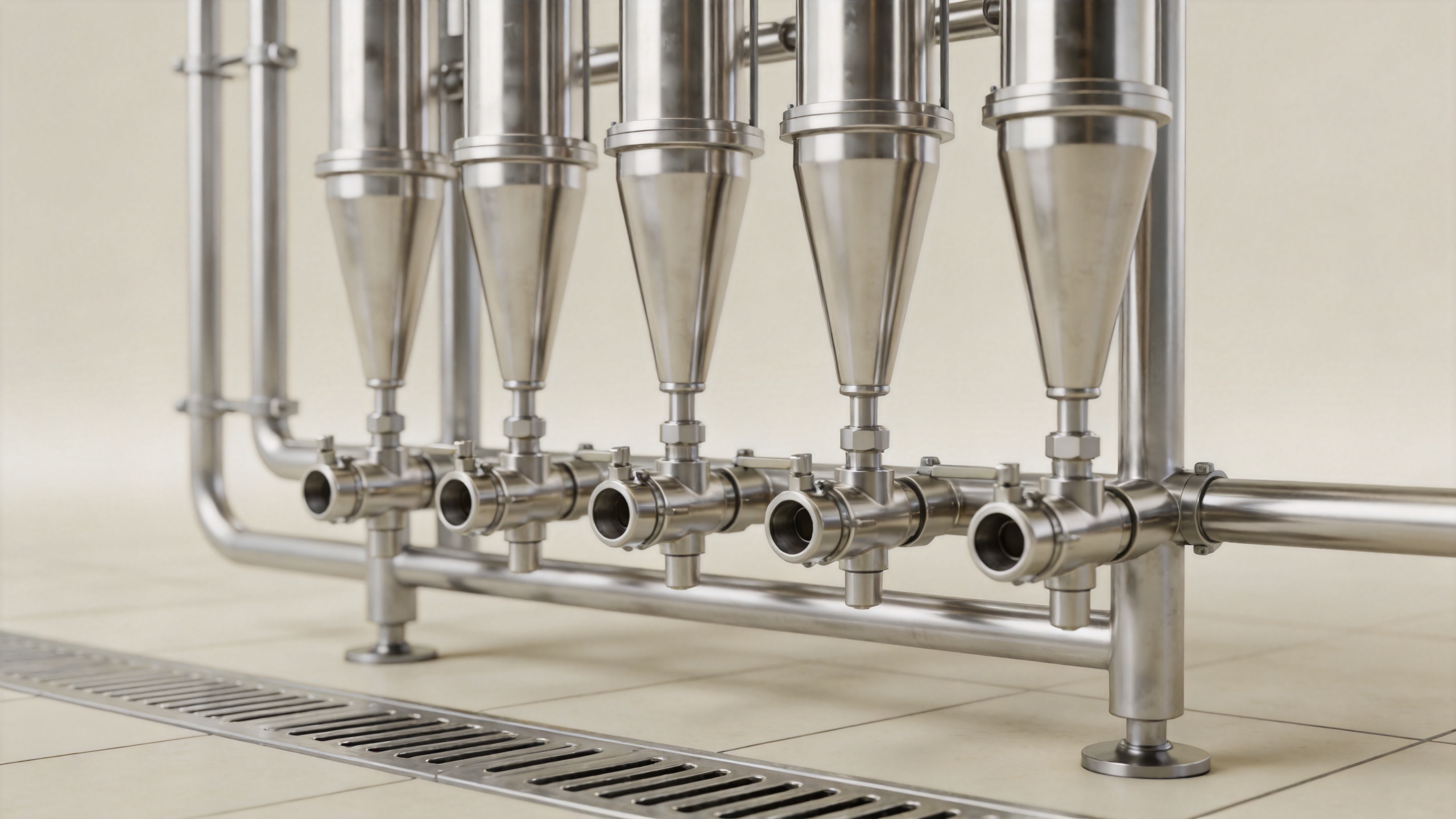
The core advantage of a stainless steel automatic liquid filling machine is its potential to combine corrosion resistance with a durable, cleanable contact surface. In hygienic equipment guidance, stainless steel is widely preferred for food equipment, yet the specified grade and finish still depend on the product and cleaning chemicals. For example, some food-contact guidance discusses a surface roughness of Ra 0.8 µm or less. That is a useful checkpoint, not a universal promise: purchasers should verify the finish requirement that applies to their process.
More accurately, the material choice becomes a hygiene advantage only if the surrounding design avoids places where liquid or soil can remain. Look for smooth product-contact paths, fully finished welds where applicable, drainable layouts, accessible valves, and seals selected for both the liquid and the wash regime. A rough seam, a dead-end pipe run, or a difficult-to-remove gasket can undermine the value of an otherwise well-built machine.
Why Automation Supports Consistent Cleaning Control
Automation does not replace sanitation procedures, but an automated stainless filler can make repeatable production and cleaning sequences easier to organize. Stable filling cycles reduce improvised handling around the product zone. Defined recipes can help teams standardize product changeovers, although every recipe should be validated against the actual liquid, line layout, and cleaning method.
When evaluating the equipment, ask how the filling circuit is isolated, drained, rinsed, and inspected. A documented cip cleaning process is particularly relevant where disassembly is impractical or where changeovers are frequent. The useful question is not whether a supplier says “CIP ready”; it is which wetted sections are included, what flow path is cleaned, how cleaning parameters are verified, and which components still need manual attention.
Material Grade and Surface Finish Need Process-Specific Review
A stainless steel automatic liquid filling machine should be specified around the actual process conditions. Product acidity, salt content, cleaning agents, temperature, and contact time can all affect material selection. In many sanitary applications, buyers compare 300-series stainless options, but a grade name by itself does not establish suitability. Confirm the material certificates, the wetted-component list, seal compatibility, and the intended-use boundaries with the supplier and your quality team.
The same discipline applies to a stainless steel liquid filling machine used for different products. A thin beverage and a sticky sauce may require different filling principles, cleaning cycles, and change-part designs. If the liquid properties are stable, that comparison becomes more meaningful. If they vary, test runs and cleaning validation become more valuable than broad specifications.
Hygiene Features Buyers Should Put on the Checklist
Before purchasing a stainless steel automatic liquid filling machine, convert the hygiene goal into inspection points:
- Identify every product-contact surface and request its material and finish information.
- Review weld quality, crevice control, slope, drainage, and access to nozzles, manifolds, tanks, and valves.
- Confirm whether the cip cleaning process covers the complete intended flow path and what manual steps remain.
- Check seal, hose, and elastomer compatibility with both product and detergent.
- Define cleaning acceptance criteria, sample points, and records before commissioning.
- Assess how filling, capping, and downstream conveying interfaces protect the cleaned product zone.
That last point is easy to overlook. A stainless steel automatic liquid filling machine sits within a line, not in isolation. Open transfers, poorly synchronized capping, or difficult-to-clean downstream interfaces can create hygiene risks outside the filler itself. Moving from a single-machine specification to a line-interface review usually produces a more useful purchasing decision.
Where an Aseptic Claim Requires Extra Care
An automatic liquid filling machine aseptic configuration should not be assumed merely because the machine has stainless contact parts. Aseptic processing involves validated controls across product treatment, sterile barriers, packaging, environmental conditions, and operating procedures. Such equipment may be part of an aseptic system, but buyers should request the specific scope of design, documentation, and validation relevant to their application.
Likewise, avoid treating generic references to sanitary standards as proof of certification. Industry frameworks such as 3-A provide useful design criteria for relevant applications, while local regulations and customer requirements may set additional expectations. The responsible approach is to map your product, market, and quality plan to the applicable requirements, then verify the supplied configuration against that map.
A Better Way to Compare Suppliers
For a stainless steel automatic liquid filling machine, compare suppliers on verifiable details rather than polished claims. Ask for a proposed product-contact drawing, materials list, cleaning sequence, access demonstration, and acceptance-test plan. A supplier that can discuss liquid behavior, container handling, filling principle, and cleaning boundaries is helping turn a broad hygiene objective into a configuration that can be checked.
Ace-Filling focuses on liquid, paste, and sauce filling equipment and can use a technical discussion to match filling and packaging conditions. For buyers, the most useful next step is to provide the liquid description, target output, bottle or container details, cleaning method, and applicable hygiene requirements. That information makes it possible to assess whether a stainless steel automatic liquid filling machine is configured for the operating conditions—not just described in marketing terms.
Conclusion
A stainless steel automatic liquid filling machine is often a strong hygiene-focused option because it can provide a durable, corrosion-resistant foundation for cleanable product handling. But stainless steel is only the foundation. The winning specification also addresses surface finish, welds, drainage, seal compatibility, cleaning access, and validation. Choose the machine that gives your team the clearest evidence and the most practical way to keep the product path clean every day.
 Hot News








