EN

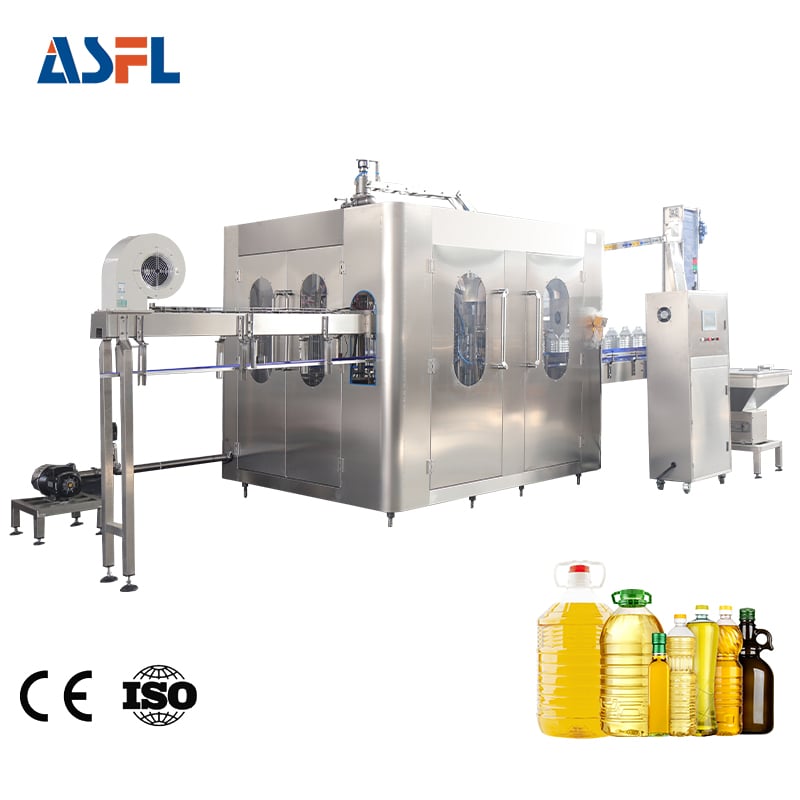
Dairy formulations containing added sugars, cocoa, fruit extracts, and stabilizing proteins represent one of the most vulnerable liquid food categories in commercial packaging. Because dairy proteins and dissolved solids create an ideal nutrient environment for bacterial colonization and spore growth, operating a flavoured milk filling machine without ultra-sanitary precautions leads to rapid batch spoilage and costly regulatory recalls. Achieving extended shelf-life (ESL) or aseptic stability requires machinery designed to strict international hygiene standards.
As an established manufacturer of high-precision liquid packaging equipment,
Sanitary Metallurgy and Hygienic Machine Architecture
The foundation of dairy packaging safety rests on physical engineering and contact metallurgy. Any surface that touches liquid dairy must resist chemical corrosion from aggressive cleaning agents while preventing microscopic biofilm accumulation.
-
SUS316L Stainless Steel Metallurgy: All fluid-contact components in a modern flavoured milk filling machine are constructed from electro-polished SUS316L stainless steel. Interior surface roughness is strictly maintained below Ra 0.4 micrometers, eliminating microscopic crevices where bacteria, sugar residues, or milk proteins can cling.
-
Hermetic Tri-Clamp Connections: Threaded pipe fittings are strictly excluded from the product zone because fluid trapped in screw threads breeds bacterial colonies. Instead, hygienic sanitary tri-clamp fittings with food-grade EPDM, PTFE, or Viton gaskets ensure flush, leak-free seals.
-
Dead-Leg Free Fluid Paths: Piping layouts must strictly adhere to EHEDG (European Hygienic Engineering & Design Group) guidelines, ensuring that dead legs do not exceed 1.5 times the pipe diameter. This prevents stagnant liquid pockets during high-speed filling cycles.
Automated CIP and SIP Cleaning Protocols
Manual disassembly for cleaning invites human error, air cross-contamination, and excessive line downtime. Today, a high-performance flavoured milk filling machine relies on fully automated Clean-In-Place (CIP) and Sterilization-In-Place (SIP) systems.
-
Multi-Stage CIP Recirculation: The automated CIP cycle flushes liquid contact lines sequentially using pre-rinsed water, caustic soda (NaOH) solution heated to 80-85 degrees Celsius to dissolve fat and protein soils, acid solution (HNO3) to remove mineral scale, and final sterile water rinses.
-
SIP Superheated Steam Sterilization: Prior to initiating a production run, superheated steam at 121 degrees Celsius circulates through all dosing cylinders, manifolds, and nozzles for at least 30 minutes. This thermal exposure destroys heat-resistant bacterial spores without disassembling a single component.
Through integrated CIP and SIP cycles, packaging facilities achieve validated sterility while maintaining continuous multi-shift production schedules.
Technical Comparison: Standard Dairy Fillers vs. Ultra-Clean Extended Shelf-Life (ESL) Fillers
Different distribution models dictate the required sanitation levels. The matrix below compares standard short-shelf-life dairy filling machines with ultra-clean ESL systems designed for extended distribution cycles.
| Engineering Parameter | Standard Fresh Dairy Filling Machine | Ultra-Clean ESL Flavoured Milk Machine |
| Environmental Isolation | Open-frame stainless guard | Positive-pressure Class 100 HEPA air enclosure |
| Bottle & Cap Decontamination | Filtered air blow/Rinse | Hydrogen peroxide (H2O2) vapor or UV-C tunnel |
| Cleaning Architecture | Semi-automatic CIP | Fully automated closed-loop CIP & SIP |
| Dosing Nozzle Design | Standard mechanical shut-off | Non-contact electromagnetic or membrane valve |
| Product Shelf-Life Target | 7 to 14 days (Refrigerated) | 30 to 90+ days (Refrigerated or Ambient) |
| Microbial Log Reduction | Log-3 reduction | Log-5 to Log-6 reduction |
Real-World Case Study: Eliminating Spoilage in Flavoured Beverage Lines
To understand the practical impact of strict sanitary packaging standards, consider a regional dairy processor experiencing periodic batch spoilage in their chocolate milk line (3.2% fat content with cocoa solids).
-
The Challenge: Their legacy filling machine used threaded valve assemblies and manual wash-down protocols. Cocoa powder and milk fat residues accumulated inside valve dead-legs, causing bacterial re-contamination after 10 days on retail shelves, resulting in a 3.8% product return rate.
-
The ACE-FILLING Solution: The plant upgraded to an ACE-FILLING ultra-clean flavoured milk filling machine featuring electro-polished SUS316L dosing circuits, non-contact filling nozzles, and an integrated CIP/SIP skid.
-
The Outcome: The non-contact nozzle design eliminated cross-contamination between container necks and dosing heads. Shelf-life expanded from 12 days to 45 days under refrigeration, product return rates fell to 0%, and the facility passed ISO 22000 and BRCGS food safety audits without corrective action requests.
Regulatory Compliance and Environmental Enclosures
Meeting international hygiene standards requires isolating the filling process from ambient factory air. Even in clean facilities, airborne spores and dust particles compromise dairy integrity if left unprotected.
-
Laminar Flow HEPA Filtration: The filling zone inside a flavoured milk filling machine is enclosed within a positive-pressure cabinet supplied with ISO Class 5 HEPA-filtered air. This continuous downward laminar air wall prevents ambient factory air from entering the sterile filling chamber.
-
3-A Sanitary Standards and FDA Compliance: All non-metallic components, such as seals, O-rings, and flexible hoses, must hold FDA 21 CFR 177 compliance and meet 3-A Sanitary Standards for dairy processing equipment.
Conclusion
Packaging flavored dairy drinks safely requires a uncompromising commitment to sanitary engineering, automated cleaning, and environmental control. Investing in an advanced flavoured milk filling machine ensures full compliance with international food safety standards, protects brand reputation, and extends product shelf life across distribution channels. To explore customizable dairy packaging solutions tailored to your operational needs, visit
 Hot News