EN
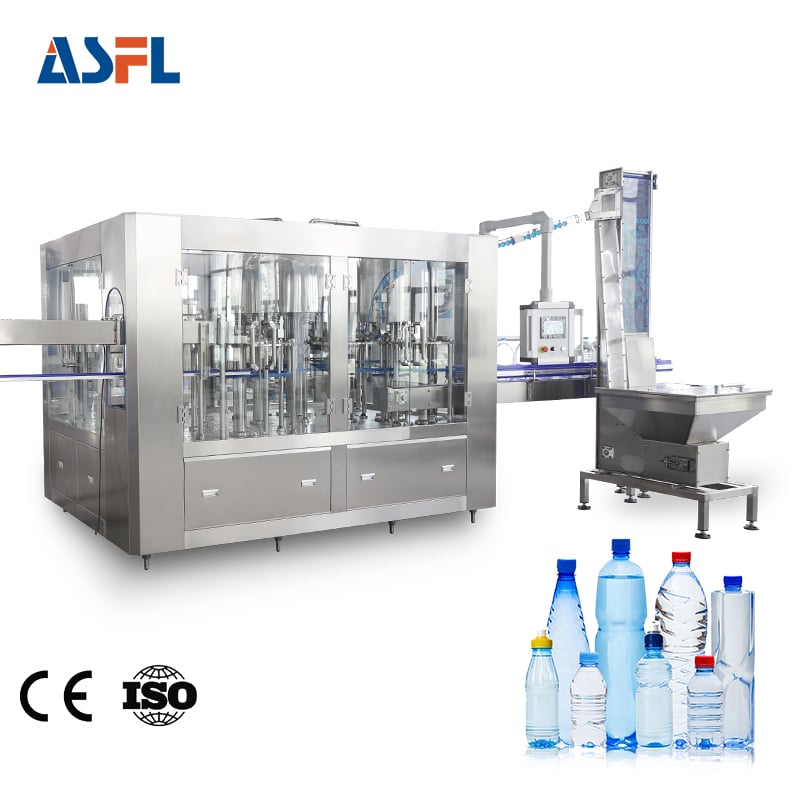
For emerging beverage producers and regional water purifiers, transitioning from manual labor to automated packaging is a pivotal step toward sustainable growth. High capital expenditure requirements often deter growing businesses from adopting massive, multi-lane bottling lines. However, integrating a compact small water bottle filling machine allows small scale enterprises to automate production without overextending capital reserves.
By bridging the gap between manual labor and high-volume industrial automation, entry-level machinery offers scalable production capacity, strict compliance with food safety regulations, and rapid return on investment. As an established designer of liquid bottling infrastructure,
Technical Advantages: Capital Efficiency and Space Optimization
Floor area and operational overhead are often constrained in boutique water bottling facilities. A compact small water bottle filling machine resolves these spatial constraints while maintaining high sanitary and operational standards.
-
Compact Footprint: Unlike monolithic rotary filling suites that require vast factory floor spaces, semi-automatic or linear compact units occupy less than 3 to 5 square meters. This enables small scale enterprises to set up fully compliant bottling lines inside standard commercial workshop facilities.
-
Low Power and Utility Consumption: Compact linear systems utilize single-phase power inputs or optimized pneumatic configurations, keeping electricity overhead low during initial scaling phases.
-
Rapid Toolless Changeovers: Compact machines feature quick-adjust guide rails and interchangeable starwheels, allowing operators to switch between 350 mL, 500 mL, and 1.5 L PET bottles in under 15 minutes.
Economic Breakdown: ROI Acceleration and Labor Reduction
Manual filling and capping introduce variable fill levels, product spillage, and high operational costs. Transitioning to a dedicated small water bottle filling machine alters the cost structure for small scale enterprises, turning labor costs into fixed capital efficiency.
-
Eliminating Material Giveaway: Manual pouring leads to erratic volume variances, often resulting in overfilling to avoid under-fill penalties. Automated volumetric nozzles lock dosing tolerance to within +/- 0.5%, saving substantial water and treatment costs over time.
-
Labor Reallocation: A 4-head or 6-head semi-automatic linear filler requires only one or two operators to load bottles and monitor capping, replacing 6 to 8 manual assembly workers.
-
Predictable Throughput: Automated indexing establishes a consistent production cycle rate, enabling exact scheduling and fulfilling distributor orders without costly overtime shifts.
Parameter Comparison: Semi-Automatic vs. Compact Automatic Fillers
Selecting the optimal equipment configuration depends on current production volume and available capital. The table below outlines key operational differences tailored to small scale enterprises.
| Operational Feature | Semi-Automatic Linear Filler | Compact Automatic Monoblock Filler |
|---|---|---|
| Output Capacity | 800 - 1,500 Bottles per Hour (BPH) | 2,000 - 4,000 Bottles per Hour (BPH) |
| Operator Requirement | 1 to 2 Operators | 1 Supervisor |
| Footprint Requirement | Under 3 square meters | 5 to 8 square meters |
| Capital Expenditure | Ultra-Low Entry Cost | Mid-Tier Investment |
| Changeover Time | 5 to 10 Minutes (Toolless) | 15 to 20 Minutes |
| Target Scale | Startups & Local Spring Water Brands | Growing Regional Distributors |
Real-World Case Study: Scaling Local Mineral Water Production
To illustrate the economic impact of upgrading production equipment, consider a regional spring water company operating in an emerging market.
-
The Challenge: The company relied on manual siphon fillers and hand-capping tools. Production was capped at 400 bottles per hour with a 5% rejection rate caused by improper cap seals and inconsistent fluid levels. High labor costs limited their ability to supply regional supermarket chains.
-
The ACE-FILLING Solution: The plant installed an ACE-FILLING 6-nozzle linear small water bottle filling machine equipped with an automated inline capping system and UV air sterilization units.
-
The Outcome: Production surged from 400 to 1,800 bottles per hour. Reject rates dropped below 0.1%, and sanitary compliance met full FDA and ISO 22000 standards. The equipment achieved full ROI within 5.5 months of continuous operation.
Regulatory Compliance and Sanitary Engineering Standards
Selling packaged drinking water requires strict adherence to international safety standards. Installing an industrial-grade small water bottle filling machine ensures small scale enterprises easily pass municipal and international health audits.
-
SUS304 / SUS316L Stainless Steel Construction: All liquid contact pipelines, nozzles, and holding tanks are built from polished stainless steel to prevent bacterial harborage and mineral scaling.
-
Inertial Air Rinsing and UV Treatment: Integrated compact systems feature inline air or ozone bottle rinsing alongside UV lamp tunnels to sanitize PET bottles prior to liquid filling.
-
FDA and CE Certification: Equipment built in compliance with international machinery standards provides small brands with the credentialing required to secure contract packaging agreements and retail shelf space.
Conclusion
Upgrading to a small water bottle filling machine allows small scale enterprises to achieve high bottling precision, cut labor costs, and meet stringent health standards without excessive capital investment. By replacing manual operations with automated linear dosing, small beverage producers can focus on brand expansion and market reach. To discover tailored equipment configurations for your production facility, visit
 Hot News